Showing 25 articles matching best fc points to buy Buyfc26coins.com is FC 26 coins official site..KzUT.

This Week's Most Popular Articles in the Longform App

A husband who spent millions failing to kill his wife, the nightmare of working for RadioShack and how an East German quantum chemist became the world’s most powerful woman — the most read articles this week in the Longform App, available free for iPhone and iPad.

This Week's Most Popular Articles in the Longform App

A surgeon opens up about medical mistakes, Chris Rock discusses Ferguson and Cosby, and the story of a woman who survived her husband's repeated attempts to have her killed — the most read articles this week in the Longform App, available free for iPhone and iPad.

This Week's Most Popular Articles in the Longform App

<img src="http://longform.org/stuff/images/seven-month-old-twins-615.jpg" title=“babies and babies" class="bleed" alt=“”>The rise and murderous fall of a pecan dynasty in Texas, the inside story of how Marissa Mayer lost her way at Yahoo! and why a baby’s brain needs love to develop — the most read articles this week in the Longform App, available free for iPhone and iPad.

Sears – Where America Shopped

An uncertain future for the retailer.

"Sears was so powerful and so successful at one time that they could build the tallest building in the world that they did not need," says James Schrager, a professor of entrepreneurship and strategy at the University of Chicago's Booth School of Business. "The Sears Tower stands as a monument to how quickly fortunes can change in retailing, and as a very graphic example of what can go wrong if you don't 'watch the store' every minute of every day."

The Larry Davis Show

In the weeks after Davis shot the six cops, faked out the costly, nationwide manhunt for 17 days, and held a major portion of the NYPD to a standoff in the Twin Parks Houses near Fordham Road, huge black-and-white mug shot-like photos of a starry-eyed, baby-faced killer adorned the front pages of the tabloids under headlines like “They Won’t Take Me Alive” and the local news anchors excitedly invoked his name at the top of every show.

Numbering the Dead

A hundred and fifty years ago, slightly more, a strange notion: the dead could be counted. In the Civil War, in the lush fields of the South, Americans first, as a culture, began to imagine death in numbers. Rosters of soldiers, as well as lists of war casualties, were not common practice in the mid-nineteenth century. Many officials feared responsibility for the dead by numbering or naming them, and military leaders felt an accurate count might embolden their enemies.

Sponsor: Contents Magazine

What can be salvaged from publishing? What does it mean to write for the 50% of US adults who have trouble reading? What happens to crime reporting when you cover every victim, every suspect, every murder with the same care?

Contents publishes open-source editorial ideas for new journalism, digital publishing, content strategy, and everything in between. Always free, always online, fresh each week.

We recommend their latest piece, "House of Cards" by Robin Sloan.

For information about sponsoring Longform, click here.

Columbine, Five Years Later

Before the viewing ends at 4 p.m., 975 people pass through the evidence rooms, many of them former students, survivors, and friends and relatives of the dead. Absent, as they have consistently been in the five years since the massacre, are Wayne and Kathy Harris, Eric's parents, and Tom and Sue Klebold, who raised Dylan. Although they live in the same Littleton-area homes they occupied on April 20, 1999, they have contributed virtually nothing to the public's understanding of who their sons were and why they killed.

The Rarely Noticed Casualties of Sept. 11

On the people who were working at Logan Airport when the hijacked flights departed:

They are the rarely noticed casualties of the terrorist attacks: the security guard, the ticket agent, the baggage handler on the ramp. They made it home that night, but with images they couldn’t shake, a pain uncomfortable to voice. They can’t believe it has been 10 years. They can’t believe it has only been 10 years.

Interview: Sol LeWitt

"Serial systems and their permutations function as a narrative that has to be understood. People still see things as visual objects without understanding what they are. They don’t understand that the visual part may be boring but it’s the narrative that’s interesting. It can be read as a story, just as music can be heard as form in time. The narrative of serial art works more like music than like literature."

The Case of Theresa Schiavo

On Terri Schiavo, “persistent vegetative state,” and life or death decisions:

Imagine it. You are in your early twenties. You are watching a movie, say on Lifetime, in which someone has a feeding tube. You pick up the empty chip bowl. “No tubes for me,” you say as you get up to fill it. What are the chances you have given this even a passing thought?

Ink, Inc.

How reality TV has changed tattooing.

Tattoos and tattoo artists have an undeniable power to attract, repulse, and intimidate. But when confronted with all this life and color, reality TV steamrolls it into the familiar “drama” of preening divas and wounded pride. “Everybody thinks they’re gonna change it,” said Anna Paige, an artist who said she’d turned down her chance at TV stardom. “Everybody thinks they’re gonna have some power.” But wait, isn’t she profiting from tattooing’s mass appeal? “I would have made money anyway.”

Wikipedia: Richard John Bingham, 7th Earl of Lucan

On the evening of November 7th 1974, the 7th Earl of Lucan, an inveterate gambler and Backgammon champion with a taste for power boats, snuck into his estranged wife’s basement. He then bludgeoned their nanny with a lead pipe and placed her in a canvas sack, before attempting to murder his wife. Recognizing his voice, she convinced him that she could him escape, then slipped out a bathroom window. Lord Lucan was never seen again.

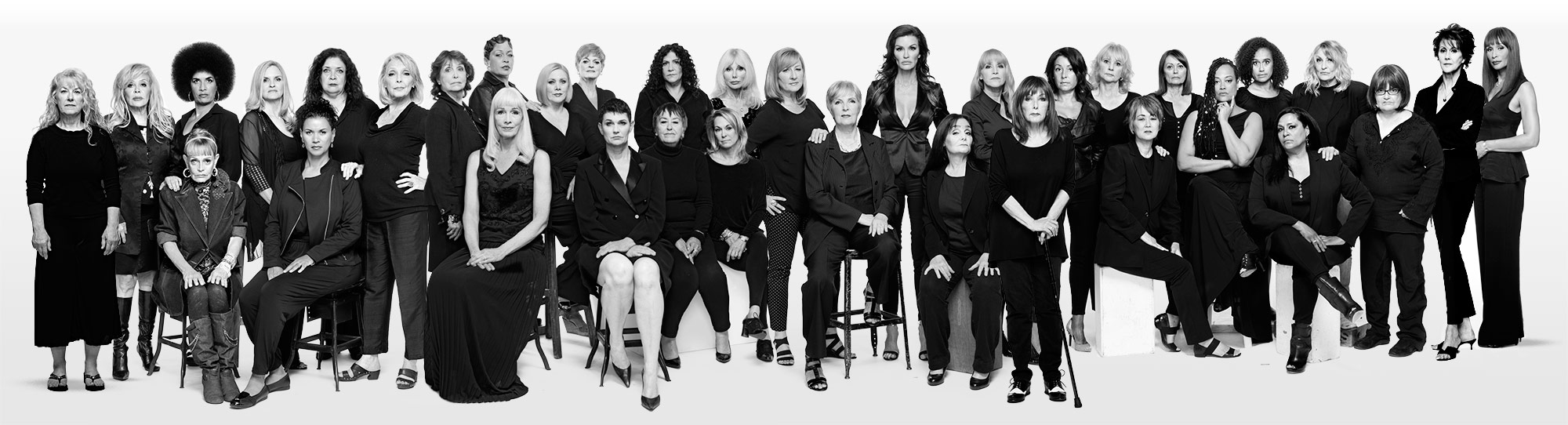
Noreen Malone wrote "Cosby: The Women — An Unwanted Sisterhood," this week's cover story in New York.

“We interviewed them all separately, and that was what was so striking: they all kept saying the same thing, down to the details of what they say Cosby did and how they processed it. Those echoes were what helped us know how to shape the story.”

Thanks to our sponsor, TinyLetter.

Computers Aren’t So Smart, After All

I love combing through The Atlantic’s archives. There’s almost no better way of grasping the strangeness of the past than to flip through a general interest magazine from 1960. Here, we find Fred Hapgood grappling with what human intelligence meant in the light of new machines that could do something like thinking. Intelligence was being explored in a new way: by finding out what was duplicable about how our minds work. Hapgood's conclusion was that if you could automate a task, it would lose value to humans. What tremendous luck! Humans value that which only humans can do, he argued, regardless of the difficulty of the task. And that because computers were so good at sequential logic problems, we'd eventually end up only respecting emotional understanding, which remained (and remains) beyond the reach of AI.

-A. Madrigal

A Last Whiff of Fulton's Fish, Bringing a Tear

On the closing of New York’s Fulton Fish Market.

It smells of truck exhaust and fish guts. Of glistening skipjacks and smoldering cigarettes; fluke, salmon and Joe Tuna's cigar. Of Canada, Florida, and the squid-ink East River. Of funny fish-talk riffs that end with profanities spat onto the mucky pavement, there to mix with coffee spills, beer blessings, and the flowing melt of sea-scented ice. This fragrance of fish and man pinpoints one place in the New York vastness: a small stretch of South Street where peddlers have sung the song of the catch since at least 1831, while all around them, change. They were hawking fish here when an ale house called McSorley's opened up; when a presidential aspirant named Lincoln spoke at Cooper Union; when the building of a bridge to Brooklyn ruined their upriver view.

Mike Sager, writer-at-large for Esquire and founder of The Sager Group.

"I was instilled with this thing by my parents who loved me — they fucked me up plenty but they loved the shit out of me — where I can go with people who are different and I don't feel bad about myself. I've had 13-year-old pit-bull fighting kids shame me horribly...throw pebbles at my head, and it doesn't bother me. Because when I'm a reporter, I'm not me. I'm just there to get the job done and learn stuff. I don't take it personally. Plus, I know I'm going to get the last word."

Thanks to TinyLetter for sponsoring this week's episode!

Miami-Dade TNT Unit Loses the War on Drugs and Liberty City's Trust

An investigation of the county’s Tactical Narcotics Team and, in particular, a Christmas-themed sting dubbed “Santa’s Helper”:

A two-month investigation by New Times has found that Santa's Helper was a colossal waste of police resources. Of the 112 suspects arrested, 73 people were charged only with misdemeanor pot possession. The vast majority of the busted pot smokers were either released within 24 hours or avoided jail by promising to show up in court. Of the 73 alleged tokers, 68 of them — including Dante Level and his siblings — had no violent criminal record. If they were guilty of anything, it was smoking a joint on their own front porch.

Word on the Suite

With flash, hip-hop echoes rock’s golden age.

When rock was at its peak in 1972, Americans earning the equivalent of $1m a year took just over 1 per cent of national income. In 2010, this group’s share of national income had grown to almost 10 per cent. At the same time, the average tax paid by these top earners almost halved. The rise of Jay-Z’s “new black elite” reflects the growth in numbers of the super-wealthy. But the opulence that he and West flaunt also reflects the growing estrangement of those at the top from the rest.

40 Years After Watergate, Nixon Was Far Worse than We Thought

The Watergate reporters look back.

In the course of his five-and-a-half-year presidency, beginning in 1969, Nixon launched and managed five successive and overlapping wars — against the anti-Vietnam War movement, the news media, the Democrats, the justice system and, finally, against history itself. All reflected a mind-set and a pattern of behavior that were uniquely and pervasively Nixon’s: a willingness to disregard the law for political advantage, and a quest for dirt and secrets about his opponents as an organizing principle of his presidency.

How Chicago House Got Its Groove Back

A look at Chicago’s DJ culture in the ’90s.

One day in 1997, Sneak promised his friend and fellow Chicago DJ Derrick Carter a new 12-inch for Carter's label Classic, then spent hours fruitlessly laboring over a basic, bustling four-four beat. Finally, Sneak gave in and smoked the J he'd had stashed for later in the day. When he came back inside, he carelessly dropped the needle onto a Teddy Pendergrass LP, heard the word "Well . . . ," and realized, "That's the sample, right there." He threaded Pendergrass's 20-year-old disco hit "You Can't Hide From Yourself" through a low-pass filter to give it the effect of going in and out of aural focus, creating one of the definitive Chicago house singles.