When Drug Addicts Work in Hospitals, No One Is Safe
How a traveling medical technician managed to steal narcotics from hospitals, infecting at least 45 people with hepatitis C in the process.
Showing 25 articles matching 高仿gucci皮带价格网站【A货微信10086082】批发购买出售定制高仿精仿,一比一A货,复刻顶级原单《微信10086082》价格最优手表,包包,皮带,饰品,衣服,鞋子】tz.
How a traveling medical technician managed to steal narcotics from hospitals, infecting at least 45 people with hepatitis C in the process.
She was the daughter of movie mogul Harry Warner. He was 15 years younger and embezzled her money, landing himself in jail. In prison, he offered a young inmate named Richard Matt $100,000 to kill her.
Thirty-three years ago, a Chicago man was sentenced to death for murder. In 1999, another man confessed to the crime. Today, they are both free.
Ken Dornstein’s older brother died when a bomb exploded on Pan Am Flight 103. For the past three decades, he’s been obsessed with identifying who’s really responsible.
The story of how Michael Larson cracked the code of Press Your Luck, winning $104,950 in cash, a sailboat ($1,015), and two all-inclusive trips.
The city of Cleveland is on the hook $18.7 million in judgements for police brutality. They have a plan to get out of paying. And if it works, cities across the country could starting using the same maneuver.
In 2006, Alexander Litvinenko, a former Russian spy working for British intelligence, was poisoned. As he lay dying, he worked with detectives to find his killer.
An attempt to figure out why, and how, a young pilot named Andreas Günter Lubitz deliberately plunged an airliner into the remote French Alps, killing himself and the other 149 people on board.
At the age fifteen, Jenny Diski, a “foundling,” went to live with Doris Lessing. For fifty years, the two talked every week. Diski promised Lessing that she would never write about her but now, after Lessing’s death, Diski has begun to recount the story of their relationship.
The question of how to name her relationship with Lessing plagued Diski.
Lessing invited Diski into her home, but did she want her there?
The scientists at Beyond Meat have concocted a plant-protein-based performance burger that delivers the juicy flavor and texture of beef with none of the dietary and environmental downsides.
A profile of “the seven-time defending UFC light-heavyweight champion, practically unbeatable, and already maybe the greatest fighter of all time.”
Sheikh Humarr Khan was a globally renowned expert in tropical diseases, and the hero who ran Sierra Leone’s worst Ebola ward. So why, when he finally fell ill, was he denied the extraordinary treatments that could have saved him?
“Easy care” sheep, crushed piglets, and starving calves. These are the products of a remote research center where scientists are trying to re-engineer the farm animal to fit the needs of the 21st-century meat industry.
The U.S. is one of only two countries that don’t guarantee paid maternity leave. As a result, women across the country are rushing back to work after C-sections and losing their positions in order to take care of newborns.
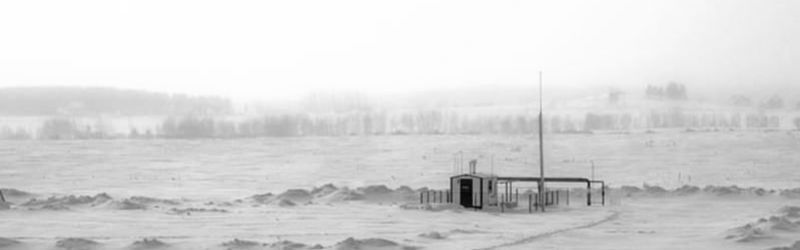
A collection of picks on Montreal's plow racket, what it’s like to freeze to death, the wilds of eastern Siberia and more.
Twelve-step programs treat alcohol and drugs according to the same principles. But heroin changes the way the brain works. If there’s a medication that treats heroin addiction, why aren’t we using it?
A good trip on psilocybin might be just the ticket to relieve anxiety and depression, particularly in the terminally ill. But are we ready to dive back in to psychedelic research?
The dramatic liberties a much-heralded film takes with historical fact show how hard it is to get complexity onto the big screen.
Kamel Daoud’s celebrated retelling of Albert Camus’s The Stranger came within two votes of winning the Prix Goncourt. It has also made him a target of radical Islamists.

A profile of Ahmet Ertegun: son of the Turkish ambassador, teenage collector of ‘race’ music, producer and pseudonymous songwriter for records by Ray Charles and Big Joe Turner, founder of Atlantic Records, confidante to Mick Jagger, impeccable dresser.
On the occasion of Hamid Karzai’s visit to the White House, a fever dream tour of the Afghanistan war through the eyes of the leaders who gave birth to its narrative.
How Viennese psychologist Ernest Dichter transformed advertising:
What makes soap interesting? Why choose one brand over another? Dichter’s first contract was with the Compton Advertising Agency, to help them sell Ivory soap. Market research typically involved asking shoppers questions like “Why do you use this brand of soap?” Or, more provocatively, “Why don’t you use this brand of soap?” Regarding such lines of inquiry as useless, Dichter instead conducted a hundred so-called “depth interviews”, or open-ended conversations, about his subjects’ most recent scrubbing experiences. The approach was not unlike therapy, with Dichter mining the responses for encoded, unconscious motives and desires. In the case of soap, he found that bathing was a ritual that afforded rare moments of personal indulgence, particularly before a romantic date (“You never can tell,” explained one woman). He discerned an erotic element to bathing, observing that “one of the few occasions when the puritanical American [is] allowed to caress himself or herself [is] while applying soap.” As for why customers picked a particular brand, Dichter concluded that it wasn’t exactly the smell or price or look or feel of the soap, but all that and something else besides—that is, the gestalt or “personality” of the soap.
A thirteen-year-old adoptee born in Russia with fetal alcohol syndrome, his golden sheperd Chancer, and the trainer who taught Chancer to bond emotionally with disabled children.
How Yvette Vickers, a B-movie starlet who had appeared in Attack of the 50 Ft. Woman, ended up mummified in her Los Angeles home last year.
When we form our thoughts into speech, some of it leaks through our hands. Gestures are thoughts, ideas, speech acts made tangible in the air. They can even, for a moment, outlive the speaker.
What hand motions can teach us about language, ethnicity and assimilation.

