Showing 25 articles matching fk33.cc_What is the price of magnesium sulfate pentahydrate in China.

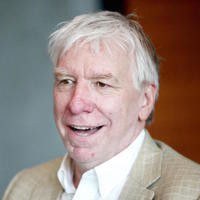
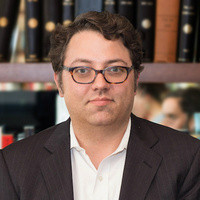
Derek Thompson is a staff writer for The Atlantic and host of the podcast Plain English.

“I am an inveterate dilettante. I lose interest in subjects all the time. Because what I find interesting about my job is the invitation to solve mysteries. And once you solve one, two, three mysteries in a space, then the meta-mystery of that space begins to dim. And all these other subjects—that's the new unlit space that needs the flashlight. And that's the part of the job that I love the most: that there are so many dark corners in the world. And I've just got this flashlight, and I can just shine it wherever the hell I want.”

Eric Lach is a staff writer at The New Yorker, where he covers New York. His latest article is “The Mayor and the Con Man.”

“I think about my own trajectory, my little generation of journalists—it was easier to get jobs reporting on national politics than to get a job reporting on something that you could see and go to and that is a really strange thing, the relief and the joy that I feel like when I can just take the subway twenty minutes to go see something interesting for a story or talk to somebody interesting or explore physically and not just feel like I’m making phone calls and Googling. It’s a very different kind of work, but it’s just not something that was super available.”

Cord Jefferson is a journalist turned television writer whose credits include Succession, The Good Place, and Watchmen.

“I’m a fearful person. I’m afraid of a lot of things. I’m afraid of how people perceive me, I’m afraid of hurting myself, I’m afraid of heights. I’m afraid of a lot. Bravery does not come naturally to me. But the moments when I feel like I’ve done the best in my life and been the proudest of myself are when I’ve overcome that fear to do something that scares me.”

Thanks to Mailchimp, Pitt Writers, and Squarespace for sponsoring this week's episode.

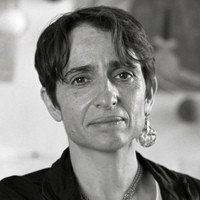
Masha Gessen has written for The New York Times, The London Review of Books, Vanity Fair, and others. Her book about Tamerlan and Dzhokhar Tsarnaev, The Brothers: The Road to an American Tragedy, came out in April.

“The moment she said it, it was obvious that I'd been created to write this story. I'd covered both wars in Chechnya. I'd covered a lot of terrorism. I'd studied terrorism. And I'd been a Russian-speaking immigrant in Boston, which actually is the most important qualification for writing this book. It didn't give me special knowledge, but it gave me a lot of questions that I knew to ask that other people wouldn't.”

Thanks to TinyLetter, Trunk Club, and Casper, for sponsoring this week's episode.

Mary Childs is a co-host of the podcast Planet Money and the author of The Bond King: How One Man Made a Market, Built an Empire, and Lost It All.

“I love aberrations. I love when things go wrong. You get a high stress situation, you get all of the manifestations of personality. We're our most selves, if not our best selves, at those times. I like the [stories] that have embedded in them all of those conduits of power and that reveal the greater system.”

Jack Hitt contributes to Harper’s, The New York Times Magazine, and This American Life.

“I’ve always lived more or less unemployed in these markets, and happily so. I think being unemployed keeps you a little more sharp in terms of looking for stories. It never gets any easier. That motivation and that desperation, whatever you want to call that, is still very much behind many of the conversations I have all day long trying to find those threads, those strings, that are going to pull together and turn into something.”

Thanks to MailChimp, Audible, and Squarespace for sponsoring this week's episode.

Mona Chalabi is a writer and illustrator whose work has appeared in The New York Times, The New Yorker, and The Guardian, where she is the data editor. Her New York Times Magazine piece “9 Ways to Imagine Jeff Bezos’ Wealth” won this year’s Pulitzer Prize for Illustrated Reporting.

“I kind of think of protest as just saying what you believe. And sometimes, it’s considered protest because it’s outside of the institutions of power. So you’re saying, Hey, Palestinians deserve human rights, and that’s considered a form of protest, right? I want the work to change things and I think I’m quite unapologetic about that, and most journalists are like No no no no no, we’re just reporting the world, we’re just reporting things as we see it. There’s no desire for change. I think that is so messed up. This idea that your work has no impact in the world is incorrect. You can’t wash yourself of the consequences of the work, you have to be considering the consequences while you’re doing it.”

White Collars Turn Blue

People know Krugman these days as a feisty political polemicist, but back when he was less politically engaged he was absolutely one of the very finest popularizers of economic ideas ever. This piece is a wonderful, brief introduction to the fundamental economic forces driving the world and a lot of my current thinking is preoccupied with the questions it raises. Reading it again, I realized that a point I like to make about the elevator being a great mass transit technology is almost certainly something I subconsciously picked up here.

-M. Yglesias

A Classic Pick from Longform and Open Road

Our sponsor this week is Open Road Integrated Media, a digital publisher with a soft spot for the kind of classic writing we highlight every day on Longform.

In addition to new work, Open Road has published ebooks by legendary authors including William Styron, Gloria Steinem and David Halberstam. And starting today, we'll be making a monthly pick from their archives, a favorite book of ours that Open Road will make make available to Longform readers at a deep discount.

Up first: Rachel Carson's 1951 bible of the enviornmental movement, The Sea Around Us. Buy it today for 66% off or read an excerpt.

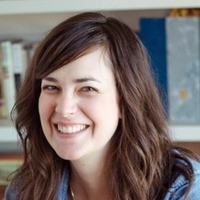
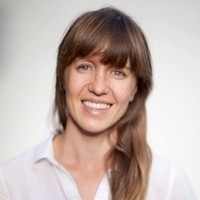
Ann Friedman is a writer, editor and co-founder of Tomorrow.

"The notion of kissing up is super weird to me. You should always be kissing down and sideways, to the people who are going to be working alongside you and coming up behind you. I'm really aware of my impending irrelevance. ... I'm waiting for that day when I'm in dire need of work and 65 years old—because none of us are retiring, obviously—and I don't understand how to write on Google Glass or whatever we're composing on then. I want there to be some journalist who remembers when I got on the phone with her in 2013 and helped her negotiate for her first salary and throws me a fucking bone. I think about that moment a lot."</i>

Thanks to TinyLetter for sponsoring this week's episode!

</blockquote>

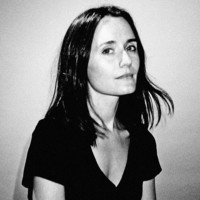
Sarah A. Topol is a writer-at-large for The New York Times Magazine. Her latest feature is ”Is Taiwan Next?”

”I think you never actually ask people head-on about what they've been through. You always ask people to just tell you what they want to tell you about anything that has happened to them…. This event that happened to you, it doesn't define you. It’s not why I'm here necessarily. Like, tell me about your childhood. Tell me about your life. Tell me about the things you think are important in your community. And by the time we get to the traumatic part, I hope they've seen enough of who I am and how I interview to feel comfortable telling me that they don't want to talk about certain things.”

Susan Burton is an editor at This American Life, the author of the memoir Empty, and the host of the podcast The Retrievals.

“I know I have much more anger than I reveal, and I don’t think that’s uncommon. Especially for women. There’s been a lot of attention to that in recent years—the anger of women, how it’s expressed and not expressed. But I think that among the things I’ve stifled for years are just my true feelings, and I’ve always wanted to be close to people and to be intimate with people, and have often felt that I have trouble making myself known or being known or being understood. And so...it felt good to be known.”

Ben Anderson is a war journalist and documentary filmmaker for Vice News. His latest book is The Interpreters.

"You're surrounded by people who are so poor. Maybe their family members have already been killed. And they still can't leave. So compared to that, I can't really take the idea that I've suffered and that I need stop and go to a spa for a few days. I can't take that idea that seriously. Compared to them, it feels like I am leading an almost privileged existence."

Thanks to TinyLetter and GoDaddy for sponsoring this week's episode.

Shane Bauer, a senior reporter for Mother Jones, spent four months working undercover as a guard in a private prison.

“The thing that I grappled with the most afterward was a feeling of shame about who I was as a guard and some of the things that I had done. Sending people to solitary confinement is hard to come to terms with—even though, in that situation, I don't know what else I could have done. ... I had to do what I could to keep myself safe.”

Thanks to MailChimp for sponsoring this week's episode.

Joe Bernstein is a senior reporter for BuzzFeed News.

“The question of disinformation is almost an attempt to create a new mythology around why people act the way they do. I don’t mean to say that it’s some kind of nefarious plot. ... It’s a natural, or a convenient explanation. And that’s why I think it caught on for some time anyway.”

Gabriel Snyder is the editor-in-chief of The New Republic.

“I had a new job, I was new to the place, and I came to it with a great deal of respect but didn’t feel like I had any special claim to it. But in that moment I realized that there were all of these people who wanted to see the place die. And that the only way The New Republic was going to continue was by someone wanting to see it continue, and I realized I was one of those people now.”

Thanks to MailChimp, Bombas, Harry's, and Trunk Club for sponsoring this week's episode.

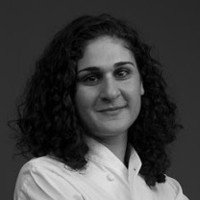
Samin Nosrat is a food writer, educator, and chef. Her new book is Salt, Fat, Acid, Heat: Mastering the Elements of Good Cooking.

“I kind of couldn’t exist as just a cook or a writer. I kind of need to be both. Because they fulfill these two totally different parts of myself and my brain. Cooking is really social, it’s very physical, and also you don’t have any time to become attached to your product. You hand it off and somebody eats it, and literally tomorrow it’s shit. … Whereas with writing, it’s the exact opposite. It’s super solitary. It’s super cerebral. And you have all the time in the world to get attached to your thing and freak out about it.”

Thanks to MailChimp, Squarespace, Away, and Masters of Scale for sponsoring this week's episode.

Spoiled Rotten

With the exception of the imperial offspring of the Ming dynasty and the dauphins of pre-Revolutionary France, contemporary American kids may represent the most indulged young people in the history of the world.

Sarah Menkedick is a freelance writer and the founder of Vela. Her upcoming book is Homing Instincts: Early Motherhood on a Midwestern Farm.

“I’d been rejected a ton of times—I had that 400-page thing that never became a book. So there were plenty of epic rejections that felt catastrophic. And I’d sort of arrived at this point where I was like: I’m living in my parents' cabin, and I’m pregnant, so whatever. Fuck it. I’m gonna write whatever I want to write.”

Thanks to MailChimp and Blue Apron for sponsoring this week's episode.

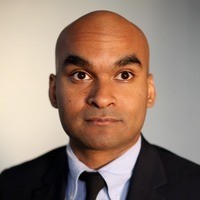
Reihan Salam is the executive editor of National Review.

"I’m incredibly curious about other people. I’m curious about what they think of as the constraints operating on their lives. Why do they think what they think? If I weren’t doing this job, I’d want to be a high school guidance counselor."

Thanks to TinyLetter, Bonobos, and Cards Against Humanity’s Ten Days or Whatever of Kwanzaa for sponsoring this week's episode.