Showing 25 articles matching fk33.cc_What is the price of magnesium sulfate pentahydrate in China.

Hannah Goldfield is the food critic at The New Yorker.

“There are just only so many ways to say ‘crunchy.’ There's ‘crunchy,’ there's ‘crisp,’ there's ‘crispy,’ you can say something ‘crackles,’ and that's kind of it. It's really, really hard. And a lot of things are crunchy. It's a really specific sensation that needs to be described. But I've had moments where I'm like, I can't say crunchy again in a sentence. What am I going to do? How do I get this across?

Lost at Sea

A few miles north of San Francisco, off the coast of Sausalito, is Richardson Bay, a saltwater estuary where roughly one hundred people live out of sight from the world. Known as anchor-outs, they make their homes a quarter mile from the shore, on abandoned and unseaworthy vessels, doing their best, with little or no money, to survive.

Jason Fagone, a contributing editor at Wired and a writer-at-large for Philadelphia, is the author of Ingenious.

"It seemed like all the big guys in American society had let us down, all the elites. And here was a contest that was explicitly looking to the little guy and saying, 'We don't care what you've done before or how much money you have in your pocket. If you solve this problem, you win the money.' There was something so optimistic and hopeful and cool about that to me."

Thanks to TinyLetter and Squarespace for sponsoring this week's episode.

Wright Thompson is a senior writer for ESPN. His new book is Pappyland: A Story of Family, Fine Bourbon, and the Things That Last.

“If you’re going to write a profile of someone … you have to find some piece of common ground with them so that no matter how famous or good or noble or bad—or no matter how cartoonish their most well-known attributes are—it shrinks them. And once they’re small enough to fit in your hand, I think it changes the entire experience of asking questions about their lives.”

Thanks to Mailchimp for sponsoring the show.

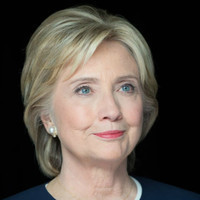
Hillary Clinton is the former Democratic nominee for president. Her new book is What Happened.

“I hugged a lot of people after [my concession speech] was over. A lot of people cried … and then it was done. So Bill and I went out and got in the back of the van that we drive around in, and I just felt like all of the adrenaline was drained. I mean there was nothing left. It was like somebody had pulled the plug on a bathtub and everything just drained out. I just slumped over. Sat there. … And then we got home, and it was just us as it has been for so many years—in our little house, with our dogs. It was a really painful, exhausting time.”

Thanks to MailChimp, Audible, and Casper for sponsoring this week's episode.

What Should We Say About David Bowie and Lori Maddox?

“Word choice is hard here. Should we say “raped” automatically if a grown man has sex with a teenager? Does it matter at all if the 15-year-old, now much older, describes their encounter as one of the best nights of her life? What is our word for a ‘yes’ given on a plane that’s almost vertically unequal? Does contemporary morality dictate that we trust a young woman when she says she consented freely, or believe that she couldn’t have, no matter what she says?”

Liana Finck writes for The New Yorker. Her new book is Passing for Human: A Graphic Memoir.

"I was drawing since I was 10 months old. My mom had left this vibrant community of architects and art people to live in this idyllic country setting with my dad, and she poured all of her art feelings into me. She really praised me for being this baby genius, which I may or may not have been. But I grew up thinking I was an amazing artist. There weren’t any other artists around besides my mom, so I didn’t have anything to compare it to. There were no art classes around. … I was so shy, so I was just always drawing and making things."

Thanks to MailChimp, Lean In podcast, Under My Skin, Skagen, Squarespace, Sleeping Beauty Dreams, and Pitt Writers for sponsoring this week's episode.

Playboy Interview: Fidel Castro

“Let me state, in all frankness, that I have never harbored personal doubts or a lack of confidence. That may be good or it may be bad. But if you see your actions as objectively correct, then not having doubts is good. I must admit that pride may have influenced my attitudes from time to time. But once I came to a conclusion as to what was right, I had great personal confidence in those ideas.”

Breaking Elgar’s Enigma

"And far from the ivory towers of music academia, mostly on his blog, Elgar’s Enigma Theme Unmasked, Bob Padgett has emerged as perhaps the most prolific and dogged of all Enigma seekers. His solution, which has caught the attention of classical music scholars, lies at the bottom of a rabbit hole of anagrams, cryptography, the poet Longfellow, the composer Mendelssohn, the Shroud of Turin, and Jesus, all of which he believes he found hiding in plain sight in the music".

Nathaniel Rich is a novelist and a writer-at-large for The New York Times Magazine. His most recent article is "Losing Earth: The Decade We Almost Stopped Climate Change."

“There’s a huge opportunity with climate change because we talk a lot about the political issue with it, the industry story and the scientific story, but we don’t talk about the human story. And I would say that not only is it a big human story, but it is the human story. ... With every step of the ladder that we’ve advanced, we’re borrowing from our future. I don’t think we’ve reckoned with that in a serious way.”

Thanks to MailChimp, Read This Summer, Google Play, and Pitt Writers for sponsoring this week's episode.

Megan Greenwell is the editor-in-chief of Deadspin.

“I’m the first external hire to be the EIC in Deadspin history, so not everybody knew me or knew anything about my work. I don’t think there was resistance to me being hired, but I do think when you’re coming in from outside, there’s a need to say, ‘Hey, no, I can do this.’ Somebody told me about a management adage at one point: Everybody tries to prove that they’re competent when they first start, and what you actually have to prove is you’re trustworthy. That is something that I think about all the time.”

Thanks to MailChimp, Read This Summer, Google Play, and Stitcher Premium for sponsoring this week's episode.

Why Are So Many Outdoorsy People Terrible With Money?

When I was 27, I quit my job to travel and ski-bum, and by that point I had managed to save a small sum that could float me for a year. I called it my fuck-you money, because if I was ever in a situation I didn’t like—stuck in a job or with a boyfriend I wanted to leave—I could say fuck you and go. Living in ski towns is how I learned the dirtbag lifestyle, and to my surprise I took to it naturally and with enthusiasm.

Spy Games

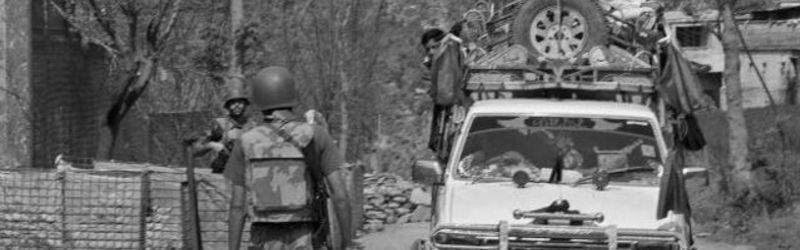
On January 27th in Lahore, an American named Raymond A. Davis stopped his Honda Civic and shot two Pakistani men, then made a failed attempt to flee. Beyond those basic facts, little is agreed upon, and the murders have ignited a diplomatic crisis, which only intensified with the revelation that Davis was a CIA subcontractor.

Molly Lambert is a writer and the host of the new podcast HeidiWorld: The Heidi Fleiss Story.

“I think as a writer… I always had this thing: I don't want to be out front. I don't want the spotlight on me. I'm not an actor. I want to be lurking in the back with the cast accepting the applause, but I don't want to be the center of attention. And so I think kind of like making peace with like, Look, man, it's fine to be the center of attention when you made something you're proud of.”

Reggie Ugwu is an arts reporter for The New York Times.

“I find that even though I talk to celebrities or popular artists, I’m not all that interested in celebrity. I’m pretty uninterested in celebrity. But I’m really interested in creativity.”

Thanks to Mailchimp for sponsoring this week's episode.

Letter from Liberia

A Monrovia travelogue:

Even Liberia's roots are sunk in bad faith. Of the first wave of emigrants, half died of yellow fever. By the end of the 1820s a small colony of 3,000 souls survived. In Liberia they built a facsimile life: plantation-style homes, white-spired churches. Hostile local Malinke tribes resented their arrival and expansion; sporadic armed battle was common. When the ACS went bankrupt in the 1840s, they demanded the 'Country of Liberia' declare its independence.
  1. Part One

  2. Part Two

Chana Joffe-Walt is a producer and reporter at This American Life. Her latest story is "Five Women."

“I felt like there was more to learn from these stories, more than just which men are bad and shouldn’t have the Netflix special that they wanted to have. And I was interested, also, in that there were groups of women, and that somehow, in having a group of women, you would have variation of experience. There could be a unifying person who they all experienced, but they would inevitably experience that person differently. And that would raise the question of: Why? And I feel like there is this response: ‘Why did she stay?’ Or: ‘Why didn’t she say fuck you?’ Or: ‘I wouldn’t have been upset by that. I wouldn’t have been offended by that thing.’ Which I feel like is a natural response, but also has a lack of curiosity. There are actual answers to those questions that are interesting.”

Thanks to MailChimp and Credible.com.

Animals

The night when Terry Thompson let his zoo-worthy collection of big animals, including lions and a bear, into the wilds of Zanesville, Ohio before shooting himself in the head.

Jay Caspian Kang is a contributor at New York Times Magazine. His new book is The Loneliest Americans.

”I have a lot of thoughts and talk to people to make sure my thoughts are right, or change them because I think they're wrong. What more does one want out of an intellectual life? It's good work.”