Showing 25 articles matching iraq podcast.

Roberto Ferdman is a correspondent at VICE News. He and his colleagues at VICE News Tonight won the George Polk Award for Television Reporting for their coverage of the killing of Breonna Taylor and the investigations that followed.

This is part four in a week-long series of conversations with winners of this year's George Polk Awards in Journalism.

On the Urge to Violence in a Time of Trump

An immigrant on what happens when neighbors turn on each other:

"Every Bosnian I know had a friend, or even a family member, who flipped and betrayed the life they had shared until, in the early 1990s, the war started. My best high-school friend turned into a rabid Serbian nationalist and left his longtime girlfriend in Sarajevo so he could take part in its siege. My favorite literature professor became one of the main ideologues of Serbian fascism. Just last week, I talked to a Muslim man from Foča whose mother was repeatedly raped by his Serb friend, and whose brother was killed by their neighbor. Yugoslavia and Bosnia had provided a sense of societal stability for a couple of generations, which is why the betrayal was so shocking to so many of us."

Read more

Aleksandar Hemon on the Longform Podcast.

The Longform Guide to the Olympics

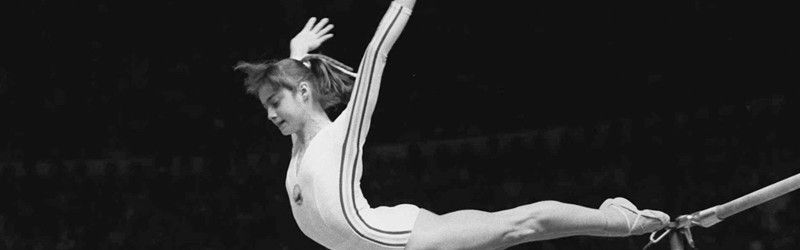
Munich, the Dream Team, and the search for Nadia Comaneci—a collection of articles on the highs and lows of Olympic history.

See the collection

Compiled by Gretchen Gavett and Elon Green.

The Longform Guide to Sleep

The nightmare of insomnia, the secret of slumber, and the search for the next Ambien — our favorite articles about sleep, presented by Casper.

See the collection

Thanks to Casper for sponsoring Longform. Get an obsessively engineered mattress at a shockingly fair price right here.

Tristan Ahtone is the former Indigenous Affairs editor at High Country News and is currently the editor-in-chief at The Texas Observer. His High Country News article “Land-Grab Universities,” co-authored with Robert Lee, won the 2021 George Polk Award for Education Reporting.

This is the first in a week-long series of conversations with winners of this year's George Polk Awards in Journalism.
Michael Grabell and Bernice Yeung are investigative reporters at ProPublica. They won the George Polk Award for Health Reporting for their coverage of the meatpacking industry's response to the pandemic, including their feature "The Battle for Waterloo."

This is final part of a week-long series of conversations with winners of this year's George Polk Awards in Journalism.
Ryan Mac and Craig Silverman are reporters at BuzzFeed News. Together they won this year's George Polk Award for Business Reporting for their coverage of Facebook's handling of disinformation on its platform. 

This is the second in a week-long series of conversations with winners of this year's George Polk Awards in Journalism.
Azmat Khan is an investigative reporter for the New York Times Magazine. She won the George Polk Award for uncovering intelligence failures and civilian deaths associated with U.S. air strikes.

“I think what was really damning for me is that, when I obtained these 1,300 records, in not one of them was there a single instance in which they describe any disciplinary action for anyone involved, or any findings of wrongdoing. … When I was looking at this in totality, suddenly it’s really hard to say you have a system of accountability.”

This is the last in a week-long series of conversations with winners of this year's George Polk Awards in Journalism.
Theo Baker is the investigations editor at The Stanford Daily. The first college student ever to win a George Polk Award, Baker received a special recognition for uncovering allegations that pioneering research co-authored by Stanford President Marc Tessier-Lavigne, a renowned neuroscientist, was supported in part by manipulated imagery.

“It’s useful to intellectualize it because when you actually get going, this is something that keeps me up at night. … It’s the last thing I think about when I go to sleep, and the first thing on my mind when I wake up.”

This is the first in a week-long series of conversations with winners of this year's George Polk Awards in Journalism.
Meribah Knight is a reporter with Nashville Public Radio. She won the Polk Award for Podcasting for “The Kids of Rutherford County,” produced with ProPublica and Serial, which revealed a shocking approach to juvenile discipline in one Tennessee county.

“Where does it leave me? It leaves me with a searing anger that is going to propel me to the next thing. But we’ve made some real improvement. And that’s worth celebrating. That’s worth recognizing and saying, This work matters, people are paying attention.”

This is the third in a week-long series of conversations with winners of this year's George Polk Awards in Journalism.
Lynsey Addario is a photojournalist for The New York Times and National Geographic. She won the George Polk award for her photograph of the bodies of a woman and her two children alongside a friend who lay dying moments after a mortar struck them as they sought to flee Ukraine.

“If I have time to compose a photo—even if it's of a horrific topic—I will always try to make the most beautiful photograph because I want people to look. I want people to ask questions, to be engaged, to pay attention. And often, that does mean the intersection of beauty and horror.”

This is the fourth in a week-long series of conversations with winners of this year's George Polk Awards in Journalism.
Become a Longform Supporter

For over five years, a small team has delivered Longform every day free of charge. And this site, along with our podcast and our app, will always be free. But we're asking for some help from this amazing community.

If you value what we do, please consider becoming a Longform Supporter. Through a monthly or one-time donation of your choice, you can help ensure that Longform remains a free resource for readers and students all over the world. Donate here.

Thank you!

Terrence McCoy is The Washington Post's Rio de Janeiro Bureau Chief. He won the George Polk award for his series "The Amazon, Undone" on the illegal and often violent exploitation of the rainforest.

“When I first got to Brazil, the Amazon was an arena of mystique. But after you spend a fair amount of time in the Amazon, it becomes quite clear what the struggle is—and how human that struggle is.”

This is the last of a week-long series of conversations with winners of this year's George Polk Awards in Journalism.
Tracy Wang and Nick Baker of CoinDesk, along with their colleague Ian Allison, won the George Polk award for reporting that led to the fall of Sam Bankman-Fried and his cryptocurrency exchange FTX.

“Crypto had been kind of a backwater of reporting. It was kind of like nobody took it seriously. People didn’t know if it was a joke and they thought it was all drug dealers and fraudsters. And I was kind of thinking, well, that seems like a great place to be reporting.”

This is the third in a week-long series of conversations with winners of this year's George Polk Awards in Journalism.
Jesse Coburn is an investigative reporter at Streetsblog. He won the Polk Award for Local Reporting for "Ghost Tags," his series on the black market for temporary license plates.

“You can imagine this having never become a problem, because it’s so weird. What a weird scam. I’m going to print and sell tens of thousands of paper license plates. But someone figured it out. And then a lot more people followed. It just exploded.”

This is the second in a week-long series of conversations with winners of this year's George Polk Awards in Journalism.

"The kind of stories I've gotten to do have involved fulfilling my childhood fantasies of having an adventurous life."

We are re-airing our February 2013 interview with our friend Matt Power, who died while on assignment in Uganda, to help raise money for The Matthew Power Literary Reporting Award.

Founded by Matt's friends and family, the annual award will support promising writers early in their careers with a stipend of $12,500 to bring forward an unreported story of importance in some overlooked corner of the world.

Please donate today.

Lori Hinnant is a reporter for the Associated Press. Along with videojournalist Mstyslav Chernov, photographer Evgeniy Maloletka, and video producer Vasilisa Stepanenko, she won the George Polk Award for war reporting for covering the siege of Mariupol.

“It’s really easy when you see raw footage flash by on the television to just see it as war as hell and this is very abstract. These are people with lives that were utterly ruined and they want to tell their stories. I mean, we’re not talking to people who don’t want to talk to us. And when you find out what happened the day their lives were changed, it really changes it.”

This is the second in a week-long series of conversations with winners of this year's George Polk Awards in Journalism.
The Collected Works of Michael Paterniti

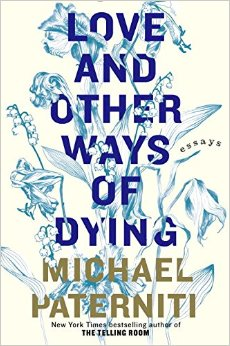
Our sponsor this week is Random House, which has just released a fantastic new collection of stories by Longform regular Michael Paterniti, Love and Other Ways of Dying.

In the remote Ukranian countryside, Paterniti picks apples (and faces mortality) with a real-life giant; in Nanjing, China, he confronts a distraught jumper on a suicide bridge; in Dodge City, Kansas, he takes up residence at a roadside hotel and sees, firsthand, the ways in which the racial divide turns neighbor against neighbor. (You can hear Paterniti talking about many of these pieces on Longform Podcast #93.)

George Saunders has described Paterniti's writing as “expansive and joyful” and Dave Eggers has called him “one of the best living practitioners of the art of literary journalism.” Needless to say, everyone here at Longform is a huge fan.


Read an Excerpt


Buy the Book:</a></em>
AmazonBarnes & NoblePowell'sKindleiBooks

Sarah Stillman is a staff writer for The New Yorker and the director of the Global Migration Program at Columbia University Graduate School of Journalism. She won the George Polk Award for "The Migrant Workers Who Follow Climate Disasters."

“I’m all about the Venn diagram where the individual meaningful stories of things people are up against intersect with the big systemic injustice issues of our day. It feels like climate is clearly an enormous domain where it’s been hard in some ways to tell substantive stories of where actual human beings are navigating and pushing back on some of these huge cultural forces.”

This is the latest in a week-long series of conversations with winners of this year's George Polk Awards in Journalism.
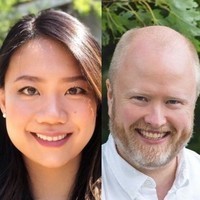
Amel Guettatfi and Julia Steers won this year's George Polk Award for Television Reporting for “Inside Wagner,” their Vice News investigation of Russian mercenaries on the Ukraine front and in the Central African Republic.

“One of the best takeaways I got from seven or eight years at Vice is that it’s not enough for something to be important when you’re figuring out how to make a story. It’s the intersection of important and interesting. And that has taught me that people will watch anything, anywhere, as long as it’s interesting. Nobody owes us their time. The onus is on us to explain things in an interesting, compelling way. I’m hoping that a landscape opens up somewhere else that sees that and understands that can be done anywhere in the world.”

This is the first in a week-long series of conversations with winners of this year’s George Polk Awards in Journalism.

Maria Abi-Habib is the bureau chief for Mexico, Central America and the Caribbean for the New York Times. Along with her colleague Frances Robles, Abi-Habib won the George Polk Award for revealing concealed aspects of the murder of Haitian president Jovenel Moïse.

“We’re not going to stop covering Haiti just because you don’t like us … at the end of the day you owe it to your citizens to talk to the media because if you can’t talk to the media and actually answer some questions, how are you going to run a country? We’re not doing this for ourselves, we’re doing this because we think that Haiti matters and we think Haitians, like all citizens in this world, actually deserve some answers to their questions and to know what the truth is.”

This is the second in a week-long series of conversations with winners of this year's George Polk Awards in Journalism.

Brian Howey is a freelance journalist who won the Polk Award for Justice Reporting after exposing a deceptive police tactic widely used in California. He began the project, which was eventually published by the Los Angeles Times and Reveal, as a graduate student in the UC Berkeley Graduate School of Journalism.

“It’s one thing to hear about this tactic and hear about parents being questioned in this way. It’s another thing entirely to hear the change in a parent’s voice when they realize for the past 20 minutes they’ve been speaking ill of a relative who’s actually been dead the entire time, and to hear that wave of grief and sometimes that feeling of betrayal that cropped up in their voice and how the way that they spoke to the officers afterwards changed.”

This is the fourth in a week-long series of conversations with winners of this year's George Polk Awards in Journalism.