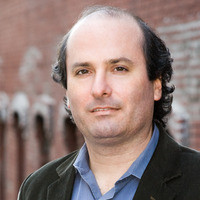
Night
Tony Judt on his own amyotrophic lateral sclerosis and the experience of being “left free to contemplate at leisure and in minimal discomfort the catastrophic progress of one’s own deterioration.”
Showing 25 articles matching fccoins26 Coinsnight.com FC 26 coins 30% OFF code: FC2026. The best place for game coins.28oS.
Tony Judt on his own amyotrophic lateral sclerosis and the experience of being “left free to contemplate at leisure and in minimal discomfort the catastrophic progress of one’s own deterioration.”
Across the country, little-known schools are accepting almost everyone who applies, cashing a lot of checks, and offering so little support that only the most determined students leave with a degree.
A just-barred Pakistani-American attorney attempts to save a young family’s home from foreclosure and glimpses the contradiction-rich bureaucracy that has emerged in response to the housing crisis.
An 1992 interview with Martin Scorsese. On Goodfellas, “I figured to do it as if it was one long trailer, where you just propel the action and you get an exhilaration, a rush of the lifestyle.”
A melancholic Billy Ray Cyrus on the trauma of being the father of a famous 18-year-old girl, his friendship with Kurt Cobain, and his favorite mullet nicknames (Kentucky Waterfall and Missouri Compromise).
Fourteen people connected to resistance of Vladimir Putin have died on British soil. Every case has been closed, the deaths deemed of natural causes. American intelligence believes they were all assassinated by the Kremlin.
A profile of Defense Secretary Jim Mattis, who “may be the only reliable voice of caution left in an administration inching closer to the brink.”
An investigation into a social media-fueled gang war in Detroit.
The Red Zone is part pharmacy, part killing field and part music studio where gang members peddled drugs, fought rivals and shot rap videos on street corners.
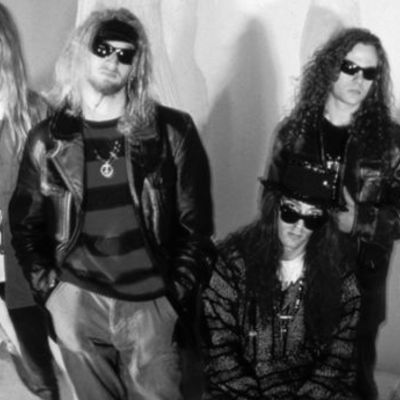
A year-by-year walk through of the decade that birthed a mainstream culture called ‘Alternative’ and the bands that were deified and destroyed by it.
How the Silicon Valley set fell in love with sourdough and decided to disrupt the 6,000-year-old craft of making bread, one crumbshot at a time.
Geneticists have begun using old bones to make sweeping claims about the distant past. But their revisions to the human story are making some scholars of prehistory uneasy.
The retired senator Mike Gravel gave two young fans his Twitter password and permission to campaign in his name. It might be a stunt—or the future of politics.
A conversation between the writers Nadifa Mohamed, who left Hargeisa, and Aleksandar Hemon, who left Bosnia.
“The vegan wars are not really about veganism at all, but about how individual freedom is coming into conflict with a personal and environmental health crisis.”
The author, who works remotely, and her evolving relationship with her physical representation at the office: “an iPad on a stick on a Segway-like base.”
How do you tell the world you are grieving? In my case, it was a year-long Twitter thread about finding the things that made me feel better.
The internet is changing everything we thought we knew about the value of stuff—from stocks, to flying cherub art, to cats with Pop-Tart bodies.
Steven Carrillo’s path to the Boogaloo Bois shows the hate group is far more organized and dangerous than previously known.
On the Long Island Inferno, two fathers, both with complicated pasts took it all too far. Neither man was ever the same.
During the brief moment when the pandemic was receding and we could be together again, all we wanted to do was move our bodies.
Laura Shin is a journalist covering cryptocurrency and hosts the podcast Unchained. Her new book is The Cryptopians: Idealism, Greed, Lies, and the Making of the First Big Cryptocurrency Craze.
“I was extremely well-acquainted with what the failings were with our traditional financial system. I was seeing through my other reporting how everything works now, and really understanding, whoa, this is not a good system. And then getting this education on what bitcoin is, I understood right away: wow, this is going to change the world.”
A profile of Justin Timberlake:
This need to succeed, to become his generation’s multi-talented Sammy Davis Jr., is part of what makes him appealing to filmmakers. “I needed someone who could be a Frank Sinatra figure, someone who could walk into the room and command all the attention,” says David Fincher, of casting Timberlake as Sean Parker, the Facebook investor and rogue, in The Social Network. “I didn’t want someone who would just say, ‘I know how to play groovy.’ You can’t fake that stuff. That’s the problem with making movies about a rock star—actors have spent their lives auditioning and getting rejected, and rock stars haven’t.”
David Grann is a staff writer at The New Yorker.
"You don't always know all the answers. I think that's what kinda makes life interesting. The thing that makes these stories real, while they are in some ways unfathomable, [is that] there's an uneasiness of certitude. Because there are things that are not always known, there are elements of doubt, and that can be very haunting ... In some of the stories, you get as close as you can to all you know—and then there are parts that elude you."
Patricia Evangelista is a trauma journalist whose coverage of the drug war in the Philippines has appeared in Rappler, Esquire, and elsewhere. Her recent book is Some People Need Killing: A Memoir of Murder in My Country.
“It is hard to describe the beat I do without saying very often it involves people who have died. And it seemed like an unfair way to frame it. It didn't quite seem right. … Sometimes there's no dead body, or sometimes there's 6,000, but the function is the same: that the people you speak to have gone through enormous painful trauma, and then there's a way to cover it that minimizes that trauma. So … I don't cover the dead. I cover trauma.”
Brian Reed and Hamza Syed are co-hosts of the new podcast The Trojan Horse Affair.
“I had lost all faith in the reporting that already happened on the subject matter. And that was my mentality with each source and each interviewer. I wanted the debate ended in the room because I didn't want commentary beyond it. I didn't want any kind of interpretation beyond it. I wanted the situation to be resolved there and then…. And without certain answers, I thought we weren't going to be able to speak about this matter in the way that I wanted to speak about it.” —Syed
“I both desperately wanted to know the answer of who wrote the letter, but kind of understood that we probably weren't going to get it beyond a shadow of a doubt. And I thought that I had transmitted that to Hamza and that he understood that. But as time went on, I realized that he had not accepted that as the likely outcome. And this is what was actually so energizing to work with you, Hamza. You never let your hope and desire and hunger to get that answer ever get dimmed. Like, ever.” —Reed