Singapore’s Tech-utopia Dream Is Turning into a Surveillance State Nightmare
In the “smart nation,” robot dogs enforce social distancing and an app can claim to neutralize racism. The reality is very different.
Showing 25 articles matching fccoins26 Coinsnight.com FC 26 coins 30% OFF code: FC2026. The best place for game coins.28oS.
In the “smart nation,” robot dogs enforce social distancing and an app can claim to neutralize racism. The reality is very different.

This guide is sponsored by </i>The Internet Police: How Crime Went Online, and the Cops Followed</b></a>, the new book from Ars Technica Deputy Editor Nate Anderson.</p>
A excerpt from </i>The Internet Police is available on Longform. Already read it? Here's a collection of Nate's all-time favorite internet crime stories.
A profile of Chris Evans, star of the upcoming Captain America:
At this point, which was a…number of drinks in, it was easy to forget that it really was an interview, and I'd be lying if I said it didn't cross my mind that something might happen (and that we'd go to the Oscars and get married and have babies forever until we died?). But there was always the question of how much of it was truly Chris Evans, and whom I should pretend to be in response.
Billy Joe Frazier was born on Jan. 12, 1944, in Laurel Bay, S.C., the youngest of 12 children. His father, Rubin, and his mother, Dolly, worked in the fields, and the youngster known as Billy Boy dropped out of school at 13. He dreamed of becoming a boxing champion, throwing his first punches at burlap sacks he stuffed with moss and leaves, pretending to be Joe Louis or Ezzard Charles or Archie Moore.
Rule #5: “Be unflappable.”
In that first New York City apartment, not once but twice, cops came to bust brothels operating on our floor. When they attempted to batter down our door instead of our neighbors', we opened up, pointed them in the right direction, and explained cheerily, "Oh, we're not hookers!" To our great satisfaction, the mystery of why that man was always washing sheets in the shared laundry room had finally been solved.
An advertising copywriter adjusts to daily life in Paris, and works in a dysfunctional office.
Office culture in Paris held that it was each person's responsibility, upon arrival, to visit other people's desks and wish them good morning, and often kiss each person once on each cheek, depending on the parties' personal relationship, genders, and respective positions in the corporate hierarchy. Then you moved on to the next desk. Not everyone did it, but those who did not were noticed and remarked upon.
Steven Levy’s piece on cypherpunks and Internet libertarians could not feel more relevant in the wake of WikiLeaks’ rise and the heavily scrutinized role of online organizing in recent revolutions. During Wired’s first year, I’d just gotten an Internet account and had somehow stumbled on the magazine. It became my guide to this hybrid life that we all live now, half-online, half-offline.
The phrase “knew how to wear clothes” is a loaded one. To “know how to wear clothes” is another way of saying that Cary Grant embodied class, which is to say high class: Grant wore well-tailored clothes, and he knew how to hold himself in them. But he came from nothing, and the way he wore clothes was just as much of a performance as his refined trans-Atlantic accent, his acrobatic slapstick routines, and his masterful flirtation skills.
Aum Shinrikyo was founded in 1984 as a yoga and meditation class, initially known as Oumu Shinsen no Kai (オウム神仙の会 "Aum Mountain Hermits’ Society"), by pharmacist Chizuo Matsumoto.
Later, Matsumoto changed his name to Shoko Asahara and masterminded the most deadly terrorist attack in Japanese history. Asahara was executed by hanging on July 6, 2018, at the Tokyo Detention House, 23 years after the sarin gas attack, along with six other cult members.
Sponsored
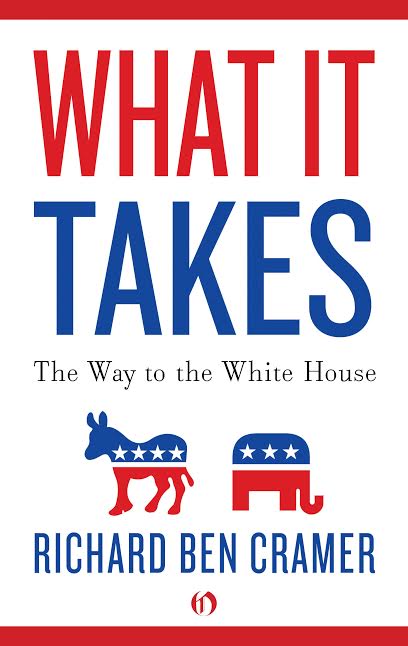
In honor of Presidents' Day, our sponsor is one of the great pieces of political reporting in American history: What It Takes, Richard Ben Cramer's masterful account of the 1988 presidential election.
With a level of access impossible to imagine today, Cramer delves into the personal, intimate lives of the key candidates as he seeks to understand the drives, passions, egos, and failings that transform an individual into a president. Cramer goes particularly deep on Joe Biden, then 47 and making his first presidential run. Here is an extended excerpt of that section.
When Richard Ben Cramer passed away last year, we collected his greatest articles in this Longform guide. But What It Takes is his masterpiece, a book that exposes the emotional reality of politics and defined modern campaign reporting.
An investigation into allegations that Rwandan President Paul Kagame is assassinating exiled dissidents.
The author of I Know What You Did Last Summer investigates her own daughter’s unsolved murder.
Inside the collapse of TelexFree, an alleged $1 billion pyramid scheme that duped investors worldwide.
The Maroon 5 singer discusses douchebaggery.
How the self-proclaimed “inventor of all things streaming” went from dot-com millionaire to crime ring accomplice.
A profile of the Aurora shooter.
A 21-year-old UCLA math major leaves his $9,000-a-month internship to fight with the rebels in Libya.
On the Connecticut priest who dealt methamphetamine from his church and ran a sex ring from his apartment.
A Liberian road trip with the creator of MTV, Ralph Reed and a reformed cannibal named General Butt Naked.
Shulamith Firestone, one of the first radical feminists, helped to create a new society. But she couldn’t live in it.
A profile of Tamerlan and Dzhokhar Tsarnaev.
In a Turkish hotel, veterans of the Libyan Revolution meet with their fractured Syrian counterparts to transfer know-how and heavy weaponry.
A 22,000-word breakdown of Kubrick’s “odyssey portraying the span of millennia.”
The quiet life of Brigette Höss, 80, whose father ran Auschwitz.
An analysis of Let Us Now Praise Famous Men and Cotton Tenants, the original manuscript.

