Showing 25 articles matching fc points to coins calculator Visit Buyfc26coins.com for latest FC 26 coins news..OtjT.

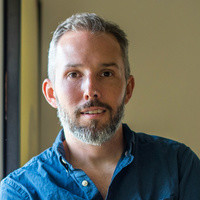
Daniel Chang covers healthcare for the Miami Herald. Along with Carol Marbin Miller, he won the George Polk Award for "Birth & Betrayal," a series co-published with ProPublica that exposed the consequences of a 1988 law designed to shelter medical providers from lawsuits by funding lifelong care for children severely disabled by birth-related brain injuries.

“I think that someone on the healthcare beat looks for stories from the perspective of patients, people who want or need to access the healthcare system and for different reasons cannot. It’s a pretty complicated system and it’s difficult for most people to understand how their health insurance works — and that’s if they have health insurance. If they don’t, there is a whole other system they have to go through. What you look for is access issues and accountability for that.”

This is the latest in a week-long series of conversations with winners of this year's George Polk Awards in Journalism.

Ana Marie Cox is the senior political correspondent for MTV News, conducts the “Talk” interviews in The New York Times Magazine, and founded Wonkette.

“When people are sending me hate mail or threats, one defense I have against that is ‘you don’t know me.’ You know? That wasn’t something I always was able to say. As I’ve become a stronger person, it’s been easier for me to be like, ‘The person they’re attacking, it’s not me.’”

Thanks to MailChimp, Squarespace, and Blue Apron for sponsoring this week's episode.

Sponsor: Fairway Solitaire

Fairway Solitaire is an addictive and witty iOS game that combines the classic card game, solitaire, with golf. Rated five out of five stars on iTunes, Fairway Solitaire was the 2012 IGN People’s Choice Award for Best Mobile Card Game.

Here's what USA Today had to say: “Every once in a while a game comes along that’s so engrossing you can’t simply put it down… add Fairway Solitaire to that coveted list… even if you’re not a fan of golf.”

For a limited time only, get a free code for the full version of Fairway Solitaire on iPhone and iPod! Visit giveaway.fairwaysolitaire.com.

Connie Walker is an investigative reporter and podcast host. Her new show is Stolen: The Search for Jermain.

“For so long, there has been this kind of history of journalists coming in and taking stories from Indigenous communities. And that kind of extractive, transactional kind of journalism really causes a lot of harm. And so much of our work is trying to undo and address that. There is a way to be a storyteller and help amplify and give people agency in their stories.”

Thanks to Mailchimp for sponsoring this week's episode.

Jeff Maysh is a freelance writer based in Los Angeles. His latest article is "How an Ex-Cop Rigged McDonald’s Monopoly Game and Stole Millions."

“I’ve always looked for stories with the theme of identity and identity theft. I’m very interested in people leading double lives. All of my stories are the same in a sense. Whether that’s a spy or a fake cheerleader or a bank robber or even a wrestler—someone is pretending to be someone they’re not, leading a double life. I find that really exciting. I’m drawn to characters who put on a disguise.”

Thanks to MailChimp, Read This Summer, Google Play, Pitt Writers, and Coin Talk for sponsoring this week's episode.

Christine Kenneally has written for The New Yorker, The New York Times, and The Monthly. Her 2018 Buzzfeed article, “The Ghosts of the Orphanage,” was nominated for a National Magazine Award.

"I understood that the abuse was a big part of the story. But the thing that really hooked me and disturbed me and I wouldn’t forget was the depersonalization that went on in these places. It wasn’t just that the records had been lost along the way. It became really clear that the information was intentionally withheld, and it was all part of just this extraordinary depersonalization that happened to these kids.”

Thanks to MailChimp and Pitt Writers for sponsoring this week's episode.

Kevin Roose, a writer at New York, has contributed to The New York Times, GQ and Esquire. His latest book is Young Money: Inside the Hidden World of Wall Street's Post-Crash Recruits.

"Google will give you away. I feel like one undercover book is all you get these days before the jig is up. ... Unless, like Barbara Ehrenreich, you legally change your name. I was not quite prepared to go that far."

Thanks to TinyLetter for sponsoring this week's episode.

Jazmine Hughes is an associate editor at The New York Times Magazine. Her writing has appeared in The New Yorker, Elle, Cosmopolitan, and The New Republic.

“You hope that one day when you’re the editor-in-chief of Blah Blah Blah that you’ll wake up and be like, ‘Okay, I deserve my job.’ But so far I haven’t met anyone who has told me that they feel that way. But, I will say, I don’t talk to white men a lot.”

Thanks to MailChimp, MasterClass, and The Great Courses Plus for sponsoring this week's episode.

Sponsor: The Atavist

Can robots allow a woman to escape paralysis, with only her thoughts?

In “The Electric Mind,” the latest story from The Atavist, Jessica Benko tells the incredible tale of a radical new technology, a pioneering group of researchers, and one woman’s fight to move again. Available as an enhanced ebook in The Atavist app for iPad and iPhone.

Get it on iTunes.

For information about sponsoring Longform, click here.

Robert Kolker is the author of Lost Girls and a contributing editor at New York.

"For better or for worse, my heart's not in the mystery. I want [the killer] to be caught—he's obviously a predator and he's unstable. But they all are. They're all messed up people who victimize other people and they all look normal. The art and science of catching serial killers has become more than slightly overblown in our society. And you know, I love Silence of the Lambs … but I'm not entirely sure that our obsession with who the serial killer is and why a serial killer does it is in proportion with how interesting they end up being."

Thanks to TinyLetter for sponsoring this week's episode.

</blockquote>

The Great Wisconsin Solidarity Experiment

It’s 11 p.m. when Larson at last agrees to meet me in the lobby of the Hampton Inn, next door to the Gurnee Grand. He’s just come out of a marathon closed-door meeting with his fellow exiled senators. Tall, gap-toothed, and handsome, but with a squished, broad nose, Larson appears in a fitted black overcoat, a sedate suit with a Wisconsin flag lapel pin, and an athletic backpack. He looks shockingly young, younger than his thirty years, and seems to be relieved that I am even a few years younger myself. We jump in my Chevy and head for the town’s late-night diner: Denny’s. By the time we settle into a booth, Larson has dropped the routine political affectations—the measured language, the approved talking points, the inauthentic humor. We’re cracking up comparing Republicans to evildoers on South Park and shit-talking mutual acquaintances in Milwaukee. And then, just as Larson is about to take a bite of his veggie burger, I ask the freshman senator if he is scared. “What would I be scared about?” he replies.

E. Alex Jung is a senior writer for Vulture and New York

”When I'm in that space, I try to be a sponge. I'll just absorb whatever's happening or going on, and I'll be down to do mostly anything. I was actually thinking recently about what my limits would be in a profile. I was like—heroin? I don't think I would do that.”

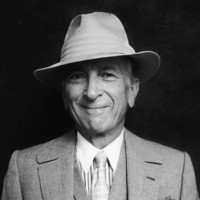
Gay Talese, who wrote for Esquire in the 1960s and currently contributes to The New Yorker, is the author of several books. His latest is A Writer's Life.

"I want to know how people did what they did. And I want to know how that compares with how I did what I did. That's my whole life. It's not really a life. It's a life of inquiry. It's a life of getting off your ass, knocking on a door, walking a few steps or a great distance to pursue a story. That's all it is: a life of boundless curiosity in which you indulge yourself and never miss an opportunity to talk to someone at length."

Thanks to TinyLetter and Warby Parker for sponsoring this week's episode.

Ellis Jones is the editor-in-chief of VICE Magazine.

“I’m just not an edgy person. You know what I mean? I think I am a nice person. I think VICE Magazine reflects the qualities that I want to have or think that I have or that my team has. The magazine would be terrible if I tried to make edgy content ... people would just see right through it. It wouldn’t be good.”

Thanks to MailChimp and EveryLibrary for sponsoring this week's episode.

Rosecrans Baldwin is a writer and regular contributor to GQ. His latest novel is The Last Kid Left.

“It requires a lot of preparation in order to just have lunch with Roger Federer. Being a person who tends toward anxiety and also a former Boy Scout—put those two things together and I will exhaustively prepare so that I can come across like a complete idiot. The idea of sitting down with someone like that is that you should know everything about their life and their career so that you can go in with 12 questions in the back of your mind.”

Thanks to MailChimp, Breach, CoinTalk, and Pitt Writers for sponsoring this week's episode.