Showing 25 articles matching fc points to coins calculator Visit Buyfc26coins.com for latest FC 26 coins news..OtjT.

Heidi Blake is a writer for The New Yorker and the author of two books, From Russia with Blood: The Kremlin's Ruthless Assassination Program and Vladimir Putin's Secret War on the West and The Ugly Game: The Corruption of FIFA and the Qatari Plot to Buy the World Cup, with Jonathan Calvert. Her latest article is “The Fugitive Princess of Dubai.”

“I definitely feel as an investigative reporter that I feel very driven by my own capacity for shock and outrage and genuinely feeling like this is unbelievable. And that kind of makes me want to keep digging. And once I stop feeling that on any given topic, I lose interest. And so I’ve always been a generalist, and I just kind of rove from one topic to the next. I’m always finding myself in new territory where I know absolutely nothing about the thing I’m starting to dig into and have to try and play catch up and get my head around something new.”


Jason Leopold is a senior investigative reporter for Buzzfeed and the author of News Junkie.

“I made the worst mistake that cost me my credibility and I could have done two things. I could have walked away, and said I’m done with this, no one wants me anymore. Or I could have—which I did—say, I’m going to learn how to do this differently, and be better. And that’s ultimately is what paved the way to this FOIA work. Because no one trusted me anymore.”

Thanks to MailChimp, Credible, Mubi, and Skillshare, for sponsoring this week's episode.

Raquel Willis, the former executive editor of Out, is an activist, journalist, and writer.

Guest host Patrice Peck is a freelance journalist and writes the Coronavirus News for Black Folks newsletter.

“To my peers, I would just say that we have to rethink our idea of leadership. Rethink our idea of storytelling. As the media, we shouldn’t be seeing ourselves as the owners and the gatekeepers of people’s stories. We actually need to be democratizing this experience—sharing the tools of storytelling with other folks. Folks are hungry to tell their own stories and may not always have the tools.”

Thanks to Mailchimp for sponsoring this week's episode.

Matthew Power is a freelance writer and contributing editor at Harper's.

"The kind of stories I've gotten to do have involved fulfilling my childhood fantasies of having an adventurous life. Even though I don't make a ton of money doing it, I've never felt like I was missing out on something. I haven't worked in an office since a two-week stint as a fact checker at House and Garden magazine in 2001, so that's 12 years, and I haven't starved to death yet."

Thanks to TinyLetter for sponsoring this week's episode!

</blockquote>

Barton Gellman is a staff writer for The Atlantic and was previously a Pulitzer-winning reporter at The Washington Post. His latest book is Dark Mirror: Edward Snowden and the American Surveillance State and his latest essay is "The Election That Could Break America."

“I have found that I have a talent for accidentally pissing people off. ... I’m interested most in accountability and the use and abuse of power. So naturally it’s going to annoy people sometimes. And sometimes they take it like grown-ups and sometimes less so.”

Thanks to Mailchimp for sponsoring this week's episode.

Clint Smith is a poet and a staff writer for The Atlantic. His most recent book is How the Word Is Passed: A Reckoning with the History of Slavery Across America and his latest feature is “Monuments to the Unthinkable.”

“I've been to a lot of places that carry a history of death and slaughter and murder. I've been on plantations. I've been in execution chambers. I've sat on electric chairs. I've been on death row. But I have never experienced anything like what I experienced walking through the gas chamber in Dachau. I mean, there's reading books about the Holocaust, and then there's that. And that is something that I hope to continue doing for the rest of my life: putting my body where these things happen. Because it completely transforms your understanding of what it was like.”

Vanessa Grigoriadis writes for Vanity Fair, Rolling Stone, and The New York Times Magazine. Her new book is Blurred Lines: Rethinking Sex, Power, and Consent on Campus.

“I’m a controversial writer. I’ve never shied away from controversy. I’ve only really courted it because I realized a lot earlier than a lot of other people who are involved in this whole depressing business that clicks are the way to go, right? Or eyeballs, as we used to call them, or readership. I come out of a Tom Wolfe-like, Hunter S. Thompson kind of tradition. You don’t mince any words, you just go for the jugular and you say as many things that can stir people up as possible.”

Thanks to MailChimp, Squarespace, and Casper for sponsoring this week's episode.

Jeffrey Gettleman is the East Africa Bureau Chief for the New York Times and the author of Love, Africa: A Memoir of Romance, War, and Survival.

“I’m not an adventure-seeking adrenaline junky. I like to explore new worlds, but I’m not one of these chain-smoking, hard-drinking, partying types that just wants thrills all the time. And unfortunately that’s an aspect of the job. And as I get older and I’ve been through more and more, the question gets louder. Which is: Why do you keep doing this? Because you feel like you only have so many points, and eventually the points are going to run out.”

Thanks to MailChimp, V by Viacom, 2U, and Kindle for sponsoring this week's episode.

How Google Dominates Us

On how search and advertising became indistinguishable, the finer points of not being evil, and why privacy is by nature immeasurable. How Google made us the product:

“Google conquered the advertising world with nothing more than applied mathematics,” wrote Chris Anderson, the editor of Wired. “It didn’t pretend to know anything about the culture and conventions of advertising—it just assumed that better data, with better analytical tools, would win the day. And Google was right.”

What's Your Favorite Soccer Article Ever?

The latest edition of our favorite video game, EA SPORTS FIFA 15, is out today! To celebrate, Longform is teaming up with EA SPORTS to create a guide to the best soccer writing of all-time. And we need your help!

All you need to do is nominate your favorite soccer article and you'll be entered to win a free Xbox One, plus a copy of EA SPORTS FIFA 15. Any article is allowed, so long as it is available online. New, classic, doesn't matter — we're just looking for the best of the best.

Submit your article and enter for a chance to win!

Ezra Klein the editor-in-chief of Vox.

“I think that if any of these big players collapse, when their obits are written, it’ll be because they did too much. I’m not saying I think any of them in particular are doing too much. But I do think, when I look around and I think, ‘What is the danger here? What is the danger for Vox?’ I think it is losing too much focus because you’re trying to do too many things.”

Thanks to MailChimp, Casper, and Squarespace for sponsoring this week's episode.

Nicholas Quah founded and writes Hot Pod, a newsletter about the podcasting industry, and reviews podcasts for Vulture.

“I think to some extent I’m in love with the concept of momentum. Sheer velocity. It’s painful. It’s punishing. Physically, I’m worse off for it. But I feel like if I stop moving, something will fall. Something will break. And I’m over. It’s a horrible feeling.”

Thanks to Mailchimp, Pitt Writers, Audm, and Bayer for sponsoring this week's episode.

Sheelah Kolhatkar is a staff writer at The New Yorker and the author of Black Edge: Inside Information, Dirty Money, and the Quest to Bring Down the Most Wanted Man on Wall Street.

“Suddenly the financial crisis happened and all this stuff that had been hidden from view came out into the open. It was like, ‘Oh, this was actually all kind of a big façade.’ And there was all this fraud and stealing and manipulation and corruption, and all these other things going on underneath the whole shiny rock star surface. And that really also demonstrated to people how connected business stories, or anything to do with money, are to everything else going on. I mean, really almost everything that happens in our world, if you trace it back to its source, it’s money at the root of it.”

Thanks to MailChimp, Blue Apron, and Stamps.com for sponsoring this week's episode.

Ben Smith is the media columnist for The New York Times. He was the founding editor-in-chief of BuzzFeed News.

“I do think there's some kind of personality flaw deep in there of wanting to like, you know, find stuff out and tell people.... I'm not sure that's a totally sane or healthy personality trait, but it is definitely, for me, a personality trait…. I think that in political reporting, certainly, there's a kind of reporter who thinks that their job is basically to pull the masks off of these monsters. And I generally tend to think all these people—with some exceptions—are weird and complicated and often doing really awful things. But they aren't necessarily irredeemable or impossible to understand. They're interesting.”

Buzz Bissinger, a Pulitzer Prize winner, has written for Vanity Fair, The New York Times Magazine, GQ and more. He is the author of several books, including Friday Night Lights.

"It’s quiet. And I really felt I needed that quiet. People say, 'Well anger was your edge, and agitation was your edge, and that’s going to hurt your writing.' I don’t know, maybe. It may be that in order to live a happier life you become a shittier writer. I don't know. But I just couldn't live in that fashion anymore, I just couldn't. It would've destroyed my marriage. It was destroying me."

Thanks to this week's sponsors. Apply for the TinyLetter Writers Residency by September 26. And nominate your favorite soccer article for a chance to win a free Xbox One and EA SPORTS FIFA 15.

Josh Dean has written for GQ, Fast Company, New York, and more. His latest piece, "The Life and Times of the Stopwatch Gang," was just published by The Atavist.

“I sort of reject the whole idea of something being beneath me. There are obviously some stories I wouldn’t do or that I have no interest in, but this job is fun and should be fun. And I wouldn’t turn something down that seems like a fun thing for me to do just because maybe the story is not something that 10,000 people are going to tweet about. I don’t give a shit.”

Thanks to TinyLetter, Squarespace, Lynda and HP Matter for sponsoring this week's episode. If you would like to support the show, please leave a review on iTunes.

Sponsor: MATTER

Our sponsor this week is MATTER, the new home for great longform writing about science, technology, and the ideas that are shaping our future. Each month MATTER publishes a major new piece of journalism, and for just 99c a month, subscribers get to read it wherever they want — on the web, for their Kindle or iPad, or even as an audiobook — as well as a slew of other benefits.

You can get a free taster with Do No Harm, a harrowing investigation into a condition that makes sufferers want to amputate their own limbs.

Or sign up now to read the latest release, The Ghost in the Cell: an extraordinary account of families riven by violence and the scientists who are trying to pinpoint the cause.

Leon Neyfakh is a writer and the host of Slow Burn.

“We didn’t want to be coy about why we were doing the show. We wanted to be up front. We’re interested in this era because it seems like the last time in our nation’s history where things were this wild and the news was this rapid fire and the outcome was this uncertain. That was the main parallel we were thinking about when we started. It was only when we started learning the story and identified the turning points we kept running into these obvious parallels. We mostly didn’t lean into them. We didn’t chase them. There wasn’t a quota of parallels per episode.”

Thanks to MailChimp, MUBI, and Thermacell for sponsoring this week's episode. Also: Longform Podcast t-shirts are now available for a limited time only!

Adam Davidson is a staff writer at The New Yorker.

“I am as shocked this moment that Trump was elected as I was the moment he was elected. That fundamental state of shock. It’s like there’s a pile of putrid, rotting human feces on a table and like six of the people around the table are like, ‘That is disgusting.’ And four are like ‘Oh it’s so delicious. Oh, I love it. It’s delicious.’ And I keep saying, ‘Well, why do you like it?’ ... Trump is not a very interesting person in my mind. He’s a very simple, one of the most simple public figures ever. And his business is complex that in that it’s lots of people doing lots of things, but the fundamental nature of it is not that mysterious. So, it is a challenge to keep me engaged, but I’m engaged. And then as a citizen, I’ve never been more engaged.”

Thanks to MailChimp for sponsoring this week's episode.

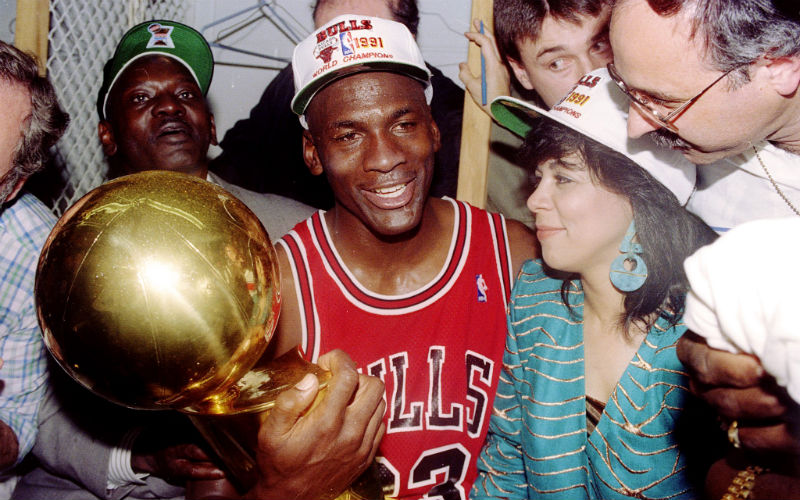
Michael Jordan and the World He Made

The NBA Finals tipoff tonight, with LeBron James gunning for his third straight title. Unquestionably the best player in the world today, James would become one of the best of all-time with another championship.

But he'd still only be halfway to Michael Jordan.

Our latest pick from Open Road Media's archive is the greatest book ever written about the NBA's greatest player: David Halberstam's Playing for Keeps. It tells the story of Jordan's rise, his talent, his unrivaled competitiveness and how the NBA capitalized on his massive appeal.

The book is trademark Halberstam, thorough and fascinating. One of our favorite parts: the chapter on Jordan's first championship, which is available free on Longform.

Download Playing for Keeps between now and June 9 for the special price of $4.99 at Amazon, Apple or Barnes & Noble.