Showing 25 articles matching fc points to coins calculator Visit Buyfc26coins.com for latest FC 26 coins news..OtjT.

Mark Bowden is a journalist and the author of 13 books, including Black Hawk Down and his latest, Hue 1968: A Turning Point of the American War in Vietnam.

“My goal is never to condemn someone that I’m writing about. It’s always to understand them. And that, to me, is far more interesting than passing judgment on them. I want you to read about Che Thi Mung, an 18-year-old village girl, who was selling hats on corners in Hue in the daytime and going home and sharpening spikes to go into booby traps to try and kill American soldiers and ARVN soldiers in the evening. I want to understand why she would do that, why she would be so motivated to do that. And I think I did.”

Thanks to MailChimp, LeVar Burton Reads, Babbel, and HelloFresh for sponsoring this week's episode.


Sponsor: Digg

Our sponsor this week is the new Digg, which has been getting a lot of love lately. Why?

Digg delivers the most interesting and talked about stories on the Internet right now. There's a lot of great content out there, and Digg helps you discover, read, and share the very best of it. It’s simple and it's everywhere: visit Digg on the web, find it on your iPhone or iPad, or get the best of Digg delivered to your inbox with The Daily Digg.

Kevin Kelly is one of the founding editors of Wired, where his current title is Senior Maverick. His new book is Excellent Advice for Living: Wisdom I'd Known Earlier.

“I never wrote a book because I wanted to do a good deed. I just wanted to tell a good story.”

Jeanne Marie Laskas writes for GQ and the New York Times Magazine. Her latest book is To Obama: With Love, Joy, Anger, and Hope.

“I hate saying this out loud, but it’s true: I’m really shy. Fundamentally, I'm 100% scared most of the time. I’m scared and wondering how I can not be noticed because I don’t know what to say and I’m shy. If you say I’m a good listener, that's why … I become more invisible so I’m more comfortable.”

Thanks to MailChimp, Techmeme Ride Home Podcast, and Pitt Writers for sponsoring this week's episode.

Hrishikesh Hirway is the host of Song Exploder.

“I love the idea that somebody would listen to an episode [of Song Exploder] and then the feeling that they would have afterwards is, ‘Now I want to make something.’ That’s the best possible reaction. Whether it’s music or not, just that idea: ‘I want to make something.’ Because that is the thing that I love most, getting that feeling.”

Thanks to MailChimp and MeUndies for sponsoring this week's episode.

Kiera Feldman is an investigative reporter. Her latest article is "Trashed: Inside the Deadly World of Private Garbage Collection."

"I used to have a lot of anxiety that I don’t seem like an investigative reporter. Utlimately, my reporting personality is just me. It’s just, I want to be real with people. And the number one rule of reporting is to be a human being to other people. Be decent. Be kind."

Thanks to MailChimp, RXBAR, and Tripping.com for sponsoring this week's episode.

Megha Rajagopalan is a senior correspondent for Buzzfeed News. She won a Pulitzer for her coverage of the Xinjiang detention camps.

“It’s not so much that I talk to [the Chinese government] to get information. It’s more that I talk to them to see how they think about things and what’s important to them and what’s their view of the world. … There are so many journalists that have been thrown out of China, so there’s very few people that are able to actually have those conversations. And in the U.S., there are these seismic decisions being made about China policy, and if you don’t talk to the people that run the country, it’s a problem.”

Thanks to Mailchimp for sponsoring this week's episode.
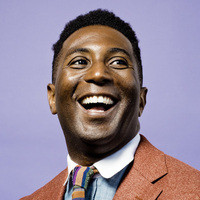
Wesley Morris is a critic at large for The New York Times, a staff writer for The New York Times Magazine, and the co-host of Still Processing. His latest article is "Last Taboo: Why Pop Culture Just Can’t Deal With Black Male Sexuality."

“You learn a lot of things about your sexuality at an early age. You know, I learned that your penis is a problem for white people, that you can’t be too openly sexual in general because that could get you in trouble because someone could misconstrue what you’re doing, and, in my case, I also knew I was gay. So I had to deal with, ‘Ok so my dick is a problem in general, and I’m not even interested in putting my penis where it’s supposed to go. This is going to be bad.’”

Thanks to Audible, Casper, Squarespace, and MailChimp for sponsoring this week's episode.

David Epstein has reported for ProPublica, Sports Illustrated, and This American Life. His new book is Range: Why Generalists Triumph in a Specialized World.

“You can’t just introspect or take a personality quiz and know what you’re good at or interested in. You actually have to try stuff and then reflect on it. That’s how you learn about yourself—otherwise, your insight into yourself is constrained by your roster of experiences.”

Thanks to MailChimp, Time Sensitive, Read This Summer, The TED Interview, and Pitt Writers for sponsoring this week's episode.

Amy Chozick is an author, journalist, executive producer, and showrunner. Her latest feature for The New York Times is ”Liz Holmes Wants You to Forget About Elizabeth.”

“The subject thought it was a hit job. Twitter thought it was a puff piece. I don’t know, guys. … I want to explain to people what it feels like to be around someone who you know you shouldn’t believe, but you can’t help believing them because this is what their personality is like when you’re with them.”

Leslie Jamison is the author of The Empathy Exams, The Recovering, and the novel The Gin Closet. Her new essay collection is Make It Scream, Make It Burn.

“My writing is always basically asking: what does it feel like to be alive, and how do we ever try to understand what it feels like for anybody else to be alive? In that sense, on the intellectual level, I’m always going to keep chasing the same unanswerable things.”

Thanks to Mailchimp, Pitt Writers, Mythology for sponsoring this week's episode.

David Wolman is the author of six books and a magazine features writer who has written for Wired, Outside, and The New York Times. His latest article is ”Vanished in the Pacific.”

“I feel like conversations about characters, character development, strong characters gets a little nauseating in my field sometimes because it’s like, of course — you need that like you need periods at the ends of sentences. Do we really have to keep saying it? But in this conversation it’s worth saying, because there are great ideas out there where the sources or the characters just really weren't there and then you’re tucking your tail in between your legs to look for the next one.”

Adrian Chen is a freelance journalist who has written for The New Yorker, The New York Times Magazine, and Wired. His latest article is "Unfollow," about a former member of the Westboro Baptist Church.

“Twitter and social media get such a bad rep for being full of hate and trolls. And, you know, a lot of the stories I’ve written have probably bolstered that stereotype. I think a lot of people have a lot of anxiety and ambivalence about social media even though they love it—they’re on it all the time—and they’re kind of thinking of it as a vice, as something they should be ashamed of, as bad. But this is a very clear win. It's not some abstract thing you could never measure. No, it’s like, [social media] really did cause her to leave the church.”

Thanks to MailChimp, Casper, Squarespace, Mack Weldon, and Howl.fm for sponsoring this week's episode.

Joe Weisenthal is the executive editor of news for Bloomberg Digital and the co-host of What’d You Miss? and Odd Lots.

"If I don’t say yes to this, then I can never say yes to anything again. Because when else am I going to get a chance in life to co-host a tv show? Even if it’s terrible, and I’m terrible at it, and it’s cancelled after three months, and everyone thinks it’s awful, for the rest of my life, I’ll be able to say I co-hosted a cable TV show. And so I was like, you know what—I have to say yes to this."

Thanks to MailChimp, Big Questions, and Credible.com for sponsoring this week's episode.

Azmat Khan is an investigative reporter and a contributing writer to The New York Times Magazine.

"For me, what matters most is systematic investigation, and I think that’s different than an investigative story that might explore one case. It’s about stepping back and understanding the big picture and getting to the heart of something. It doesn’t have to be a number’s game, but being able to say: Look, I looked at a wide enough sample of whatever this issue is, and here is what this tells us. That is what I crave and love the most."

Thanks to MailChimp and Barkbox for sponsoring this week's episode.

Naomi Zeichner is editor-in-chief of The Fader.

“Right now in rap there’s kind of a huge tired idea that kids are trying to kill their idols, and kids have no respect for history, and kids are making bastardized crazy music, and how dare they? I just don’t even know why we still care about this false dichotomy. Kids are coming from where they come from, they’re going where they’re going. And it’s like, do you want to try to learn about where they’re coming from and where they’re going, or do you not?”

Thanks to MailChimp, Club W, and Squarespace for sponsoring this week's episode.

Mike Sager, writer-at-large for Esquire and founder of The Sager Group.

"I was instilled with this thing by my parents who loved me — they fucked me up plenty but they loved the shit out of me — where I can go with people who are different and I don't feel bad about myself. I've had 13-year-old pit-bull fighting kids shame me horribly...throw pebbles at my head, and it doesn't bother me. Because when I'm a reporter, I'm not me. I'm just there to get the job done and learn stuff. I don't take it personally. Plus, I know I'm going to get the last word."

Thanks to TinyLetter for sponsoring this week's episode!

Monika Bauerlein and Clara Jeffery are the co-editors of Mother Jones.

"We probably pay more attention to our fact-checking and our research than almost everybody in our industry. By the time we publish stuff, we make sure it's unimpeachable because people would like to impeach it."

Thanks to TinyLetter and HostGator for sponsoring this week's episode.

In NSA Net, Ordinary Web Users Eclipse Legal Targets

In the latest revelation from Edward Snowden, the U.S. government is shown to collect and retain massive amounts of data on nearly 900,000 people with the most minimal of connections to official NSA targets. The collected information tells our “stories of love and heartbreak, illicit sexual liaisons, mental-health crises, political and religious conversions, financial anxieties and disappointed hopes.”

Craig Mod is a writer and photographer. His podcast is On Margins.

“You pick up an iPad, you pick up an iPhone—what are you picking up? You’re picking up a chemical-driven casino that just plays on your most base desires for vanity and ego and our obsession with watching train wrecks happen. That’s what we’re picking up and it’s counted in pageviews, because—not to be reductive and say that it’s a capitalist issue, but when you take hundreds of millions of dollars of venture capital, and you’re building models predicated on advertising, you are gonna create fucked-up algorithms and shitty loops that take away your attention. And guess what? You need to engage with longform texts. You need control of your attention. And so I think part of what subverted our ability to find this utopian reading space is the fact that so much of what’s on these devices is actively working to destroy all of the qualities needed to create that space.”

Thanks to MailChimp for sponsoring this week's episode.

Mattathias Schwartz has written for The New Yorker, The New York Times Magazine and Harper's.

"I figure it's like digging through a wall with a spoon: if you spend enough time at it eventually you get to the other side."

Thanks to TinyLetter and Audible for sponsoring this week's episode.