Showing 25 articles matching best fc points to buy Buyfc26coins.com is FC 26 coins official site..KzUT.

Tejal Rao is the California restaurant critic for The New York Times and a columnist for The New York Times Magazine.

“I've been thinking a lot about what makes a restaurant good. Can a restaurant be good if it doesn't have wheelchair access? Can a restaurant be good if the farmers picking the tomatoes are getting sick? How much do we consider when we talk about if a restaurant is good or not? … If people are being exploited at every single point possible along the way, how good is the restaurant, really? … I worry that the pandemic has illuminated all of these issues and things are just going to keep going the way that they were. ... That's what I worry about. That nothing will change.”

Thanks to Mailchimp for sponsoring this week's episode.

James Verini is a contributing writer at The New York Times Magazine and National Geographic. His new book is They Will Have to Die Now: Mosul and the Fall of the Caliphate.

“War is mostly down time. War is mostly waiting around for something to happen.”

Thanks to Mailchimp, Pitt Writers, and "Couples Therapy" for sponsoring this week's episode.

Jeffrey Gettleman is the East Africa Bureau Chief for the New York Times and the author of Love, Africa: A Memoir of Romance, War, and Survival.

“I’m not an adventure-seeking adrenaline junky. I like to explore new worlds, but I’m not one of these chain-smoking, hard-drinking, partying types that just wants thrills all the time. And unfortunately that’s an aspect of the job. And as I get older and I’ve been through more and more, the question gets louder. Which is: Why do you keep doing this? Because you feel like you only have so many points, and eventually the points are going to run out.”

Thanks to MailChimp, V by Viacom, 2U, and Kindle for sponsoring this week's episode.

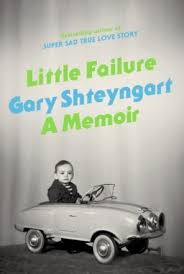
Sponsor: "Little Failure" by Gary Shteyngart

Our sponsor this week is Little Failure, the new memoir by Gary Shteyngart. Already a New York Times bestseller, Little Failure tells the story of Shteyngart's American immigrant experience, moving back and forth through time and memory with self-deprecating humor, moving insights, and literary bravado. The result is a resonant story of family and belonging that feels epic and intimate and distinctly his own.

Mary Karr called Little Failure "a memoir for the ages." The Millions called Shteyngart the "Chekhov-Roth-Apatow of Queens." And Nathan Eglander, responding to the book's aching honesty, said "Dr. Freud would be proud."

Buy it today or read an exclusive excerpt on Longform.

A Classic Pick from Longform and Open Road

Our sponsor this week is Open Road Integrated Media, a digital publisher with a soft spot for the kind of classic writing we highlight every day on Longform.

In addition to new work, Open Road has published ebooks by legendary authors including William Styron, Gloria Steinem and David Halberstam. And starting today, we'll be making a monthly pick from their archives, a favorite book of ours that Open Road will make make available to Longform readers at a deep discount.

Up first: Rachel Carson's 1951 bible of the enviornmental movement, The Sea Around Us. Buy it today for 66% off or read an excerpt.

Reginald Dwayne Betts is a poet, lawyer, and founder of the nonprofit Freedom Reads. His New York Times Magazine article "Could an Ex-Convict Become an Attorney? I Intended to Find Out" won the National Magazine Award. His new podcast is Almost There.

“I felt like I had to own becoming something and intuitively understood that if I didn't lay claim to desiring to be something, that it would be too many other forces that would be pulling on me to dictate that I become something else. … When you say you're a writer, if you know nothing else, then you know that you read. You pay attention to the world. … And prison became the metaphor by which I understood the world and poetry became the medium by which I understood what it meant to write about the world and what it meant to take seriously the responsibility to write about the world that I knew.”

Sean Fennessy is the editor-in-chief of The Ringer and a former Grantland editor. He hosts The Big Picture.

"What I try to do is listen to people as much as I can. And try to be compassionate. I think it’s really hard to be on the internet. This is an internet company, in a lot of ways. We have a documentary coming out that’s going to be on linear television that’s really exciting. Maybe we’ll have more of those. But for the moment, podcast, writing, video: it’s internet. [The internet] is an unmediated space of angst and meanness and a willingness to tell people when they’re bad, even when they’ve worked hard on something. That’s like the number one anxiety that I feel like we’re dealing with on a day-to-day basis with everybody, myself included."

Thanks to MailChimp, Mubi, and "Dear Franklin Jones" for sponsoring this week's episode.
Sheelah Kolhatkar is a staff writer at The New Yorker and the author of Black Edge: Inside Information, Dirty Money, and the Quest to Bring Down the Most Wanted Man on Wall Street.

“Suddenly the financial crisis happened and all this stuff that had been hidden from view came out into the open. It was like, ‘Oh, this was actually all kind of a big façade.’ And there was all this fraud and stealing and manipulation and corruption, and all these other things going on underneath the whole shiny rock star surface. And that really also demonstrated to people how connected business stories, or anything to do with money, are to everything else going on. I mean, really almost everything that happens in our world, if you trace it back to its source, it’s money at the root of it.”

Thanks to MailChimp, Blue Apron, and Stamps.com for sponsoring this week's episode.

Emily Bazelon is a staff writer at the New York Times Magazine and a co-host of Political Gabfest. Her latest book is Charged: The New Movement to Transform American Prosecution and End Mass Incarceration.

“I'm pretty convinced that if everybody went to criminal court we would not have courts that are dysfunctional the way our courts are. Because what you see every day is a lot of dysfunction and disrespect. It’s kind of deadening. Most people—especially most middle and upper-class people in this country—don’t know anything about the system. They haven’t experienced it first-hand and they prefer not to think about it. It’s very stigmatized. A lot of what I do is just bear witness.’”

Thanks to MailChimp, The Great Courses Plus, and Pitt Writers for sponsoring this week's episode.

What's Your Favorite Soccer Article Ever?

The latest edition of our favorite video game, EA SPORTS FIFA 15, is out today! To celebrate, Longform is teaming up with EA SPORTS to create a guide to the best soccer writing of all-time. And we need your help!

All you need to do is nominate your favorite soccer article and you'll be entered to win a free Xbox One, plus a copy of EA SPORTS FIFA 15. Any article is allowed, so long as it is available online. New, classic, doesn't matter — we're just looking for the best of the best.

Submit your article and enter for a chance to win!

The Disaster and How Some Escaped

On the curious life of Archibald Butt, confidant to President Taft and tragic victim of the sinking Titanic.

As much as the narrative of Butt’s heroism meant to the family, to the White House, to the military, it seems all too cinematic. The reality is that the experience was probably a great annoyance to him, right up until the moment it became a nightmare.