Showing 25 articles matching best fc points to buy Buyfc26coins.com is FC 26 coins official site..KzUT.

The Death-Wish Kids

Two 16-year-olds form a suicide pact, driving a Pontiac off a cliff. One of the boys survives:

To many of the people in Fillmore who considered the incident a cause for civic mourning and self-scrutiny, the idea of trying Joe for murdering his best friend seemed outlandish. To a prosecutor, however, the indictment had its own logic. The Ventura County district attorney, Michael Bradbury, was an aggressive law-and-order man, and he had a potentially strong case. With Joe's repeated announcements of his plan to drive off the cliff, the crucial element of premeditation was undeniably present.
The Legacy of Malcolm X

As surely as 2008 was made possible by black people’s long fight to be publicly American, it was also made possible by those same Americans’ long fight to be publicly black. That latter fight belongs especially to one man, as does the sight of a first family bearing an African name. Barack Obama is the president. But it’s Malcolm X’s America.

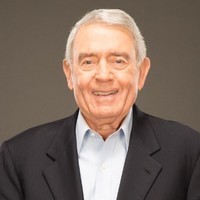
Dan Rather is a journalist, author, and the former anchor of CBS Evening News.

”I knew that being named to succeed Walter Cronkite would put me in a position of inhaling—every day—a kind of NASA-grade rocket fuel for the ego. And that could be dangerous…. In the end, when the red light goes on, it's just you. You're by yourself.… And the longer you're in that role, the more difficult it is to stay true to yourself and to remember who you are and who you want to be.”

Thanks to Mailchimp for sponsoring this week's episode.

The Life & Times Of M. Serge Gainsbourg

Gainsbourg decked out his home at 5 Rue de Verneuil in Saint Germain all in black, inspired by a time when he was younger when he'd somehow got the keys to Salvador Dali's house and made love to his first wife in every room while Dali was away. He even stole a small token souvenir in the form of a picture from Dali's porn collection. (Serge was obsessed with Dali and the pair later became friends. The title of 'Je T'Aime... Moi Non Plus' - roughly translated as 'I love you, me neither' - was inspired by something Dali was once supposed to have said: "Picasso is Spanish - so am I; Picasso is a genius - so am I; Picasso is a communist - me neither.")

Why Are So Many Outdoorsy People Terrible With Money?

When I was 27, I quit my job to travel and ski-bum, and by that point I had managed to save a small sum that could float me for a year. I called it my fuck-you money, because if I was ever in a situation I didn’t like—stuck in a job or with a boyfriend I wanted to leave—I could say fuck you and go. Living in ski towns is how I learned the dirtbag lifestyle, and to my surprise I took to it naturally and with enthusiasm.

Playboy Interview: Frank Sinatra

“I don’t know what other singers feel when they articulate lyrics, but being an 18-karat manic-depressive and having lived a life of violent emotional contradictions, I have an overacute capacity for sadness as well as elation. I know what the cat who wrote the song is trying to say. I’ve been there—and back. I guess the audience feels it along with me. They can’t help it. Sentimentality, after all, is an emotion common to all humanity.”

Maria Abi-Habib is the bureau chief for Mexico, Central America and the Caribbean for the New York Times. Along with her colleague Frances Robles, Abi-Habib won the George Polk Award for revealing concealed aspects of the murder of Haitian president Jovenel Moïse.

“We’re not going to stop covering Haiti just because you don’t like us … at the end of the day you owe it to your citizens to talk to the media because if you can’t talk to the media and actually answer some questions, how are you going to run a country? We’re not doing this for ourselves, we’re doing this because we think that Haiti matters and we think Haitians, like all citizens in this world, actually deserve some answers to their questions and to know what the truth is.”

This is the second in a week-long series of conversations with winners of this year's George Polk Awards in Journalism.

BuzzFeed, the Ad Model for the Facebook Era?

How the website mastered “Social Publishing”:

To understand some of the principles underlying BuzzFeed’s strategy, he recommends reading The Individual in a Social World, a 1977 book by Stanley Milgram, who is known, among other things, for his experiments leading to the six degrees of separation theory. “When some cute kitten video goes viral,” says [Jonah] Peretti, “you know a Stanley Milgram experiment is happening thousands of times a day.”

Inside Trump’s Hour-by-Hour Battle for Self-Preservation

“To an extent that would stun outsiders, Mr. Trump, the most talked-about human on the planet, is still delighted when he sees his name in the headlines. And he is on a perpetual quest to see it there. One former top adviser said Mr. Trump grew uncomfortable after two or three days of peace and could not handle watching the news without seeing himself on it.”

Read more

Maggie Haberman on the Longform Podcast

The Sensational Tito Gaona And His Spectacular Aerial Flights

A profile of the “acrobatic genius of the trapeze”:

As he spoke, he looked up at the pipes and swings in the arena ceiling. A mechanic was working on the rigging, but Tito spoke thoughtfully, for he seemed to be seeing something else. "Sometimes I see movies of myself in the air and I say, 'Jesus, how can I do that?' I wonder who do I think I am ... but, yes, I do admire myself in films sometimes as if I am watching another person. I have sometimes dreamed my tricks at night, you know, and then tried to master them from the dream."

The Scratch Interview with Jonathan Franzen

“I mean, writers are horribly envious and so nobody likes stars, we always feel like it’s a zero-sum game and whatever stardom somebody else has is being taken directly from us, so we hate the stars. But we also need them. Because the possibility of some level of stardom is what will continue to attract new writers to the game. If you’re a linguistically talented 22-year-old, there’s a list of things you can be: you can work in Hollywood, you can be a blogger, etc. And if being a novelist equates to some quaint thing like being a Morris dancer, who’s going to choose this?”

Jay Caspian Kang is a contributor at New York Times Magazine. His new book is The Loneliest Americans.

”I have a lot of thoughts and talk to people to make sure my thoughts are right, or change them because I think they're wrong. What more does one want out of an intellectual life? It's good work.”

Terrence McCoy is The Washington Post's Rio de Janeiro Bureau Chief. He won the George Polk award for his series "The Amazon, Undone" on the illegal and often violent exploitation of the rainforest.

“When I first got to Brazil, the Amazon was an arena of mystique. But after you spend a fair amount of time in the Amazon, it becomes quite clear what the struggle is—and how human that struggle is.”

This is the last of a week-long series of conversations with winners of this year's George Polk Awards in Journalism.

Parul Sehgal is a book critic for The New York Times.

“I write about books, I review books, but in a sense, to do my job at a newspaper also puts that pressure on a piece to say: why should you read or care about this? You’re trying to tweeze out what is newsworthy, what is interesting, what is vital about this book….My job is I think to be honest with the reader and to keep surfacing new ways for me and for other people to think about books. New vocabularies of pleasure and disgust.”

Thanks to Mailchimp and Pitt Writers for sponsoring this week's episode.