Showing 25 articles matching best fc points to buy Buyfc26coins.com is FC 26 coins official site..KzUT.

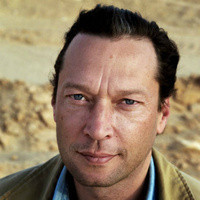
Matthieu Aikins is a contributing writer at The New York Times Magazine who has reported on Afghanistan since 2008. His new book is The Naked Don’t Fear the Water: An Underground Journey with Afghan Refugees.

“I think at some point you just say, screw it. I'm gonna act like a human being and help my friend. That's the most important thing. You actually realize, yeah, now that we're in it together, the only thing that matters is both of us staying alive and staying safe and getting where we need to go. And whatever I have to do to do that, I'm going to do.”
Pandemic Time: A Distributed Doomsday Clock

Even within a single apartment building, neighbors experience different temporalities. In one unit, we have a single extrovert experiencing the acute trauma of being forced to work alone from home. Next door, we have parents suddenly juggling childcare and work. At the end of the hall is an immigrant using WhatsApp to track the fate of family members on the other side of the globe who are suddenly physically unreachable due to travel bans. Even members of a single household experience pandemic time differently.

Read more

Rao on the Longform Podcast

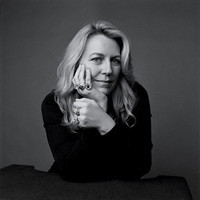
Cheryl Strayed is the author of Wild and Tiny Beautiful Things. Her new podcast is Sugar Calling.

“I think that we have this limited idea of what ambition is. All through my twenties, you wouldn’t necessarily have looked at me and been like, ‘she’s ambitious.’ I mean, I was working as a waitress. I was goofing around and doing all kinds of things. But I was always writing. And I was always really sure and clear and serious about my writing. My ambition was this secret thing within me that I dedicated myself to.”

Thanks to Mailchimp and Pitt Writers for sponsoring this week's episode.

A Conspiracy of Hogs: The McRib as Arbitrage

The absurd scale of McDonald’s’ economics suggests a company more like a commodity trader than a chain of restaurants.

At this volume, and with the impermanence of the sandwich, it only makes sense for McDonald’s to treat the sandwich as a sort of arbitrage strategy: at both ends of the product pipeline, you have a good being traded at such large volume that we might as well forget that one end of the pipeline is hogs and corn and the other end is a sandwich. McDonald’s likely doesn’t think in these terms, and neither should you.

Kathryn Schulz is a staff writer for The New Yorker. "The Really Big One," her article about the rupturing of the Cascadia fault line, won the 2016 Pulitzer Prize.

“I can tell you in absolute sincerity: I didn't realize I was writing a scary story. Obviously I know the earthquake is going to be terrifying, and that our lack of preparedness is genuinely really scary. But, as I think often happens as a reporter, you toggle between professional happiness, which is sometimes, frankly, even professional glee—you’re just so thrilled you’re getting what you’re getting—and then the sort of more human and humane response, which comes every time you really set down your pen and think about what it is you’re actually reporting about.”

Thanks to MailChimp and Squarespace for sponsoring this week's episode.

Weekend At Kermie's: The Muppets' Strange Life After Death

To this day, no one (outside of the movie's own crew) knows how the Muppets rode bicycles in The Great Muppet Caper, the classic Henson movie from 1981. In that scene, Kermit stands up on one frog-leg on the seat of his bicycle to impress Miss Piggy, and then the whole gang joins them on their bikes, doing circles and figure eights, singing “Couldn’t We Ride?” It's a wonderful piece of filmmaking, and still a complete delight to watch because the effect relied on the ingenuity and bravado of the puppeteers and crew, not CGI wizardry. Contrast the joy and ebullience of this scene to the elegant chiaroscuro slickness of the post-Henson Muppet Christmas Carol in which we see old fogies Statler and Waldorf, as the Marley brothers, floating in mid air. No viewer is impressed; no one really thinks about it at all. And that's because when a then 29-year-old Brian Henson directed that film, he threw the rules out the window. Statler and Waldorf “float” because Goelz and Nelson, the men working the old guys, were standing behind them during filming and then were removed in post production. It’s an elegant fix—a cutting of the Gordian knot—but it is a complete break with an aesthetic 35 years in the making.

Rukmini Callimachi covers ISIS for The New York Times and is the host of Caliphate.

“My major takeaway that I have come away with in this work is go to the enemy. Talk to the enemy. I think that the way that Al Qaeda and ISIS is typically covered is by reporters who just speak to officials in Washington. ... That’s only one side of the story. And I have learned so much by seeking out their documents, reading their propaganda ... speaking to them themselves.”

Thanks to MailChimp, Read This Summer, Google Play, and Stitcher Premium for sponsoring this week's episode.

Ed Yong spent 2020 covering the pandemic for The Atlantic. His latest feature is "How Science Beat the Virus."

“I am trying to give readers a platform that they can stand on to observe this raging torrent that is the pandemic, this cascade of information that is threatening to sweep us all away. I’m trying to give people a rock on which they can stand so that they can observe what is happening without themselves being submerged by it. But I am trying to construct that platform while also being submerged in it.”

Thanks to Mailchimp for sponsoring this week's episode.

Sponsor: Igloo Software

Our sponsor this week is Igloo, an intranet you'll actually like. Igloo is now free with up to ten people, helping you work better with your team and your clients. Get your (responsive!) Igloo today and start sharing blogs, calendars, files, forums, microblogs and wikis . And as your Igloo grows, it’s only $12/person each month.

Build your own Igloo here.

Business, Casual.

TheFacebook, as it was then called, had just reached 1.5 million users:

In the end, Zuckerberg says, quarrels over money rarely come up because money is not their priority. “We’re in a really interesting place because if you look at the assets we have, we’re fucking rich,” Zuckerberg adds. “But if you look at like the cash and the amount of money we have to live with, we’re dirt poor. All the stuff we own is tied up in random assets” like servers and the company itself. “Living like we do now, it’s, like, not that big of a deal for us. We’re not like, Aw man, I wish I had a million dollars now. Because, like, we kind of like living like college students and being dirty. It’s fun."

Maria Konnikova is a journalist, professional poker player, and author of the new book The Biggest Bluff: How I Learned to Pay Attention, Master Myself, and Win.

“I do think that writing and psychology are so closely interlinked. The connections between the human mind and writing are in some ways the same thing. If you’re a good writer, you have to be a good, intuitive psychologist. You have to understand people, observe them, and really figure out what makes them tick.”

Thanks to Mailchimp for sponsoring this week's episode.

Ask A Mormon! A Conversation

But you were drinking and having premarital sex, right? Isn’t that kind of an indirect way of questioning your faith? Is disobeying questioning? It can be, but I don't think I was really pondering questions of faith when I started drinking in high school, and the premarital sex didn't actually happen until after I graduated. I think looking back the answer is yes, I was looking at other options. But I didn't think about it in those terms then. I think lots of people of every faith experiment in these ways but ultimately decide to embrace their religion.

The Me Who Knew It

On Alison Winter’s Memory: Fragments of a Modern History, and issues of memory in the 20th century.

Underlying the compelling feeling that we are our memories is a further common-sense assumption that our entire lives are accurately retained somewhere in the brain ‘bank’ as laid-down memories of our experience, and that we retrieve our lives and selves from an ever expanding stockpile of recollections. Or we can’t, and then that feeling that it’s on the tip of our tongue, or there but just out of range, still encourages us to think that everything we have known or done is in us somewhere, if only our digging equipment were sharper.

Jesse Coburn is an investigative reporter at Streetsblog. He won the Polk Award for Local Reporting for "Ghost Tags," his series on the black market for temporary license plates.

“You can imagine this having never become a problem, because it’s so weird. What a weird scam. I’m going to print and sell tens of thousands of paper license plates. But someone figured it out. And then a lot more people followed. It just exploded.”

This is the second in a week-long series of conversations with winners of this year's George Polk Awards in Journalism.

Jerry Saltz is a Pulitzer-winning art critic for New York.

“To this day I wake up early and I have to get to my desk to write almost immediately. I mean fast. Before the demons get me. I got to get writing. And once I’ve written almost anything, I’ll pretty much write all day, I don’t leave my desk, I have no other life. I’m not part of the world except when I go to see shows.”

Thanks to MailChimp and Pitt Writers for sponsoring this week's episode.

Aaron Lammer is a co-host of the Longform Podcast and the host of the podcast Exit Scam: The Death and Afterlife of Gerald Cotten.

“Something I got from a number of reporters that I’ve interviewed on the Longform Podcast is letting the story guide you, and ultimately that led me to an ambiguous ending. Early on, I was like, the pinnacle achievement is to solve this case. But ultimately, I felt like an ambiguous ending was the most honest to what I actually experienced in reporting it.”

Thanks to Mailchimp for sponsoring this week's episode.

Sean Flynn is a GQ correspondent and National Magazine Award winner.

"I find it satisfying to be able to give a voice to people that sort of get lost…You know, when these big horrible things happen, and the spotlight is very briefly on them, and then it moves away, and it's not that I'm dragging them out and forcing them to 'Relive your horrible moments!' It's more a thing of, 'If you'd like to relive your horrible moment, if you want people to know what actually happened, talk to me. I will tell your story.'"

Thanks to TinyLetter and the The Literary Reportage concentration at NYU's Arthur L. Carter Journalism Institute for sponsoring this week's episode.

Scott Anderson is a war correspondent and novelist. He’s written for The New York Times Magazine, Harper’s, Vanity Fair, and more.

“I really feel that what’s at the root of so many wars now, modern wars, unconventional wars, it really just comes down to a bunch of young guys with access to guns coming up with a pretext to rape and murder and pillage and steal from their neighbors.”

Thanks to TinyLetter, MarketingProfs, and WealthFront for sponsoring this week's episode.

Irin Carmon is a senior correspondent at New York, a contributor at CNN, and the co-author of Notorious RBG: The Life and Times of Ruth Bader Ginsburg.

“The fact that we were part of this entire wave of reporting was actually exhilarating. Even when it was competitive. For me, my desire to do this comes out of a broader set of commitments to the world. I’m a feminist and I’m a journalist. The ability to do feminist investigative journalism felt like a gift. And it also felt like, wow, this thing I’d been working on for a long time is something that institutions—the most prestigious and well-resourced institutions—wanted to put resources to. … I think that that kind of commitment is significant in our culture because it is validating it as a point of inquiry.”

Thanks to MailChimp, Skagen, TBD with Tina Brown, Screen Dive, and Pitt Writers for sponsoring this week's episode.

Casey Johnston is a journalist and editor who writes the column "Ask A Swole Woman," which now appears in her newsletter ”She's a Beast.”

”I feel more comfortable lately with a sort of beloved-local-restaurant level of success. What's nice about Substack is that we've come to this place, that I hope lasts, where we can have this sort of local-restaurant relationship with writers, or I can have that with readers, where I don't have to be part of this big machine in order to do something that I really like.”

Our Israelitish Brethren

On Jews:

The Jews are happy in the United States. There are now two hundred congregations of them here, half of whom have arrived within the last twelve years. They are good citizens, firmly attached to those liberal principles to which they owe their deliverance from degrading and oppressive laws, and are rising in the esteem of the people among whom they dwell. Their attachment to the system of universal education is hereditary; it dates back three thousand years; and though their religious feelings are wounded by the opening exercises of many public schools, they would not for that reason destroy them.

A Question of Fairness

Clarence Thomas, then-chairman of the U.S. Equal Employment Opportunity Commission, profiled by Juan Williams:

He agrees with Reagan's characterization of the civil-rights leaders as old men fomenting discontent to justify their own "rather good positions." "The issue is economics—not who likes you." Thomas has told me. "And when you have the economics, people do have a way of changing their attitudes toward you. I don't see how the civil-rights people today can claim Malcolm X as one of their own. Where does he say black people should go begging the Labor Department for jobs? He was hell on integrationists. Where does he say you should sacrifice your institutions to be next to white people?"

Sarah A. Topol is a writer-at-large for The New York Times Magazine. Her latest feature is ”Is Taiwan Next?”

”I think you never actually ask people head-on about what they've been through. You always ask people to just tell you what they want to tell you about anything that has happened to them…. This event that happened to you, it doesn't define you. It’s not why I'm here necessarily. Like, tell me about your childhood. Tell me about your life. Tell me about the things you think are important in your community. And by the time we get to the traumatic part, I hope they've seen enough of who I am and how I interview to feel comfortable telling me that they don't want to talk about certain things.”

Joshua Davis is a contributing editor at Wired and author of the new ebook John McAfee's Last Stand.

"This is a pretty unique situation [for me]. Never has a multimillionaire tech pioneer gone on the lam for a murder and called me from hiding. Yeah, this is a first."

Thanks to TinyLetter for sponsoring this week's episode!