Showing 25 articles matching best fc points to buy Buyfc26coins.com is FC 26 coins official site..KzUT.

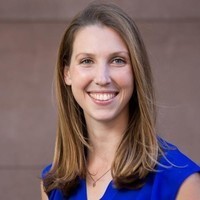
Sarah Stillman is a staff writer for The New Yorker and the director of the Global Migration Program at Columbia University Graduate School of Journalism. She won the George Polk Award for "The Migrant Workers Who Follow Climate Disasters."

“I’m all about the Venn diagram where the individual meaningful stories of things people are up against intersect with the big systemic injustice issues of our day. It feels like climate is clearly an enormous domain where it’s been hard in some ways to tell substantive stories of where actual human beings are navigating and pushing back on some of these huge cultural forces.”

This is the latest in a week-long series of conversations with winners of this year's George Polk Awards in Journalism.
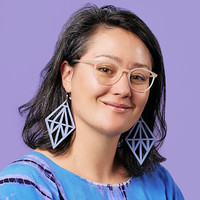

Tessa Hulls is a writer and artist whose work has appeared in The Rumpus, The Washington Post, and The Capitol Hill Times. Her new book, a graphic memoir, is Feeding Ghosts.

“This project is the thing I have spent my entire life running from. I was incredibly determined to never touch this, either personally or professionally. … It was more an eventual act of resignation than a desire.”

Albert Samaha is an investigative journalist and the deputy inequality editor at BuzzFeed News. His book Concepcion: An Immigrant Family's Fortunes comes out in October.

“I don’t think any child of the recession will ever not feel precarious. And being in journalism makes that even more so. ... At this point I’ve embraced the precarity of working in this industry. I’m sure at some point it’s going to be grating for people to hear me talk about how precarious and insecure I feel. … But I’ve got too many friends who are way too talented, who can’t use that talent in the ways that they are passionate about, for me to ever feel like my place in this industry is fully cemented.”

Thanks to Mailchimp and CaseFleet for sponsoring this week's episode.

Kevin Roose, a writer at New York, has contributed to The New York Times, GQ and Esquire. His latest book is Young Money: Inside the Hidden World of Wall Street's Post-Crash Recruits.

"Google will give you away. I feel like one undercover book is all you get these days before the jig is up. ... Unless, like Barbara Ehrenreich, you legally change your name. I was not quite prepared to go that far."

Thanks to TinyLetter for sponsoring this week's episode.

Birth of an MTV Nation

An oral history.

Tom Freston: We knew we needed a real signature piece that would look different from everything else on TV. We also knew that we had no money. So we went to NASA and got the man-on-the-moon footage, which is public domain. We put our logo on the flag and some music under it. We thought that was sort of a rock ’n’ roll attitude: “Let’s take man’s greatest moment technologically, and rip it off.”

Let the Robot Drive

The autonomous car of the future is here:

I was briefly nervous when Urmson first took his hands off the wheel and a synthy woman’s voice announced coolly, “Autodrive.” But after a few minutes, the idea of a computer-driven car seemed much less terrifying than the panorama of indecision, BlackBerry-fumbling, rule-flouting, and other vagaries of the humans around us—including the weaving driver who struggles to film us as he passes.

One Awful Night in Thanh Phong

"I thought dying for your country was the worst thing that could happen to you, and I don't think it is. I think killing for your country can be a lot worse. Because that's the memory that haunts."

On February 25, 1969, Bob Kerrey led a raid into a Vietnamese peasant hamlet during which at least 13 unarmed women and children were killed.

The New Wilderness

For the purposes of this essay, I’ll call it ‘ambient privacy’—the understanding that there is value in having our everyday interactions with one another remain outside the reach of monitoring, and that the small details of our daily lives should pass by unremembered. What we do at home, work, church, school, or in our leisure time does not belong in a permanent record. Not every conversation needs to be a deposition.

Michael Grabell and Bernice Yeung are investigative reporters at ProPublica. They won the George Polk Award for Health Reporting for their coverage of the meatpacking industry's response to the pandemic, including their feature "The Battle for Waterloo."

This is final part of a week-long series of conversations with winners of this year's George Polk Awards in Journalism.

Life After Death

How is Canada’s “post-AIDS” generation coping? Not that well.

[I]n some ways we are still hopelessly lost. A generation of men who could have been our mentors was decimated. The only thing we learned from observing them was to ruthlessly identify “AIDS face,” that skeletal appearance the early HIV drugs wrought on patients by wasting away their bodily tissues. But those faces grow more rare each day.

Mary Karr: The Art of Memoir No. 1

“People who didn’t live pre-Internet can’t grasp how devoid of ideas life in my hometown was. The only bookstores sold Bibles the size of coffee tables and dashboard Virgin Marys that glowed in the dark. I stopped in the middle of the SAT to memorize a poem, because I thought, This is a great work of art and I’ll never see it again.”

Chris Ryan is the editorial director for The Ringer, where he co-hosts The Watch and The Rewatchables.

“There is a point where there’s just too much stuff. I can’t read a 5,000-word feature, 10 blog posts, and listen to three podcasts, and then do it all again the next day. So that is the line you walk in digital publishing, whether it’s for editorial stuff or for podcasting. You have to accept the fact that there is not going to be a single person out there who listens to it all, and who can read it all, and who can watch it all. But you can imbue everything you do with a certain quality—both like a personality, characteristic quality, but also like a quality of production—that hopefully anybody who does like this kind of thing will find some value in it.”