Showing 25 articles matching best fc points to buy Buyfc26coins.com is FC 26 coins official site..KzUT.

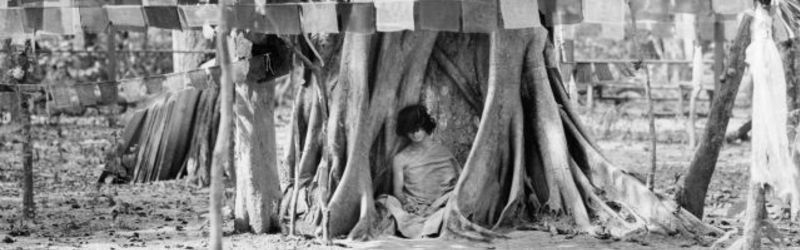
Paradise With An Asterisk

“From all appearances, this place is still an earthly paradise. There is just one problem, though you could stare at this palm grove for a lifetime and never see it. The soil under our feet, whitish gray in color with flecks of coral, contains a radioactive isotope called cesium 137.”

Hanna Rosin is a senior editor at The Atlantic and a founder and editor at DoubleX.

“I often think of reporting as dating, or even speed dating. You’re looking for someone where there’s a spark there between you and them. Sometimes that happens right away and sometimes it takes forever. ... You have to determine if they're reflective, friendly, open. It could be love at first sight and they're still all wrong, which is really heartbreaking.”

Thanks to TinyLetter, Bonobos and The Los Angeles Times' Bookshelf Newsletter for sponsoring this week's episode.

What I Learned in Two Years at the Tea Party

One reason the Tea Party's patriotic political statements are so taupe is that they mirror the religious rhetoric, which is high on generalizations about God and low on nuance and complexity and conflict. Go ahead, replace "constitution" and "patriotism" with "God" and "faith" in some tea party speech sometime—it's not as wacky as it should be.

Jay Caspian Kang is a writer at large at The New York Times Magazine and a correspondent for Vice News Tonight.

“I make a pretty provocative argument about how Asian American identity doesn’t really exist—how it’s basically just an academic idea, and it’s not lived within the lives of anybody who’s Asian. Like you grow up, you’re Korean, you’re a minority. You don’t have any sort of kinship with, like, Indian kids. You know? And there’s no cultural sharedness where you’re just like, ‘oh yeah…Asia!’”

Thanks to MailChimp, "Mussolini’s Arctic Airship," and Blinkist and for sponsoring this week's episode.

Sarah Ellison is a special correspondent at Vanity Fair and the author of War at the Wall Street Journal.

“There’s no lack of stories. ... There’s always an element where you’re going to be parachuting into something that someone has likely written about, to some degree. You can’t shy away from going into something that’s a crowded field.”

Thanks to MailChimp, Quip, and BarkBox for sponsoring this week's episode.

Paige Williams is a New Yorker staff writer and the author of The Dinosaur Artist: Obsession, Betrayal, and the Quest for Earth's Ultimate Trophy.

“I was just sitting in a coffee shop and saw this thing about a Montana dinosaur thief, and thought, oh that’s really interesting, I don’t know anything about that. And I knew nothing about natural history, nothing about natural history museums. I was born and raised in Mississippi. We didn’t talk about that kind of stuff. I grew up in the Baptist church. It certainly wasn’t mentioned there. … It just was a world completely alien to me, which I love. I love going into worlds that I know nothing about, and I like to take them apart and put them back together again.”

Thanks to MailChimp, Skagen, Squarespace, and Pitt Writers for sponsoring this week's episode.

Ira Glass is the host and executive producer of This American Life.

“You can only have so many questions about feelings, I think. At some point people are just like alright, enough with the feelings.”

Thanks to MailChimp, EA SPORTS FIFA 16, Fracture, and FRONTLINE's "My Brother's Bomber for sponsoring this week's episode.

John Grisham is the author of 38 books, including his latest novel, Camino Island.

A Time to Kill didn’t sell. It just didn’t sell. There was never any talk of going back for a second printing. No talk of paper back. No foreign deal. It was a flop. And I told my wife, I said, ‘Look, I’m gonna do it one more time. I’m gonna write one more book…hopefully something more commercial, more accessible, more popular. If this doesn’t work, forget this career. Forget this hobby. I’m just gonna be a lawyer and get on with it.’”

Thanks to Casper, Squarespace, and MailChimp for sponsoring this week's episode.

Jennifer Senior is a staff writer for The Atlantic. Her article ”What Bobby McIlvaine Left Behind” won the 2022 Pulitzer Prize for Feature Writing. Her most recent article is ”The Ones We Sent Away.”

“I'm at the point where I'm only thinking about the big questions and the difficulty of being a human as what matter most. That's what I want to keep focusing on. Our common frailties, our common bonds, our common difficulties. Because clearly we are not going to bond politically as a nation, right? … But we can bond over our kids with disabilities. About the fact that we grieve, that we love, that we lose people. That we have friends that we love, friends that we hate. We have friendships that we miss, we have friendships that we can't live without.”

David Remnick is the editor of The New Yorker.

“I think it’s important — not just for me, but for the readers — that this thing exists at the highest possible level in 2016, in 2017, and on. That there’s a continuity to it. I know, because I’m not entirely stupid, that these institutions, no matter how good they are, all institutions are innately fragile. Innately fragile.”

Thanks to MailChimp, Audible, EveryLibrary, and Igloo for sponsoring this week's episode.

Jessica Hopper is editor-in-chief of the Pitchfork Review and the author of The First Collection of Criticism by a Living Female Rock Critic.

“I have an agenda. You can’t read my writing and not know that I have a staunch fucking agenda at all times.”

Thanks to MailChimp, Blue Apron, and Fracture for sponsoring this week's episode.

Matthew Shaer is a freelance writer whose work has appeared in The New York Times Magazine, New York, GQ, and The Atavist Magazine.

“I could not turn off the freelance switch in my head. I could not not be thinking about these different types of stories. My Google Alert list looks like a serial killer's.”

Thanks to MailChimp, Squarespace, Howl, and MasterClass for sponsoring this week's episode.

Jeff Sharlet writes about politics and religion for Esquire, GQ, New York Times Magazine, and more.

“I like the stories with difficult people. I like the stories about people who are dismissed as monsters. I hate the term ‘monster.’ ‘Monster’ is a safe term for us, right? Trump’s a monster. Great, we don’t need to wrestle with, ‘Uh oh, he’s not a monster. He’s in this human family with us.’ I’m not normalizing him. I’m acknowledging the fact. Now, what’s wrong with us? If Trump is human, what’s wrong with you?”

Thanks to MailChimp, Squarespace, and Blue Apron for sponsoring this week's episode.