Showing 25 articles matching iraq podcast.

Matthew Klam is a journalist and fiction writer. His new novel is Who Is Rich?.

“The New Yorker had hyped me with this “20 Under 40” thing…and when the tenth anniversary of that list [came], somebody wrote an article about it. And they found everybody in it, and I was the only one who hadn’t done anything since then, according to them. And the article, it was a little paragraph or two, it ended with ‘poor Matthew Klam.’”

Thanks to MailChimp, Casper, and Squarespace for sponsoring this week's episode.

Michael Pollan is a contributing writer for New York Times Magazine, the host of Netflix's How To Change Your Mind, and the author of nine books. The latest is This Is Your Mind On Plants.

“I have found myself at two distinct points in my history having this transition from being the journalist, learning at the feet of these people, to becoming an advocate. And it’s an awkward role for a journalist, but at a certain point it would be kind of false to pretend you didn't have points of view, that there weren't directions in which you think the world should go. And the great thing about doing narrative nonfiction is that editors cut you a fair amount of slack at the end of a 10,000–word piece to say what you think.”

Anne Helen Petersen writes for BuzzFeed. Her book Scandals of Classic Hollywood is out this week.

"I was obsessed with Entertainment Weekly from the very first issue and I obsessively catalogued it. I made a database on my Apple IIe where I put in the title of the magazine and the number and whether it was a little 'e' or a big 'E' on the cover and the different topics and then I gave it a grade. You know how in Entertainment Weekly they give everything a grade, so I’d be like 'Oscar’s Issue: A minus.' But I learned how to obsessively track Hollywood industry even though I grew up in a very small town in northern Idaho."

Thanks to TinyLetter, Bonobos, and EA SPORTS FIFA 15 for sponsoring this week's episode.

Luke Dittrich is a contributing editor at Esquire. His new book is Patient H.M.: A Story of Memory, Madness, and Family Secrets.

“As soon as I told [my mom] that I got my first book deal for this story about Patient H.M., her first words were, ‘Oh no.’ That was sort of her gut reaction to it because, I think, she knew at a certain level that I was going to be dredging up very painful stories. And I think at that point even she didn’t know the depth of the pain that some of the stories that I was going to find were going to lay out there.”

Thanks to MailChimp, EA SPORTS FIFA 17, Squarespace, Wunder, and Audible for sponsoring this week's episode.

S.L. Price is a senior writer at Sports Illustrated.

“The fact is, if you write about sports and people think they're just reading about sports, they'll read about drug use. They'll read about sex. They'll read about sex change. They'll read about communism. They'll read about issues they couldn't possibly care about, issues that if they saw them in any other part of the paper they would just gloss over. But because it's about sports—because there's a boxing ring or a baseball field or a football field—they'll be more patient and you can get some issues under the transom.”

Thanks to Pitt Writers and TinyLetter for sponsoring this week's episode.

Ginger Thompson is a Pulitzer Prize-winning senior reporter at ProPublica. Her most recent article is "How the U.S. Triggered a Massacre in Mexico."

“How many times have I written the phrase ‘a town that was controlled by drug traffickers?' I had no idea what that really meant. What does it mean to live in a town that’s controlled by drug traffickers? And how does it get that way? One of the things I was hoping that we could do by having the people who actually lived through that explain it to us was that—to bring you close to that and say, ‘No, here’s what that means.’”

Thanks to MailChimp, Casper, and Outside the Box for sponsoring this week's episode.

David Epstein has reported for ProPublica, Sports Illustrated, and This American Life. His new book is Range: Why Generalists Triumph in a Specialized World.

“You can’t just introspect or take a personality quiz and know what you’re good at or interested in. You actually have to try stuff and then reflect on it. That’s how you learn about yourself—otherwise, your insight into yourself is constrained by your roster of experiences.”

Thanks to MailChimp, Time Sensitive, Read This Summer, The TED Interview, and Pitt Writers for sponsoring this week's episode.

Ta-Nehisi Coates is the author of The Beautiful Struggle, We Were Eight Years in Power, and Between the World and Me. His new novel is The Water Dancer. Chris Jackson is Coates's editor, and the publisher and editor-in-chief of One World.

“I don’t think an essay works unless I can pin a story to it. You don’t want people to just say, ‘Oh that was a cool argument.’ You want people to say, ‘I could not stop thinking about this.’ You want them to nudge their wives and husbands and say, ‘You have to read this.’ You want them to be bothered by it.”

Thanks to MailChimp, Squarespace, Vistaprint, and Pitt Writers for sponsoring this week's episode.

Heather Havrilesky writes the Ask Polly and Ask Molly newsletters. Her latest book is Foreverland: On the Divine Tedium of Marriage.

“It’s not a good story when you're bullshitting people. I didn't want this book to feel like bullshit…. I wanted to show enough that you could feel reassured that it's normal to feel conflicted about your life and the people in it. It's normal to feel anxious about how much people love you. And it's normal to feel avoidant about how much people love you. It's normal to feel like a failure in the face of trying to stay with someone over the course of your entire life.”

McKay Coppins is a senior political writer for Buzzfeed News and the author of The Wilderness: Deep Inside the Republican Party's Combative, Contentious, Chaotic Quest to Take Back the White House.

“I am part of the problem. Not in the sense that it’s my fault Trump ran, but in the sense that I’m one of many who for his entire life have mocked him and ridiculed him. He’s a billionaire—I don’t feel any moral guilt about it. But if being I’m honest with myself that same part of me can also, when not checked, be projected onto vast swathes of people. It’s easy to have a lazy classism about the type of people who would vote for Donald Trump.”

Thanks to MailChimp and Blue Apron for sponsoring this episode.

Rembert Browne is a staff writer at Grantland.

“I'm ok with not being at my most refined online at all times. It's happening in real time and some of that is therapeutic. I could write a lot this stuff privately, but I'd rather just hit publish and see what happens. It's a weird world. But I'm super deep in.”

Thanks to this week's sponsors: TinyLetter, Trunk Club, and QuickBooks Self-Employed.

Ross Andersen is the deputy editor of Aeon Magazine.

“One of the things that’s been really refreshing in dealing with scientists—as opposed to say politicians or most business people—is that scientists are wonderfully candid, they’ll talk shit on their colleagues. They’re just firing on all cylinders all the time because they traffic in ideas, and that’s what’s important to them.”

Thanks to TinyLetter and Alarm Grid for sponsoring this week's episode.

Jazmine Hughes is an associate editor at The New York Times Magazine. Her writing has appeared in The New Yorker, Elle, Cosmopolitan, and The New Republic.

“You hope that one day when you’re the editor-in-chief of Blah Blah Blah that you’ll wake up and be like, ‘Okay, I deserve my job.’ But so far I haven’t met anyone who has told me that they feel that way. But, I will say, I don’t talk to white men a lot.”

Thanks to MailChimp, MasterClass, and The Great Courses Plus for sponsoring this week's episode.

Ed Caesar is a freelance writer based in England whose work has appeared in The New Yorker, British GQ, and The Sunday Times Magazine. He is the author of Two Hours: The Quest to Run the Impossible Marathon.

“That was a really horrific situation. People were being killed in the street in front of us. People were firing weapons in all directions. It was really chaotic and quite scary. It freaked me out. And I thought, ‘Actually, there's not a huge amount more of this I want to do in my life.’”

Thanks to MailChimp, MasterClass, The Message, RealtyShares, and Prudential for sponsoring this week's episode.

Heather Havrilesky writes the Ask Polly advice column for New York and is the author of the upcoming How to Be a Person in the World.

“I don’t give a shit if I succeed or fail or what I do next, I just want to do things that are strange and not sound bitey. I don’t want to be polished. I want to be such a wreck that no one will ever say ‘let’s put her on her own talk show.’”

Thanks to MailChimp, Audible, and Squarespace for sponsoring this week's episode.

Molly Crabapple is an artist and writer. She is a columnist for VICE and her work has appeared in The New York Times, The Paris Review and Vanity Fair.

“As long as the marginalized communities I’m writing about don’t think I’m full of shit, that’s success to me.”

Thanks to TinyLetter, Squarespace and Lynda for sponsoring this week's episode. If you would like to support the show, please leave a review on iTunes.

Scott Anderson is a war correspondent and novelist. He’s written for The New York Times Magazine, Harper’s, Vanity Fair, and more.

“I really feel that what’s at the root of so many wars now, modern wars, unconventional wars, it really just comes down to a bunch of young guys with access to guns coming up with a pretext to rape and murder and pillage and steal from their neighbors.”

Thanks to TinyLetter, MarketingProfs, and WealthFront for sponsoring this week's episode.

Rebecca Traister writes for New York. Her new book is Good and Mad: The Revolutionary Power of Women's Anger.

“I don’t want my experience to be held up as so, ladies, your new health regimen is rage all day. Because the fact is we live in a world that does punish women for expressing their anger, that denies them jobs, that attaches to them bad reputations as difficult-to-work-with, crazy bitches. Because they’re reasonably angry about something they have every reason to be angry about. We live in a world in which black women’s anger is either caricatured and they get written off as cartoons, or regarded as threats and face steep, often physical penalties for expressing dissent or dissatisfaction. When I talk about this, I don’t mean it to be prescriptive, I mean it to be descriptive of a particular experience I had that was extraordinarily unusual but which made me question a premise that I think all of us internalize that the anger is bad for us. I no longer believe that that’s true.”

Thanks to MailChimp, Skagen, Under My Skin, and Pitt Writers for sponsoring this week's episode.

Alex Mar has written for The Believer, Wired, and New York. She is the author of Witches of America and the director of the documentary American Mystic.

“I really do believe that all of us run on some kind of desire for meaning. And if someone is an atheist and they don’t subscribe to an organized system, it doesn’t mean that they don’t crave something. Maybe it’s their job. Or maybe it’s the way that they raise their children with a certain kind of intense focus. Or something else. As humans, we are built to crave meaning, right? For me, that was something that I wanted to explore about myself.”

Thanks to MailChimp, On the Media, The TED Interview,and Pitt Writers for sponsoring this week's episode.

Renata Adler is a journalist, critic, and novelist. Her latest collection of nonfiction is After the Tall Timber.

“Unless you're going to be fairly definite, what's the point of writing?”

Thanks to MailChimp and Squarespace for sponsoring this week's episode.
Taylor Lorenz just announced she is leaving her job covering internet culture for The Atlantic to join The New York Times.

“With technology and internet culture, I am more of an optimist than a lot of other people who cover those topics. It’s more ambiguous for me. It's more like, ‘This is the world we live in now and here are the pros and here are the cons. There are a lot of cons, but there are also these pros.’ I like how things shift and change under me. I like to see how things are constantly evolving.”

Thanks to MailChimp and Pitt Writers for sponsoring this week's episode.
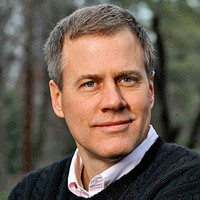
Michelle García has written for The New York Times, The Washington Post and Oxford American. She directed the PBS film, Against Mexico: The Making of Heroes and Enemies.

“We have to see that within difficult stories there is a very important message of humanity triumphing over despair. If you don’t focus on joy, humanity is squashed. If all you see and all you narrate is pain, then you extinguish the possibility of joy and the important part of holding onto humanity.”

Thanks to MailChimp and Pitt Writers for sponsoring this week's episode.
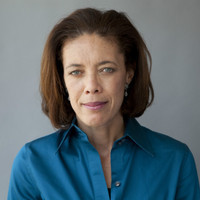
Radhika Jones is the editor-in-chief of Vanity Fair and the editor of Women on Women.

“There are a lot of people who still see the value of talking to someone, having a real conversation — about the things that they’re doing, the things that they’re caring about, the things that they’re afraid of, the things that are challenging — because in that conversation, they themselves will discover things that they didn’t realize. It obviously takes courage. It’s a payoff for the reader, certainly, but I think that there are subjects who understand that there is something there for them, too.”

Thanks to Mailchimp and Pitt Writers for sponsoring this week's episode.

Katherine Eban is an investigative journalist and contributing writer at Fortune Magazine. Her new book is Bottle of Lies: The Inside Story of the Generic Drug Boom.

“I am not known for my optimism. I think it’s hard to do this work and retain a sunny view of humankind. I hate to say that. On the other hand, I do believe there will always be whistleblowers. And it’s interesting to me that even in the darkest spaces, even when it looks like everything is arrayed against them, there are people who will say: ‘This just isn’t right, and I must do something.’ Which is kind of extraordinary.”

Thanks to Mailchimp and Pitt Writers for sponsoring this week's episode.

Melissa del Bosque is an investigative journalist covering the U.S.-Mexico border.

“What I really want people to know is the context within which this traumatic event is happening. It doesn’t have to happen. It’s happening because certain people made certain decisions. Or they made a decision to do nothing. … There are laws, there are policies on the books that are either being ignored or could be changed.”

Thanks to Mailchimp for sponsoring this week's episode.