Showing 25 articles matching iraq podcast.

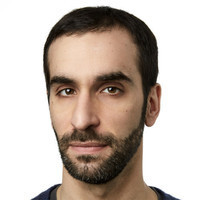
David Marchese is the interviewer for New York's "In Conversation" series.

"The thing I like about doing long interviews with people is that each one feels like a totally unique experience to me. It’s not like I go into an interview and already know the arc of the story I’m going to tell, and I’m going to just fill that in the best I can. I have ideas of what to talk about and what the conversation might entail, but it does feel like I’m starting at zero and the conversation can go anywhere.”

Thanks to MailChimp, Read This Summer, Google Play, and Pitt Writers for sponsoring this week's episode.

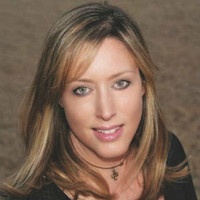
Jeff Maysh is a freelance writer based in Los Angeles. His latest article is "How an Ex-Cop Rigged McDonald’s Monopoly Game and Stole Millions."

“I’ve always looked for stories with the theme of identity and identity theft. I’m very interested in people leading double lives. All of my stories are the same in a sense. Whether that’s a spy or a fake cheerleader or a bank robber or even a wrestler—someone is pretending to be someone they’re not, leading a double life. I find that really exciting. I’m drawn to characters who put on a disguise.”

Thanks to MailChimp, Read This Summer, Google Play, Pitt Writers, and Coin Talk for sponsoring this week's episode.

Paige Williams is a New Yorker staff writer and the author of The Dinosaur Artist: Obsession, Betrayal, and the Quest for Earth's Ultimate Trophy.

“I was just sitting in a coffee shop and saw this thing about a Montana dinosaur thief, and thought, oh that’s really interesting, I don’t know anything about that. And I knew nothing about natural history, nothing about natural history museums. I was born and raised in Mississippi. We didn’t talk about that kind of stuff. I grew up in the Baptist church. It certainly wasn’t mentioned there. … It just was a world completely alien to me, which I love. I love going into worlds that I know nothing about, and I like to take them apart and put them back together again.”

Thanks to MailChimp, Skagen, Squarespace, and Pitt Writers for sponsoring this week's episode.
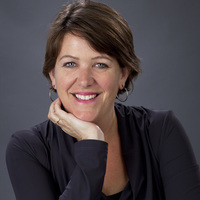
Maria Streshinsky is the executive editor at Wired.

“Sometimes a story comes in and it’s really lovely and well done. And you think if you just got on the phone with this person and pointed out the structure is wrong here and the chronology is wrong here, ask them to change that and send them what is known at Wired as the ‘praise sandwich letter’: how wonderful something is, how much work it will need, how wonderful it will be. … It’s not the kiss of death, it’s ‘we have a lot of work to do.’ … There are lots of pieces that come in that you’ve assigned because it’s the person with the right information with the right access, and they’re a good reporter, but maybe not a terrific wordsmith. So, you do more rewriting. Then there’s the other person that’s a really lovely, lovely writer that doesn’t have the structure and the reporting so you push on that. It’s sort of a three or four-pronged thing—it depends on the piece. I will say, somewhat controversially, there aren’t that many pieces that come in pretty clean.”

Thanks to MailChimp, Skagen, and Pitt Writers for sponsoring this week's episode.

Lizzie Johnson covers wildfires for the San Francisco Chronicle.

“It’s kind of like when you’re a beginning journalist and you have to write an obituary—calling the family of the person who died seems like this insurmountable, very invasive task and you really don’t want to do it. That’s kind of how I felt about interviewing fire victims at first. I felt like I was somehow intruding on their grief and their pain. But somewhere along the way I realized there’s healing power in talking about what you’ve been through. Saying it out loud and being able to claim ownership to it. I found that time after time these people are very grateful because they need to talk. They have something to say in the aftermath of this big, massive thing that just came and wiped out everything they knew. They really do just need someone to listen to them. I have never had someone tell me, ‘Go away, we don’t want to talk to you.’ And I’m completely bowled over by that every single time.”

Thanks to MailChimp and Pitt Writers for sponsoring this week's episode.

Lydia Polgreen, former foreign correspondent and director of NYT Global at The New York Times, is the editor in chief of HuffPost.

“Like a lot of people, I think I went a little bit crazy after Donald Trump got elected. ... If Hillary Clinton had won the election, I have a feeling that I would still be a mid-level manager at The New York Times. But after the election, I really started to think about journalism, about my role in it, about who journalism was serving and who it was for, and I just became really enamored with this idea that you could create a news organization that was less about people who are left out of the political and economic power equations, but actually for them.”

Thanks to MailChimp and Pitt Writers for sponsoring this week's episode.
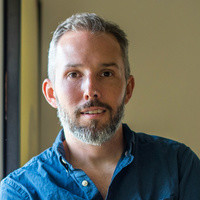
Rosecrans Baldwin is a writer and regular contributor to GQ. His latest novel is The Last Kid Left.

“It requires a lot of preparation in order to just have lunch with Roger Federer. Being a person who tends toward anxiety and also a former Boy Scout—put those two things together and I will exhaustively prepare so that I can come across like a complete idiot. The idea of sitting down with someone like that is that you should know everything about their life and their career so that you can go in with 12 questions in the back of your mind.”

Thanks to MailChimp, Breach, CoinTalk, and Pitt Writers for sponsoring this week's episode.
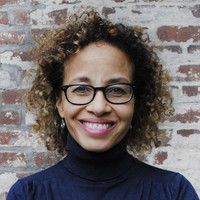
Linda Villarosa directs the journalism program at the City College of New York and is a contributing writer at the New York Times Magazine. Her article "Why America’s Black Mothers and Babies Are in a Life-or-Death Crisis" was one of Longform's Top Ten of 2018. She is at work on a new book, Under the Skin: Race, Inequality and the Health of a Nation, due out in 2020.

“I think at the beginning I was afraid to say it right out, so I think I was saying ‘racial bias’ or something like that. Then I stopped. ... I think how I learned about it both in earlier reporting and in grad school and in my own research was that race is a risk factor for a bunch of different health problems, whether it’s heart disease, infant and maternal mortality, or HIV. It’s just said that race is a risk factor. It’s disproportionate. What it really is is that race is a risk factor, but it’s also a risk marker. Instead of looking at what individuals are doing wrong, it’s what society is doing wrong in creating problems for individual people which lead to health crisis. It’s sort of like bias, related to racism, is creating problems in people’s actual bodies. That’s what I came to understand. It really shifts the blame off the individual.”

Thanks to MailChimp, The Great Courses Plus, and Pitt Writers for sponsoring this week's episode.

Ashley Feinberg is a senior writer at Slate. She recently uncovered Mitt Romney's secret Twitter account.

“The whole thing about politics is that they are basically creating this character, this mask, and that is who they are supposed to be. That is who they try to project to the world. We know that it’s not really them but we have no access to what they actually are. This is the closest we get to seeing what they’re doing when they think no one is watching. … This is the most unfiltered access to what they’re actually thinking.”

Mara Hvistendahl is a freelance reporter and was a Pulitzer Prize finalist for her first book, Unnatural Selection. Her new book is The Scientist and the Spy: A True Story of China, the FBI, and Industrial Espionage.

“In times of tension, Cold War historians believe that there’s this mirroring that goes on, that we start to behave like the enemy, and that that is the big risk. And I feel like that’s the moment we’re in now.”

Thanks to Mailchimp and Pitt Writers for sponsoring this week's episode.

Brooke Jarvis is a contributing writer for The New York Times Magazine.

“Obsession is inherently interesting. We want to know why somebody would care so much about something that it could direct their whole life. ... When people care about something a lot, what can be more interesting than that to understand what drives those powerful emotions? ... Part of why I do this work is that I am able to get temporarily obsessed with a lot of different things and then move on to the next thing that I'm temporarily obsessed with. ... There's always a new question that I want to follow.”

Thanks to Mailchimp for sponsoring this week's episode.
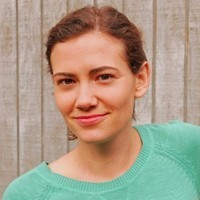
Sarah A. Topol is a writer-at-large for The New York Times Magazine. Her latest feature is ”Is Taiwan Next?”

”I think you never actually ask people head-on about what they've been through. You always ask people to just tell you what they want to tell you about anything that has happened to them…. This event that happened to you, it doesn't define you. It’s not why I'm here necessarily. Like, tell me about your childhood. Tell me about your life. Tell me about the things you think are important in your community. And by the time we get to the traumatic part, I hope they've seen enough of who I am and how I interview to feel comfortable telling me that they don't want to talk about certain things.”

Sam Anderson is a writer for New York Times Magazine and the author of Boom Town.

“I love being in that place where everything is just coming in, and everything is potentially important, and I’m underlining every great sentence that John McPhee has ever written and then I’m typing it up into this embarrassingly long set of reading notes, documents, organized by books. And then when you sit down with it as a writer who has a job, and his job is to fill a little window of a magazine or website, all of that ecstatic inhaling has to stop. You realize that you’ve collected approximately 900,000% of what you need or could ever use.”

Andrea Elliott is an investigative reporter for The New York Times. Her recent book, Invisible Child: Poverty, Survival & Hope in An American City, won a Pulitzer Prize.

”I don’t see reporting as a one-way street. ... I think that people need to know as much as they can about you. And yes, there are boundaries ... but at the same time, the fact of the boundaries is something to talk about with the people you’re writing about. Isn’t it weird that this is my job to be reporting on your life when we can laugh and we can break bread together and I spend all these hours with you and you know about my kids? ... And at the same time, I’m also here to write a book. ... And those two facts I learned to just allow to coexist within me. But it was not easy.”

Elif Batuman is a novelist and a staff writer at The New Yorker. Her latest article is “Japan’s Rent-a-Family Industry.”

“I hear novelists say things sometimes like the character does something they don’t expect. It’s like talking to people who have done ayahuasca or belong to some cult. That’s how I felt about it until extremely recently. All of these people have drunk some kind of Kool Aid where they’re like, ‘I’m in this trippy zone where characters are doing things.’ And I would think to myself, if they were men—Wow, this person has devised this really ingenious way to avoid self-knowledge. If they were women, I would think—Wow, this woman has found an ingenious way to become complicit in her own bullying and silencing. It’s only kind of recently—and with a lot of therapy actually—that I’ve come to see that there is a mode of fiction that I can imagine participating in where, once I’ve freed myself of a certain amount of stuff I feel like I have to write about, which has gotten quite large by this point, it would be fun to make things up and play around.”

Thanks to MailChimp, Google Play, and Pitt Writers for sponsoring this week's episode.
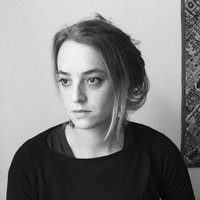
Nancy Jo Sales writes for Vanity Fair and is the author of The Bling Ring.

"I'm a mom now, so my life's a little different. I can't do certain things that I used to do, and I won't, because they're dangerous or ridiculous or keep me out till five in the morning or whatever. But back in those days, I didn't even have a pet. This was everything I did. This was my whole life, this passion to find out these things, and do these things, and see these things, and have these adventures and be able to report about this street life that rarely gets talked about. I just didn't really have a lot of boundaries in those days. I don't think I had any, really. And if you really throw yourself into something, you can get a great story. You can also not have a life of your own."

Thanks to TinyLetter and Squarespace for sponsoring this week's episode.
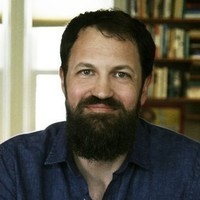
Gay Talese, who wrote for Esquire in the 1960s and currently contributes to The New Yorker, is the author of several books. His latest is A Writer's Life.

"I want to know how people did what they did. And I want to know how that compares with how I did what I did. That's my whole life. It's not really a life. It's a life of inquiry. It's a life of getting off your ass, knocking on a door, walking a few steps or a great distance to pursue a story. That's all it is: a life of boundless curiosity in which you indulge yourself and never miss an opportunity to talk to someone at length."

Thanks to TinyLetter and Warby Parker for sponsoring this week's episode.
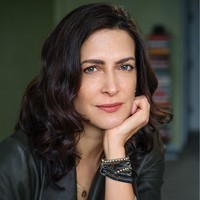
Elizabeth Gilbert has written for Spin, GQ, and The New York Times Magazine. She is the author of several books, including Eat, Pray, Love.

“I call it the platinum rule. The golden rule is do unto others as you would have them do unto you, but the platinum rule is even higher: don’t be a dick.”

Thanks to MailChimp, Bombas, Squarespace, and Audible for sponsoring this week's episode.
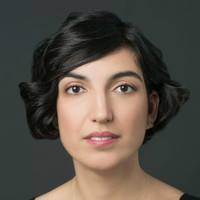
Doreen St. Félix is a writer at MTV News.

“It feels like there are images of black utopias that are arising. And you can’t—even if you’re not as superstitious as me—you can’t possibly think that that doesn’t have to do with the decline, the final, to me, last gasp of white supremacy. It really does feel like we’re approaching that, [but] that approach might be a thousand years.”

Thanks to MailChimp, Texture, Harry’s, and HelloFresh, for sponsoring this week's episode.
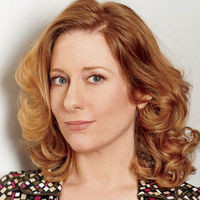
Adam Moss is the editor of New York Magazine.

“I think [change] is good for journalism—it’s what journalism is about. You can’t write about something static. News is about what is new. So there’s plenty of new right now. I’m not saying it’s good for the citizenry or anything like that, but, yeah, for journalists it’s an extremely interesting time. There’s no denying that.”

Thanks to MailChimp, BarkBox, Squarespace, and Sock Fancy for sponsoring this week's episode.
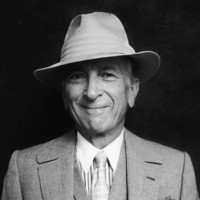
Mattathias Schwartz has written for The New Yorker, The New York Times Magazine and Harper's.

"I figure it's like digging through a wall with a spoon: if you spend enough time at it eventually you get to the other side."

Thanks to TinyLetter and Audible for sponsoring this week's episode.
Michael Paterniti, a correspondent for GQ, has also written for Esquire, Rolling Stone and Outside. His latest book is The Telling Room.

"I want to see it, whatever it is. If it's war, if it's suffering, if it's complete, unbridled elation, I just want to see what that looks like—I want to smell it, I want to taste it, I want to think about it, I want to be caught up in it."

Thanks to this week's sponsors: TinyLetter and Hari Kunzru's Twice Upon a Time, the new title from and Atavist Books.

Buzz Bissinger, a Pulitzer Prize winner, has written for Vanity Fair, The New York Times Magazine, GQ and more. He is the author of several books, including Friday Night Lights.

"It’s quiet. And I really felt I needed that quiet. People say, 'Well anger was your edge, and agitation was your edge, and that’s going to hurt your writing.' I don’t know, maybe. It may be that in order to live a happier life you become a shittier writer. I don't know. But I just couldn't live in that fashion anymore, I just couldn't. It would've destroyed my marriage. It was destroying me."

Thanks to this week's sponsors. Apply for the TinyLetter Writers Residency by September 26. And nominate your favorite soccer article for a chance to win a free Xbox One and EA SPORTS FIFA 15.

Margaret Sullivan is the public editor of The New York Times.

“Jill Abramson said to me early on, ‘What will happen here is you’ll stick around and eventually you’ll alienate everybody, and then no one will be talking to you, and you’ll have to leave.’ I’m about three-quarters of the way there.”

Thanks to TinyLetter and Netflix for sponsoring this week's episode.
Alex Perry, based in England, has covered Africa and Asia for Newsweek and Time. His most recent book is The Rift: A New Africa Breaks Free.

“I got a call from one of my editors in 2003 or 2004, and he said something like, ‘You realize someone has died in the first line of every story you’ve filed for the last eight months?’ And my response was, ‘Of course. Isn’t that how we know it’s important?’ It took me a long time to work out that the importance of a story isn’t established only by death.”

Thanks to MailChimp, </em>Feverborn</a>, and AlarmGrid for sponsoring this week's episode.</p>