Showing 25 articles matching fccoins26 Coinsnight.com FC 26 coins 30% OFF code: FC2026. The best place for game coins.28oS.

Julia Turner is editor-in-chief of Slate.

“That’s what we’ve been focused on: trying to double down on the stuff that feels distinctive and original. Because if you spend all your time on a social platform, and a bunch of media brands are optimizing all their content for that social platform, all those media brands’ headlines say the same, all the content is pretty interchangeable. It turns media into this commodity where then what is the point of developing a media company for 20 years? You might as well take the Silicon Valley approach and just make a new one every three years for whatever that moment is.”

Thanks to MailChimp, Audible, and Igloo for sponsoring this week's episode.
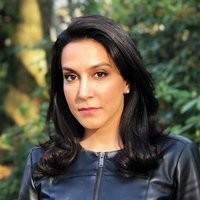
Azmat Khan is an investigative reporter and a contributing writer to The New York Times Magazine.

"For me, what matters most is systematic investigation, and I think that’s different than an investigative story that might explore one case. It’s about stepping back and understanding the big picture and getting to the heart of something. It doesn’t have to be a number’s game, but being able to say: Look, I looked at a wide enough sample of whatever this issue is, and here is what this tells us. That is what I crave and love the most."

Thanks to MailChimp and Barkbox for sponsoring this week's episode.

Terry Gross is the host and co-executive producer of Fresh Air.

“Part of my philosophy of life is that you have to live with a certain amount of delusion. And part of the delusion I live with is that maybe, from experience, I’m getting a little bit better. But then the other part of me, the more overpowering part of me, is the pessimistic part that says, ‘It’s going to be downhill from here.’ I try not to judge myself too much because I’m so self-judgmental that I don’t want to over-judge and get into too much of ‘Am I better than I was yesterday, or not?’”

Thanks to MailChimp, Squarespace, and Blue Apron for sponsoring this week's episode.
Run Like Fire Once More

On the world’s longest foot race, which takes place entirely within Queens, N.Y.:

Such were the hazards last summer in Jamaica, Queens, at the tenth running of the Self-Transcendence 3,100. The fifteen participants—all but two of them disciples of the Bengali Guru Sri Chinmoy, who has resided in the neighborhood for forty years—hailed from ten countries on three continents. They ran in all weather, seven days a week, from 6:00 a.m. to midnight, or until their bodies compelled them to rest. If they logged fewer than fifty miles on a given day, they risked disqualification. By their own reckoning, the runners climbed eight meters per lap, mounting and descending a spectral Everest every week and a half. They toiled in this fashion for six to eight weeks, however long it took them to complete 5,649 circuits—3,100 miles—around a single city block.

Melissa del Bosque is an investigative journalist covering the U.S.-Mexico border.

“What I really want people to know is the context within which this traumatic event is happening. It doesn’t have to happen. It’s happening because certain people made certain decisions. Or they made a decision to do nothing. … There are laws, there are policies on the books that are either being ignored or could be changed.”

Thanks to Mailchimp for sponsoring this week's episode.

Ezra Klein the editor-in-chief of Vox.

“I think that if any of these big players collapse, when their obits are written, it’ll be because they did too much. I’m not saying I think any of them in particular are doing too much. But I do think, when I look around and I think, ‘What is the danger here? What is the danger for Vox?’ I think it is losing too much focus because you’re trying to do too many things.”

Thanks to MailChimp, Casper, and Squarespace for sponsoring this week's episode.

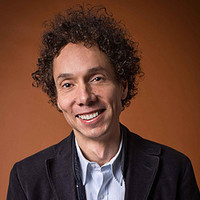
Malcolm Gladwell is a staff writer at The New Yorker. His latest book is David and Goliath: Underdogs, Misfits, and the Art of Battling Giants.

"The categories are in motion. You turn into a Goliath, then you topple because of your bigness. You fall to the bottom again. And Davids, after a while, are no longer Davids. Facebook is no longer an underdog—it's now everything it once despised. I am everything I once despised. When I was 25, I used to write these incredibly snotty, hostile articles attacking big-name, nonfiction journalists. Now I read them and I'm like, 'Oh my God, they're doing a me on me!'"

Thanks to TinyLetter and EA SPORTS FIFA 14 for sponsoring this week's episode.

Joe Bernstein is a senior reporter for BuzzFeed News.

“The question of disinformation is almost an attempt to create a new mythology around why people act the way they do. I don’t mean to say that it’s some kind of nefarious plot. ... It’s a natural, or a convenient explanation. And that’s why I think it caught on for some time anyway.”

Home Body

No house is private. It may be purchased, and thus legally private property, but it doesn’t stand alone. Through its extending wires, pipes, inputs and outputs, the house (with few off-grid exceptions) is tied up in the cyborg systems of the city and the supply chains and logistical inputs that extend around the globe.

Porn Machete Murder

At the very bottom of the porn totem pole is the “mope”, a barely paid assistant who hangs around and occasionally performs. Stephen Hill was mope-ing for Ultima Studios in exchange for pocket money and a place to crash. Learning he was going to be evicted, he sharpened a prop machete.

Mattathias Schwartz has written for The New Yorker, The New York Times Magazine and Harper's.

"I figure it's like digging through a wall with a spoon: if you spend enough time at it eventually you get to the other side."

Thanks to TinyLetter and Audible for sponsoring this week's episode.

Cisco's Big Bet on New Songdo: Creating Cities From Scratch

On the development of South Korea’s New Songdo and Cisco’s plans to build smart cities which will “offer cities as a service, bundling urban necessities – water, power, traffic, telephony – into a single, Internet-enabled utility, taking a little extra off the top of every resident’s bill.” The demand for such cities is enormous:

China doesn't need cool, green, smart cities. It needs cities, period -- 500 New Songdos at the very least. One hundred of those will each house a million or more transplanted peasants. In fact, while humanity has been building cities for 9,000 years, that was apparently just a warm-up for the next 40. As of now, we're officially an urban species. More than half of us -- 3.3 billion people -- live in a city. Our numbers are projected to nearly double by 2050, adding roughly a New Songdo a day; the United Nations predicts the vast majority will flood smaller cities in Africa and Asia.

Michael Barbaro is the host of The Daily.

“I don’t think The Daily should ever be my therapy session. That’s not what it’s meant to be, but I’m a human being. I arrive at work on a random Tuesday, and I do an interview with a guy like that, and it just punched me right in the stomach.”

Thanks to MailChimp, School of the Art Institute of Chicago, and Blinkist for sponsoring this week's episode.

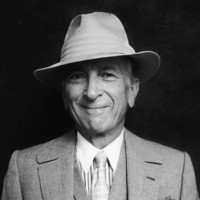
Gay Talese, who wrote for Esquire in the 1960s and currently contributes to The New Yorker, is the author of several books. His latest is A Writer's Life.

"I want to know how people did what they did. And I want to know how that compares with how I did what I did. That's my whole life. It's not really a life. It's a life of inquiry. It's a life of getting off your ass, knocking on a door, walking a few steps or a great distance to pursue a story. That's all it is: a life of boundless curiosity in which you indulge yourself and never miss an opportunity to talk to someone at length."

Thanks to TinyLetter and Warby Parker for sponsoring this week's episode.

Who Killed Julian Pierce?

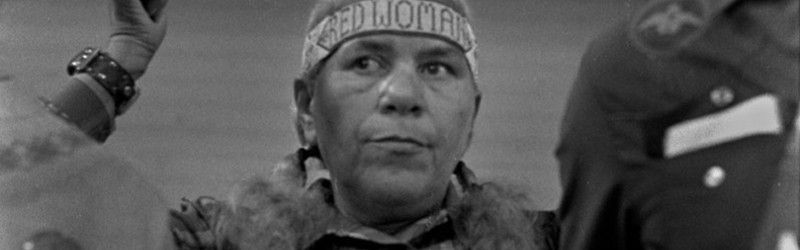
He was a Georgetown-educated Native-American lawyer who’d left behind a career in D.C. to advocate on behalf of poor and minority populations in rural North Carolina. At the time of his 1988 murder, he was investigating ties between police and the local cocaine trade.

The author spent nearly 30 years looking into what really happened.

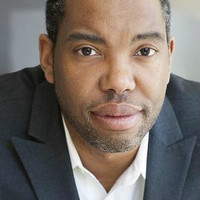
Ta-Nehisi Coates is the author of Between the World and Me and a national correspondent for The Atlantic. His latest cover story is “My President Was Black."

“[People] have come to see me as somebody with answers, but I don’t actually have answers. I’ve never had answers. The questions are the enthralling thing for me. Not necessarily at the end of the thing getting somewhere that’s complete—it’s the asking and repeated asking. I don’t know how that happened, but I felt like after a while it got to the point where I was seen as having unique answers, and I just didn’t. I really, really didn’t.”

Thanks to MailChimp, Casper, and Audible for sponsoring this week's episode.
Lost at Sea

A few miles north of San Francisco, off the coast of Sausalito, is Richardson Bay, a saltwater estuary where roughly one hundred people live out of sight from the world. Known as anchor-outs, they make their homes a quarter mile from the shore, on abandoned and unseaworthy vessels, doing their best, with little or no money, to survive.

Susie Cagle is a journalist and illustrator.

“I don’t really know what it was that made me not quit. I still kind of wonder that. There have been many times over the last couple of years even, as things are taking off in my career, things are going well, I’m writing about wonderful things that are interesting to me, and I still wonder—should I be doing this? What the hell is next year gonna look like?”

Thanks to MailChimp, FreshBooks, and AlarmGrid for sponsoring this week's episode.