Showing 25 articles matching fccoins26 Coinsnight.com FC 26 coins 30% OFF code: FC2026. The best place for game coins.28oS.

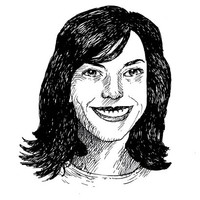
Louisa Thomas, a former writer and editor at Grantland, is a New Yorker contributor and the author of Louisa. Her father Evan Thomas, a longtime writer for Newsweek and Time, is the author of several award-winning books, including last year's Being Nixon.

“That's one thing I've learned from my dad: the capacity to be open to becoming more open.”

Thanks to MailChimp's Freddie and Co. for sponsoring this bonus episode.

Judy Blume Knows All Your Secrets

“She has no theories, for example, to explain why she, of all people, felt unburdened by the unspoken rules marking certain subjects off limits for children, or why, for that matter, she has that particular gift, that ability to recall the emotional experiences of adolescence, the confusion, the longing, the rivalries — the memories, in other words, that most of us try to bury as quickly and deeply as we can.”

Casey Cep has written for The New Yorker, The New York Times, and The New Republic. She is the author of Furious Hours: Murder, Fraud, and the Last Trial of Harper Lee.

“I want to meet all of these expectations. I want my book to be a page-turner. I want it to be a beautiful literary object. I want it to sell. I want it to do all of these things. But at the end of the day, I just want to feel like I’ve honored this commitment between writer and reader, and writer and source. And those are sometimes in conflict.”

Thanks to Mailchimp and Pitt Writers for sponsoring this week's episode.

Jodi Kantor is a New York Times investigative reporter and the author of The Obamas. On October 5th, she (with Megan Twohey) published an article detailing decades of sexual harassment payoffs by Harvey Weinstein, and she has covered the story extensively since.

“Being a reporter really robs you of self-consciousness and shyness. You realize that it’s this great gift of being able to ask crazy questions, either really personal or very probing or especially with a powerful — to walk up to Harvey Weinstein, essentially and say, ‘What have you been doing to women all these years, and for how long? All of these other people may be afraid to confront you about it, but we are not.’ That is our job.”

Thanks to MailChimp and Eero for sponsoring this week's episode.

Playboy Goes West

As Playboy magazine moves to Los Angeles, the writer considers its place in the Midwest.

No other general interest magazine tried to reach readers in the wide swathe of land between New York and California. “It was a Midwestern magazine, designed for people there. If you wanted it to be hip, edgy, go toe-to-toe with GQ, you were making a mistake,” said Chris Napolitano, a former executive editor who began at Playboy in 1988.

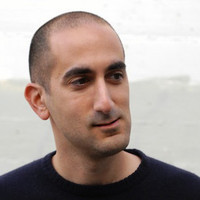
Roger Bennett is a co-host of Men In Blazers and the author of (Re)born in the USA: An Englishman's Love Letter to His Chosen Home.

“So much of my work is about human tenacity. That value of perseverance, of driving onwards. I believe life is about darkness and happiness. I believe that nothing is given, you fight for everything. And how you operate in moments of doubt and darkness ultimately define you. So I talk a lot as a professional about tenacity. What I've never linked that to before was my own biography. What did surprise me when I read the book as not being about me, but just read it as a book, was how bloody tenacious I was in fleeting moments of real awfulness.”

Pablo Torre is a senior writer at ESPN the Magazine and frequently appears on Around the Horn, PTI, and other ESPN shows.

“Most of my friends are not sports fans. My parents aren't. Brother and sister — no. So I just want to make things that they want to read. That's the big litmus test for me in deciding if a story is worth investing my time into: Is somebody who doesn’t give a shit about sports gonna be interested in this?”

Thanks to MailChimp, Johnson & Johnson, FreshBooks, and Squarespace for sponsoring this week's episode.

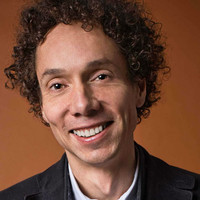
Malcolm Gladwell is a staff writer at The New Yorker. His new podcast is Revisionist History.

“The amount of criticism you get is a constant function of the size of your audience. So if you think that, generously speaking, 80% of the people who read your work like it, that means if you sell ten books you have two enemies. And if you sell a million books you have 200,000 enemies. So be careful what you wish for. The volume of critics grows linearly with the size of your audience.”

Thanks to MailChimp, Audible, and Squarespace for sponsoring this week's episode.

Married, With Infidelities

On why the Anthony Weiner story makes people more uncomfortable than simple cheating, the shifting meaning of faithfulness in marriage, and the relationship ideals espoused by Dan Savage:

In Savage Love, his weekly column, he inveighs against the American obsession with strict fidelity. In its place he proposes a sensibility that we might call American Gay Male, after that community’s tolerance for pornography, fetishes and a variety of partnered arrangements, from strict monogamy to wide openness.

Hamilton Morris is the science editor for Vice and a contributor to Harper's.

"It's a shame that there isn't more of an interdisciplinary approach to a lot of scientific investigations, because often the result is that misinformation is produced. Again, there's misinformation in journalism and there's misinformation in science. And if you combine the best elements of both of those disciplines you can come a little bit closer to the truth. If you want to understand a drug phenomenon, you're going to need to look at it medically, chemically, anthropologically, you need to talk to people, you need to interview people, you need to look at the drug policy, the chemistry, the history—there's a lot of different factors that need to be examined in order to understand even the most simple, minute drug phenomenon. And if you're approaching something purely as a scientist, as an academic, there are huge limitations as to what you can do."

Thanks to TinyLetter and Hulu Plus for sponsoring this week's episode.

Tejal Rao is the California restaurant critic for The New York Times and a columnist for The New York Times Magazine.

“I've been thinking a lot about what makes a restaurant good. Can a restaurant be good if it doesn't have wheelchair access? Can a restaurant be good if the farmers picking the tomatoes are getting sick? How much do we consider when we talk about if a restaurant is good or not? … If people are being exploited at every single point possible along the way, how good is the restaurant, really? … I worry that the pandemic has illuminated all of these issues and things are just going to keep going the way that they were. ... That's what I worry about. That nothing will change.”

Thanks to Mailchimp for sponsoring this week's episode.

Jon Mooallem, a contributing writer at The New York Times Magazine, is the author of Wild Ones and American Hippopotamus, the latest story from The Atavist.

"I'm terrible at writing nut graphs. I never know why people should keep reading. That's the menace of my professional existence, trying to figure that out. Because often you have to explain that to an editor before you even start, and I may not even know while I'm writing what the bigger point is."

Thanks to TinyLetter for sponsoring this week's episode.

Sponsor: The Warby Parker Guide to Black Eyes and Secret Societies

This guide is sponsored by Warby Parker, which sells $95 glasses with prescription lenses included. Directed by Philip Andelman, their newest television commercial is a Kinks-scored ode to New York literary life.

<IMG SRC=”http://ad.doubleclick.net/ad/N884.1744599.LONGFORM.ORG/B7797079;sz=1x1;ord=[timestamp]?” BORDER=0 WIDTH=1 HEIGHT=1 ALT=”Advertisement”></A></p>

Alice Gregory has written for GQ, The New York Times, n+1 and Harper's.

"If you don't have a real story with a beginning, middle and an end, you owe it to the reader to kind of serve as their chaperone."

Thanks to TinyLetter and EA SPORTS FIFA WORLD CUP for sponsoring this week's episode.