Showing 25 articles matching fccoins26 Coinsnight.com FC 26 coins 30% OFF code: FC2026. The best place for game coins.28oS.

Ben Anderson is a war journalist and documentary filmmaker for Vice News. His latest book is The Interpreters.

"You're surrounded by people who are so poor. Maybe their family members have already been killed. And they still can't leave. So compared to that, I can't really take the idea that I've suffered and that I need stop and go to a spa for a few days. I can't take that idea that seriously. Compared to them, it feels like I am leading an almost privileged existence."

Thanks to TinyLetter and GoDaddy for sponsoring this week's episode.
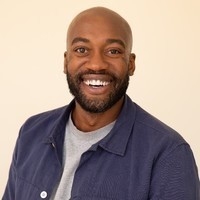
Sam Sanders is the former host of NPR’s It’s Been a Minute. He hosts Vulture’s Into It, which launched last week.

“I don’t think I ever wanted a career where I was doing the same thing for 30 years. I think that, editorially, I had become someone who was really contemplating what kind of capital-j journalist I wanted to be, want to be, and I was questioning a lot of rules and the structure of what we think journalism is supposed to be, and I think I needed to be away from a legacy institution like NPR, at least for a spell, to work that out.”

Andrew Leland is an editor at The Believer and hosts The Organist

"I think a good editor has a strong stomach for crazy assholes. Because often crazy assholes are really brilliant great writers."

Thanks to TinyLetter and Squarespace for sponsoring this week's episode.

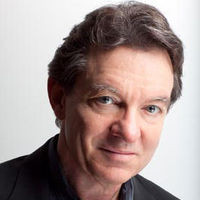
Lawrence Wright, author of The Looming Tower and Going Clear, is a staff writer for The New Yorker.

"If I had the chance to interview Osama Bin Laden, should I kill him? It’s a fair question. Suppose we’re having dinner — should I stab him with the bread knife? Do I have a moral obligation to kill him? Or do I have a moral obligation as a reporter to simply hear him?"

Thanks to TinyLetter and PillPack for sponsoring this week's episode.

Elizabeth Weil covers California and the climate for ProPublica. She has written for The New York Times Magazine, California Sunday, and more.

“As a journalist you’re endlessly asking people to tell you really personal, really vulnerable stuff about their lives. And I feel like you have to be willing to be in that conversation too—or really think about why you’re not willing.”

Thanks to Mailchimp for sponsoring this week's episode.

Andrea Valdez is the editor-in-chief of The 19th*.

“You know how sometimes you hear a song and you think, Gosh, it feels like that song has always existed and an artist just plucked it out of the air and played it and now it’s a part of our musical canon? I really hope that The 19th* is a news organization where it feels like it has always been, should have always been, and will always be there.”

Thanks to Mailchimp for sponsoring this week's episode.

Ellis Jones is the editor-in-chief of VICE Magazine.

“I’m just not an edgy person. You know what I mean? I think I am a nice person. I think VICE Magazine reflects the qualities that I want to have or think that I have or that my team has. The magazine would be terrible if I tried to make edgy content ... people would just see right through it. It wouldn’t be good.”

Thanks to MailChimp and EveryLibrary for sponsoring this week's episode.
Chloé Cooper Jones is a philosopher and journalist whose work has appeared in GQ, The Verge, The Believer and many other publications. Her new book is Easy Beauty.

”I literally didn't talk to anyone in my life about disability until I was, like, 30. Ever. Not my husband, not my friends, as little as possible to my own mother. I had this very bad idea that what I needed to do in every single social situation was wait until people could unsee my body…. And it was all in service of trying to be truly recognized or truly seen. And, of course, what was happening is I was involved in a complete act of self erasure because my body and my real self are related…. There is no real me without my physical self…. I did not think I was going to ever write about this, but once I started, it felt like I met myself for the first time.”

Alexey Kovalev is a Moscow-based journalist and the author of the recent article, “A Message to My Doomed Colleagues in the American Media."

“It’s really disheartening to see how little it takes for people to start believing in something that directly contradicts the empirical facts that they are directly confronting. The Russian TV channel tells you that the pill is red, but the pill in front of you is blue. It completely alters the perception of reality. You don’t know what’s real anymore.”

Thanks to MailChimp and Penn State World Campus.

Jennifer Senior is a contributing editor at New York and the author of All Joy and No Fun: The Paradox of Modern Parenthood.

"I've had moments in motherhood that have been close to something like religious. But I don't think social scientists say things like, "How many numinous moments have you had?" They don't do that, so you have to figure out what to do. I was suddenly turning to other texts to try and explain all of this."

Thanks to TinyLetter for sponsoring this week's episode.

Baynard Woods and Brandon Soderberg are the co-authors of the new book I Got A Monster: The Rise and Fall of America's Most Corrupt Police Squad.

“We really wanted to create some kind of leftist, anti-racist true crime story that we really haven’t seen. The conventions of the thriller often smuggle in all of this really right-wing, pro-police propaganda that all of our cops were raised on—the story of cops having to crash cars and break rules in order to get the bad guys. We wanted to take that and subvert it, using its methods to blow it up from the inside while also being rigorously reported.”

Thanks to Mailchimp and The Jordan Harbinger Show for sponsoring this week's episode.
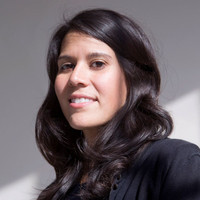
Delia Cai is the senior vanities correspondent for Vanity Fair and publishes the media newsletter Deez Links. Her debut novel Central Places is out this week.

“This was in like, 2011, where I think actual journalists were still trying to figure out ‘Is it gross to be a brand?’ And at least in school, they were all about it. They’re like, ‘You need a brand, you need to think about what your niche is going to be, you need to think about engaging your audience.’ We had to make websites, we had to blog, and of course, all of us being college students, we started using our blogs to write about each other. We used Twitter to talk shit about each other in a very thinly veiled way. So really, it was the best training for being online.”

Andy Kroll is an investigative reporter for ProPublica. His new book is A Death on W Street: The Murder of Seth Rich and the Age of Conspiracy.

“I think a book has ruined me for writing hot takes and spicy Twitter dunks and all of these other one- and two-dimensional bits of ephemera. I wasn't really a big fan of it in the first place, but I can't do it anymore. A book forces you to look at the world in a much more fine grained, humane, empathetic way, and there's no going back from that.”

Wikipedia: Theodore Robert "Ted" Bundy

Using his good looks and charm to lure over young women into his VW, Bundy terrorized the Pacific Northwest and then Utah, leaving over 30 corpses in desolate forest gravesite clusters. After being caught in Colorado, he escaped twice, the second time fleeing to Florida by train and going on a murderous rampage.

Philip Montgomery is a photojournalist.

“The photographers that I grew up on all sort of had their moment… I sort of had, in this weird way, this feeling of envy that they had their moment with this story that was all-encompassing. Looking at it now, this is the story of my time, and it’s a little more than I perhaps bargained for.”

Thanks to Mailchimp and Pitt Writers for sponsoring this week's episode.
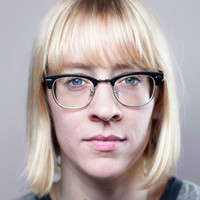
Brooke Gladstone is the host of On the Media.

“I’ve learned so much about how easy it is to redefine reality in this era of billions of filter bubbles. How easy it is to cast doubt on what is undeniably true. And I think that that’s what frightens me the most. I actually think that’s what frightens most people the most. How do we make sure that we all live in the same world? Or do we?”

Thanks to MailChimp, Texture, and School of the Art Institute of Chicago for sponsoring this week's episode.
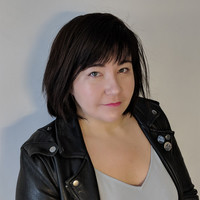
Jia Tolentino is a staff writer at the New Yorker and the author of the essay collection Trick Mirror: Reflections of Self-Delusion.

“I feel a lot of useless guilt solidifying my own advantages at a time when the ground people stand on is being ripped away. And I feel a lot of emotional anxiety about the systems that connect us — about the things that make my life more convenient and make other people’s lives worse. It’s the reality of knowing that ten years from now, when there are millions of more climate refugees, that you’ll be okay. It makes me feel so crazy and lucky and intent on doing something with being alive.”

Thanks to MailChimp, Time Sensitive, Substack, and Pitt Writers for sponsoring this week's episode.
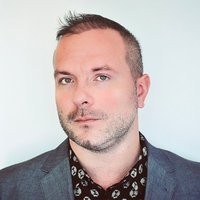
Synthetic Biology Could Bring a Pox on Us All

On July 11, 2002, the researchers revealed that they had synthesized the polio virus, which had been wiped out in the US in 1979. It was the first time a virus had been created from scratch with synthetic DNA. The work was funded by the Pentagon in part to establish whether terrorists could pull off such a feat. The answer was yes.