With Child
The right to choose in Rapid City, South Dakota.
Showing 25 articles matching fccoins26 Coinsnight.com FC 26 coins 30% OFF code: FC2026. The best place for game coins.28oS.
The right to choose in Rapid City, South Dakota.

The story of Theranos.
Erin Lee Carr is a documentary filmmaker and writer. Her new film is Mommy Dead and Dearest.
“I feel like I’ve always had the story down—that’s not been really difficult for me. So the difficult thing, I think, for me, has always been access. Can I get the access? Can I withstand the pressure? You know, there’s been so many times where I wasn’t being paid to do the job, and I had to wait on the access. And it’s not for the faint of heart. You know, I could have spent a year and a half of my life doing [Mommy Dead and Dearest] and I could’ve not gotten the access to Gypsy, and it kind of would’ve been a wash.”
Thanks to MailChimp, Kindle, Squarespace, V by Viacom, and HelloFresh for sponsoring this week's episode.
Patricia Lockwood is a poet and essayist. Her new book is Priestdaddy: A Memoir.
“[Prose writing is] strange to me as a poet. I’m like, ‘Well I guess I’ll tell you just what happened then.’ But the humor has to be there as well. Because in my family household…the absurdity or the surrealism that we have is in reaction to the craziness of the household. So something like your underwear-clad father with his hand in a vat of pickles, sitting in a room full of $10,000 guitars and telling you that he can’t afford to send you to college—that’s bad. That’s a sad scene. But it’s also totally a lunatic scene. It’s, just the very fact of it, all these accoutrements, all the elements of the scene—they are funny.”
Thanks to Audible and MailChimp for sponsoring this week's episode.
Kevin Roose, a writer at New York, has contributed to The New York Times, GQ and Esquire. His latest book is Young Money: Inside the Hidden World of Wall Street's Post-Crash Recruits.
"Google will give you away. I feel like one undercover book is all you get these days before the jig is up. ... Unless, like Barbara Ehrenreich, you legally change your name. I was not quite prepared to go that far."
Thanks to TinyLetter for sponsoring this week's episode.
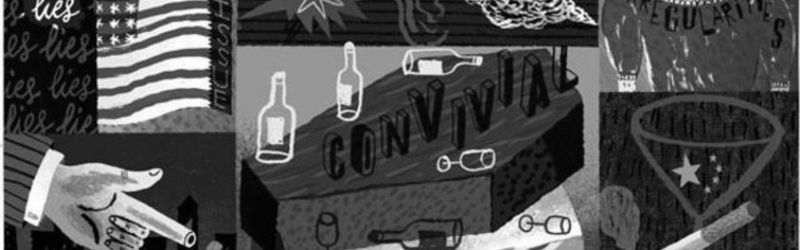
On the utility of euphemisms:
In the upper reaches of the British establishment, euphemism is a fine art, one that new arrivals need to master quickly. “Other Whitehall agencies” or “our friends over the river” means the intelligence services (American spooks often say they “work for the government”). A civil servant warning a minister that a decision would be “courageous” is saying that it will be career-cripplingly unpopular. “Adventurous” is even worse: it means mad and unworkable. A “frank discussion” is a row, while a “robust exchange of views” is a full-scale shouting match. (These kind of euphemisms are also common in Japanese, where the reply maemuki ni kento sasete itadakimasu—I will examine it in a forward-looking manner—means something on the lines of “This idea is so stupid that I am cross you are even asking me and will certainly ignore it.”)
The false promise and double standard of integration in the Obama era.
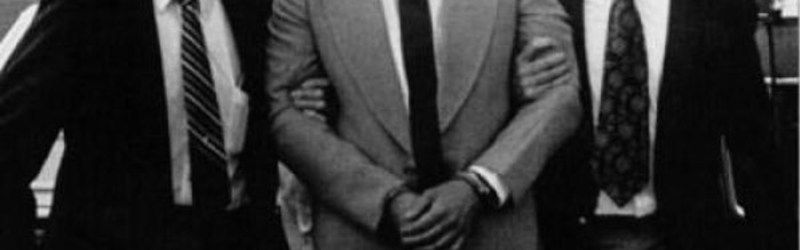
The city that fell in love with the mob.
The defining, minute-by-minute account of the 2008 attacks in Mumbai.
A thousand years ago, huge pyramids and earthen mounds stood where East St. Louis sprawls today in Southern Illinois... At the city's apex in 1100, the population exploded to as many as 30 thousand people. It was the largest pre-Columbian city in North America, bigger than London or Paris at the time.
Kindler could be remorseful after letting loose -- he'd send women flowers the day after bringing them to tears -- but that didn't prevent the next explosion. Says an executive who worked closely with him: "Don't call me at five o'clock in the morning and rip my face off, then call me at 11 o'clock at night and tell me how much you love me."
The 79-year-old actor, too creaky to get off the couch, interviewed at his palatial Florida mansion about love, fame, and how he’s in okay financial shape despite the fact that a surveyor is taking measurements of his house as he speaks.
Elif Batuman is a novelist and a staff writer at The New Yorker. Her latest article is “Japan’s Rent-a-Family Industry.”
“I hear novelists say things sometimes like the character does something they don’t expect. It’s like talking to people who have done ayahuasca or belong to some cult. That’s how I felt about it until extremely recently. All of these people have drunk some kind of Kool Aid where they’re like, ‘I’m in this trippy zone where characters are doing things.’ And I would think to myself, if they were men—Wow, this person has devised this really ingenious way to avoid self-knowledge. If they were women, I would think—Wow, this woman has found an ingenious way to become complicit in her own bullying and silencing. It’s only kind of recently—and with a lot of therapy actually—that I’ve come to see that there is a mode of fiction that I can imagine participating in where, once I’ve freed myself of a certain amount of stuff I feel like I have to write about, which has gotten quite large by this point, it would be fun to make things up and play around.”
Thanks to MailChimp, Google Play, and Pitt Writers for sponsoring this week's episode.
On the phenomenal, disturbing influence of Ayn Rand.
The story behind the story that ended Dan Rather’s career.

The complex, highly evolved world of Moscow’s subway-riding stray dogs.
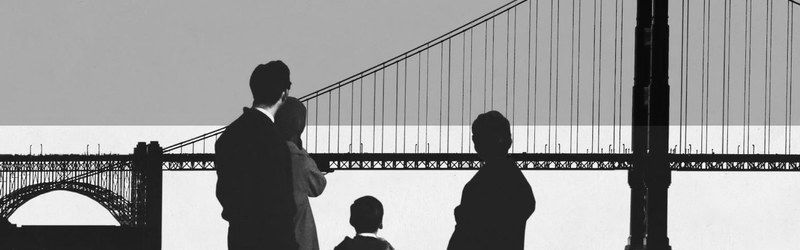
Generations of the writer’s family experience the “romantic delusions and hazardous fortunes” of San Francisco.
Sarah Stillman is a staff writer for The New Yorker.
"People don't really care about issues so much as they care about the stories and the characters that bring those issues to life. ... A story needs an engine or something to propel you forward and it can't just be a collection of like, 'Oh hmm, this was interesting over here and this was interesting over there.' Realizing that helped me sit down with all my stuff on trafficking and labor abuses in Iraq and Afghanistan and say 'What are the five craziest things that I found here and how could I weave them together in a way that would actually have some forward motion?'"
Thanks to TinyLetter and Hulu Plus for sponsoring this week's episode.
Kevin Kelly is a writer and a founding executive editor of Wired Magazine. He is the author of What Technology Wants, Out of Control and The Inevitable: Understanding the Twelve Technological Forces That Will Shape Our Future.
“I always try to write about the future—and it became harder and harder because things would catch up so fast. If you read Out of Control now, I’ve heard that people say, ‘well, this is obvious.’ I have to tell you, it was dismissed as entirely pie-in-the-sky, wild-eyed craziness twenty-five years ago.”
Thanks to Mailchimp and Pitt Writers for sponsoring this week's episode.
The inside story of the Affordable Care Act.
Nikole Hannah-Jones covers civil rights for The New York Times Magazine.
“I don’t think there’s any beat you can cover in America that race is not intertwined with—environment, politics, business, housing, you name it. So, whatever beat you put me on, this is what I was going to cover because I think it’s just intrinsic. If you’re not being blind to what’s on your beat, then it’s part of the beat.”
Thanks to MailChimp's Freddie and Co., Audible, and Trunk Club for sponsoring this week's episode.
Carol Loomis retired last summer after 60 years at Fortune. She continues to edit Warren Buffett's annual report.
“Writing itself makes you realize where there are holes in things. I’m never sure what I think until I see what I write. And so I believe that, even though you’re an optimist, the analysis part of you kicks in when you sit down to construct a story or a paragraph or a sentence. You think, ‘Oh, that can’t be right.’ And you have to go back, and you have to rethink it all.”
Thanks to TinyLetter and SquareSpace for sponsoring this week's episode.
Eric Lach is a staff writer at The New Yorker, where he covers New York. His latest article is “The Mayor and the Con Man.”
“I think about my own trajectory, my little generation of journalists—it was easier to get jobs reporting on national politics than to get a job reporting on something that you could see and go to and that is a really strange thing, the relief and the joy that I feel like when I can just take the subway twenty minutes to go see something interesting for a story or talk to somebody interesting or explore physically and not just feel like I’m making phone calls and Googling. It’s a very different kind of work, but it’s just not something that was super available.”
Edith Zimmerman is the founding editor of The Hairpin and a contributing writer to The New York Times Magazine.
"I never wrote anything myself or ran anything from other people that was needlessly negative. It wasn't some false grin plastered all over it — we addressed dark things too, and poked fun at things. But I didn't want there to ever be a tone of yeah, let's really just deflate this. Because ultimately you're just stabbing at a ghost among friends. And then at the end you've all just fallen on the floor and the ghost is gone. You're not really doing anything constructive."
Thanks to TinyLetter for sponsoring this week's episode.
</blockquote>

The story of the Abbottabad raid, in detail.