Showing 25 articles matching fccoins26 Coinsnight.com FC 26 coins 30% OFF code: FC2026. The best place for game coins.28oS.

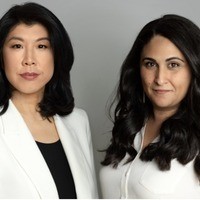
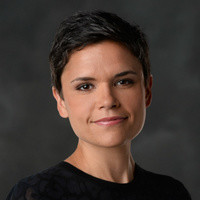
Amel Guettatfi and Julia Steers won this year's George Polk Award for Television Reporting for “Inside Wagner,” their Vice News investigation of Russian mercenaries on the Ukraine front and in the Central African Republic.

“One of the best takeaways I got from seven or eight years at Vice is that it’s not enough for something to be important when you’re figuring out how to make a story. It’s the intersection of important and interesting. And that has taught me that people will watch anything, anywhere, as long as it’s interesting. Nobody owes us their time. The onus is on us to explain things in an interesting, compelling way. I’m hoping that a landscape opens up somewhere else that sees that and understands that can be done anywhere in the world.”

This is the first in a week-long series of conversations with winners of this year’s George Polk Awards in Journalism.

Sheera Frenkel and Cecilia Kang are reporters for the New York Times. They are coauthors of An Ugly Truth: Inside Facebook's Battle for Domination.

“There are two types of reporters. There are reporters who date and reporters who marry. I think both Cecilia and I are reporters who marry our sources and by that I mean they are lifelong sources. It’s not a relationship that you build quickly. It’s one where you have to really let them get to know you as a journalist, show them that you are always going to be honest and do what you say and protect their anonymity and that you’re not biased. I think some reporters make mistakes in that they try to curry favor with sources by writing things they think the sources will like and I think sources actually respect you more when you show them: no I am accurate and I am honest and I am objective and I’m actually going to check what you tell me so that I know it’s true and you know I am doing my homework on everything.”

Adam Grant is an organizational psychologist, author, and host of the podcasts Work Life and Re: Thinking. His new book is Hidden Potential: The Science of Achieving Greater Things.

“If you only focus on your own interest, you tend to develop novel ideas, but not necessarily useful ideas. And so for me, the audience is a filter. … I might have 30 ideas for a book. Let me hone in on the four or five that also might be relevant to other people. The goal there is to make a contribution.”

Magic Actions

Looking back on the George Floyd rebellion.

Armed only with their psychotic courage, they were running, dancing, singing, smashing, burning, screaming, storming heaven: all rapturous varieties of Baraka’s “magic actions.” I listened to 19-year-olds talk nonstop throughout the night we spent in jail, as they howled insults at the officers and swapped stories of humiliation by police. It struck me that they were too young to have seen even the initial phase of BLM. Though well-acquainted with power and violence, they were tasting “politics” for the first time. Whatever the fate of the movement, I suspect that much of their future thinking will be measured against the feelings that filled the nights of 2020: the vastness and immediacy, the blur and brutal clarity.

Brendan I. Koerner is a contributing editor at Wired and the author of The Skies Belong to Us.

"It was this big review in The New York Times and I was terrified that it was going to say something awful about the book or about me as a writer. And my son said to me — he's 5, I should say — "If it's bad, you won't die." That's a good point, you know? So I always think of that when I pick up a new review and take that risk of someone slamming something that I've genuinely poured my heart and soul into. You'll live to fight another day."

Thanks to TinyLetter and the The Literary Reportage concentration at NYU's Arthur L. Carter Journalism Institute for sponsoring this week's episode.

</blockquote>

Emma Carmichael, a former editor at Deadspin and The Hairpin, is the editor in chief of Jezebel.

"Online feminism has more and more rules lately. There are only so many things you can say. And while our opinions are getting more constrained online, personal feminism and face-to-face conversations are looser and more complicated and don't go by any rules. ... The ideal with Jezebel is getting to a point where you can say, 'This is what I think, so who gives a fuck.'"

Thanks to TinyLetter for sponsoring this week's episode.

Kate Fagan is a columnist and feature writer for ESPN. Her latest book is What Made Maddy Run: The Secret Struggles and Tragic Death of an All-American Teen.

“When I was professionally closeted, I was kind of bitter. I didn’t have a ton of empathy. And I don’t think I always asked the right question, because I wouldn’t ask people questions that I wouldn’t want to be asked…I had walls up. I wouldn’t even allow myself to be vulnerable in my writing. Because the whole point of my existence at that time was to circumvent any moment that could create vulnerability in a way that would frighten me. And I think you could that see in my writing.”

Thanks to MailChimp and HelloFresh for sponsoring this week's episode.

Brooke Gladstone is the host of On the Media and the author of The Influencing Machine.

“I'm not going to get any richer or more famous than I am right now. This is it, this is fine — it's better than I ever expected. I don't have anything to risk anymore. As far as I’m concerned, I want to just spend this last decade, decade and a half, twenty years, doing what I think is valuable. I don’t have any career path anymore. I’m totally off the career path. The beautiful thing is that I just don’t have any more fucks to give.”

Thanks to Audible, Open Source, MailChimp, Igloo, and Squarespace for sponsoring this week's episode.

Ta-Nehisi Coates is an author and journalist. His next book is The Message.

“I don’t think we have the luxury as journalists of avoiding things because people might say bad things about us. I don’t even think we have the luxury of avoiding things because we might get fired. I don’t think we have the luxury of avoiding them because somebody might cancel some sort of public speech that we have. I then have to ask you, what are you in it for? Like, why did you come here? Did you come here just to make a living? Because there are many other things where you could make more money.”

Nilay Patel is editor-in-chief of The Verge and hosts the podcast Decoder.

“The instant ability—unmanaged ability—for people to say horrible things to each other because of phones is tearing our culture apart. It just is. And so sometimes, I’m like, Man, I wish our headline had been: ‘iPhone Released. It’s A Mistake.’ … But I think there’s a really important flipside to that … a bunch of teenagers are able to create culture at a scale that has never been possible before. Also, a bunch of marginalized communities are able to speak with coordinated voices and make change very rapidly. And that balance—I don’t think we’ve quite understood.”

Thanks to Mailchimp for sponsoring this week's episode.