Showing 25 articles matching fccoins26 Coinsnight.com FC 26 coins 30% OFF code: FC2026. The best place for game coins.28oS.

Kiera Feldman is an investigative reporter. Her latest article is "Trashed: Inside the Deadly World of Private Garbage Collection."

"I used to have a lot of anxiety that I don’t seem like an investigative reporter. Utlimately, my reporting personality is just me. It’s just, I want to be real with people. And the number one rule of reporting is to be a human being to other people. Be decent. Be kind."

Thanks to MailChimp, RXBAR, and Tripping.com for sponsoring this week's episode.
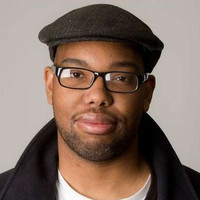
Ta-Nehisi Coates is a senior editor at The Atlantic. His latest cover story is "The Case for Reparations."

"The writer hopes for change, but writers can't assume that their work is going to cause change."

Thanks to TinyLetter and I Am Zlatan, the international bestseller published by Random House, for sponsoring this week's episode.
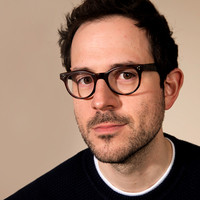
Latria Graham is a writer living in South Carolina. Her work has appeared in Outside, Garden & Gun, The Guardian, and The New York Times. Her latest essay is "Out There, Nobody Can Hear You Scream."

“My goal as a person—not just as a writer—is to be the adult that I needed when I was younger. That’s why I go and talk to college classes. That’s why I write some of these vulnerable things, to let people that are struggling know that they’re not on their own. … I have to be unmerciful to myself, I think, in order to do it. I really do try to dissect myself and my mistakes. And just kind of say, Here’s the full deck of my life. Take from it what you need. But I’m not holding out on you.

Thanks to Mailchimp for sponsoring this week's episode.
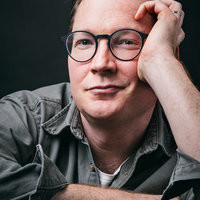
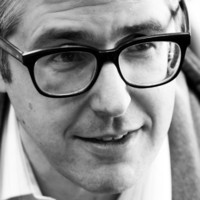
Ira Glass is the host and executive producer of This American Life.

“You can only have so many questions about feelings, I think. At some point people are just like alright, enough with the feelings.”

Thanks to MailChimp, EA SPORTS FIFA 16, Fracture, and FRONTLINE's "My Brother's Bomber for sponsoring this week's episode.

Jesse David Fox covers comedy for Vulture, where he hosts the podcast Good One. His new book is Comedy Book: How Comedy Conquered Culture—and the Magic That Makes It Work.

“There’s a complete lack of anyone who’s ever written about comedy seriously compared to any other art form. There’s just nothing. … So the challenge was, how do you start a conversation that no one has been participating in?”

Mark Adams is the author of Mr. America and Turn Right at Machu Picchu. His latest book is Tip of the Iceberg: My 3,000-Mile Journey Around Wild Alaska, the Last Great American Frontier.

“It’s always sheer and utter panic the whole time I’m on the road. I never sleep more than like three or four hours a night when I’m on the road because I wake up at 4:00 in the morning and I’m like, Who am I going to talk to today? I don’t have anything scheduled for today. What am I going to do? And sometimes things work out for that day and sometimes they don’t. I think when you start to lose that feeling — that tense feeling, that pit in your stomach — then the work starts to lose something as well.”

Thanks to MailChimp and Pitt Writers for sponsoring this week's episode.
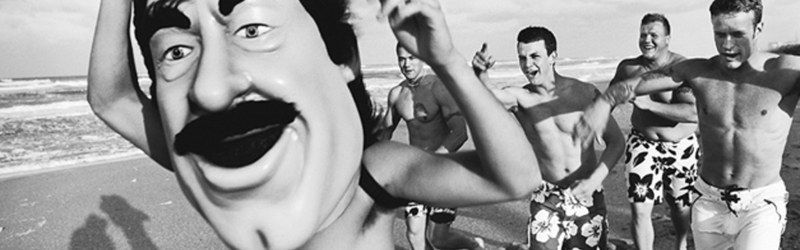
Jonah Weiner, contributing editor at Rolling Stone, pop critic at Slate, and contributor to The New York Times Magazine and The New Yorker.

"The thing that I've found useful is really actually to delete everything that I've written and go at it fresh, and re-envision it again: this is going to be my new lede now. That's really the best way to do it, because if there are these vestigial sentences, and vestigial sequences or paragraphs that are in the draft, for me, that's just going to snap me back to where my head was at, in an unproductive way ... Often, I'll find that that is just this great cure-all. Just delete it all, go for a walk or whatever, and then sit down and start writing an entirely different feature about the exact same subject."

Thanks to TinyLetter for sponsoring this week's episode!

Alexis C. Madrigal is an editor-at-large for Fusion, where he’s producing the upcoming podcast, Containers.

“Sometimes you think like, 'Man the media business is the worst. This is so hard.' When you spend time with all these other business people, you probably are going to say, ‘Capitalism is the worst. This is hard.’ Competition that’s linked to global things is so hard because global companies are locked in this incredible efficiency battle that just drives all of the slack out of the system. Like media, there’s no slack left, and I don’t know where things go after that.”

Thanks to MailChimp, Stamps.com, and Casper for sponsoring this week's episode.
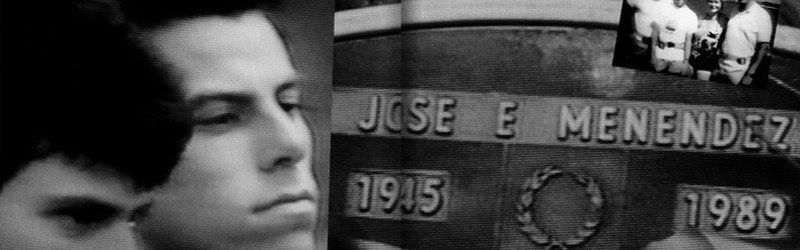
Kliph Nesteroff writes for WFMU's Beware of the Blog. His book, The Comedians: Drunks, Thieves, Scoundrels, and the History of American Comedy, was released in November.

“Well, comedy always becomes stale. Whether it’s offensive or not offensive, it has an expiry date, unfortunately. A lot of people don’t want to hear this because that means a lot of their favorite comedians suddenly become irrelevant. But that’s the history of comedy: the hippest, coolest guy today—whoever that is to you in comedy—50 years from now, the new generation is going to say, ‘That guy’s not funny, and he’s square.’ And they’re going to say, ‘This new young guy is funny.’ But in another 50 years that guy becomes the square who isn’t funny. And it’s not that they weren’t funny and everybody was wrong; it was that that person was relating to their time.”

Thanks to MailChimp, Casper, Squarespace , and CreativeLive for sponsoring this week's episode. If you would like to pitch in, please become a Longform Supporter.

Linda Villarosa directs the journalism program at the City College of New York and is a contributing writer at the New York Times Magazine. Her article "Why America’s Black Mothers and Babies Are in a Life-or-Death Crisis" was one of Longform's Top Ten of 2018. She is at work on a new book, Under the Skin: Race, Inequality and the Health of a Nation, due out in 2020.

“I think at the beginning I was afraid to say it right out, so I think I was saying ‘racial bias’ or something like that. Then I stopped. ... I think how I learned about it both in earlier reporting and in grad school and in my own research was that race is a risk factor for a bunch of different health problems, whether it’s heart disease, infant and maternal mortality, or HIV. It’s just said that race is a risk factor. It’s disproportionate. What it really is is that race is a risk factor, but it’s also a risk marker. Instead of looking at what individuals are doing wrong, it’s what society is doing wrong in creating problems for individual people which lead to health crisis. It’s sort of like bias, related to racism, is creating problems in people’s actual bodies. That’s what I came to understand. It really shifts the blame off the individual.”

Thanks to MailChimp, The Great Courses Plus, and Pitt Writers for sponsoring this week's episode.

Ben Smith is the editor-in-chief of BuzzFeed.

“I do think as a reporter in general, most of what we deal in is ephemera. And I love that. I mean that’s the business, and I don’t think there’s anything wrong with that. In fact, I think that’s a plus and something that shapes how you succeed at the job because you realize that this thing you’re writing is about this moment and right now, and about its place in the conversation. It’s not some piece of art to hang on the wall.”

Thanks to MailChimp, Harry's, and Reveal, and Home Chef for sponsoring this week's episode.
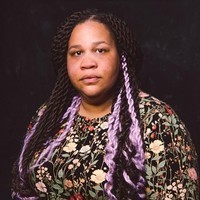
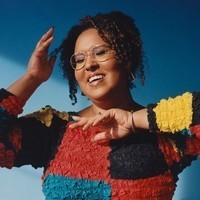
Brittany Luse is the host of NPR’s It’s Been a Minute.

“One of the things I love about this job is everything is practice. I love it. It's like if a show is great and everyone loves it, you gotta put on another one. You just gotta do it again. And if the show didn't quite do what you'd hoped or set out to do in your mind and in your heart, you gotta do another one. I just love it. You can never feel too good and you can never feel too bad.”

You’re Wrong, You’re Wrong, You’re Definitely Wrong, and I’m Probably Wrong, Too

What it was like to edit The New Republic at its most contentious.

One of the little tweaks I made the first time I got the job was to change the slogan on the table of contents from “A Journal of Politics and the Arts” back to the original: “A Weekly Journal of Opinion.” All the fine reporting notwithstanding, what The New Republic did best, had always done best, was opinion. Its politics were polemical, its art was the art of argument.

David Epstein has reported for ProPublica, Sports Illustrated, and This American Life. His new book is Range: Why Generalists Triumph in a Specialized World.

“You can’t just introspect or take a personality quiz and know what you’re good at or interested in. You actually have to try stuff and then reflect on it. That’s how you learn about yourself—otherwise, your insight into yourself is constrained by your roster of experiences.”

Thanks to MailChimp, Time Sensitive, Read This Summer, The TED Interview, and Pitt Writers for sponsoring this week's episode.

Robin Marantz Henig, the author of nine books, writes about science and medicine for The New York Times Magazine.

“I have my moments of thinking, ‘Well, why is this still so hard? Why do I still have to prove myself after all this time?’ If I were in a different field, or if I were even on a staff, I’d have a title that gave me more respect. I still have to wait just as long as any other writer to get any kind of response to a pitch. I still have to pitch. Nothing is automatic, even after all these years of working at this.”

Thanks to MailChimp, Johnson & Johnson, and Audible.