Showing 25 articles matching fccoins26 Coinsnight.com FC 26 coins 30% OFF code: FC2026. The best place for game coins.28oS.

Jerry Saltz is a Pulitzer-winning art critic for New York.

“To this day I wake up early and I have to get to my desk to write almost immediately. I mean fast. Before the demons get me. I got to get writing. And once I’ve written almost anything, I’ll pretty much write all day, I don’t leave my desk, I have no other life. I’m not part of the world except when I go to see shows.”

Thanks to MailChimp and Pitt Writers for sponsoring this week's episode.

Rachel Syme has written for The New Yorker, The New York Times, Grantland, and more.

“You have this sense that you’re bonding, but at the same time you're also going to betray them. Because if you hear this quote that they say or you see it in a mannerism, you write it in your notebook and you think ‘I got it.’”

Thanks to TinyLetter, The Great Courses, MarketingProfs, and Squarespace for sponsoring this week's episode.

Roxanna Asgarian is the law and courts reporter for the Texas Tribune. Her new book is We Were Once a Family: A Story of Love, Death, and Child Removal in America.

“Every once in a while, I'll have someone just freak out at me. And it keeps you honest, in a way, because they don't owe you anything. People don't owe you anything as a journalist. ... But everyone reacts to trauma differently and some people really do want to talk about it. And I think the families in this book really wanted to talk about it and it felt like no one was even paying attention to them.”

Wesley Yang writes for New York and other publications.

“If a person remains true to some part of their experience, no matter what it is, and they present it in full candor, there’s value to that. People will recognize it. Once I knew that was true, I knew I could do this.”

Thanks to MailChimp, Home Chef, and Trunk Club for sponsoring this week's episode.

Patrick Radden Keefe is a staff writer at The New Yorker.

"I tend not to like really prescriptive writing, and as often as not what I want to do is kind of get in and find the stories and the narratives almost as a delivery mechanism to just get people to sit up and think about it. Honestly, the areas that I'm interested in are so obscure, often, that the thing that I want is for people just to understand and care a little bit more than they did before."

Thanks to TinyLetter for sponsoring this week's episode!

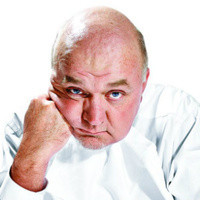
Adam Platt is the restaurant critic for New York.

“My job was described to me recently as ‘the last great job of the 20th century.’ I think there might be something to that.”

Thanks to TinyLetter, Lynda, Casper, and Wealthfront for sponsoring this week's show.

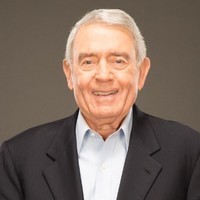
Dan Rather is a journalist, author, and the former anchor of CBS Evening News.

”I knew that being named to succeed Walter Cronkite would put me in a position of inhaling—every day—a kind of NASA-grade rocket fuel for the ego. And that could be dangerous…. In the end, when the red light goes on, it's just you. You're by yourself.… And the longer you're in that role, the more difficult it is to stay true to yourself and to remember who you are and who you want to be.”

Thanks to Mailchimp for sponsoring this week's episode.

Chris Heath, winner of the 2013 National Magazine Award for Reporting, is a staff writer at GQ.

"I present myself as someone who is going to be rigorous and honest. And if you can engage in the way I'm asking you to engage, then I hope that you will recognize yourself in a more truthful way in this story than you usually do. And maybe even, with a bit of luck, more than you ever have before. That's what I bring. That's my offer."

Thanks to TinyLetter and the The Literary Reportage concentration at NYU's Arthur L. Carter Journalism Institute for sponsoring this week's episode.

</blockquote>

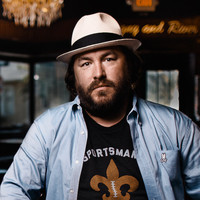
Wright Thompson is a senior writer for ESPN. His new book is Pappyland: A Story of Family, Fine Bourbon, and the Things That Last.

“If you’re going to write a profile of someone … you have to find some piece of common ground with them so that no matter how famous or good or noble or bad—or no matter how cartoonish their most well-known attributes are—it shrinks them. And once they’re small enough to fit in your hand, I think it changes the entire experience of asking questions about their lives.”

Thanks to Mailchimp for sponsoring the show.

Evan Ratliff, a co-host of the Longform Podcast, discusses "The Oilman's Daughter," his new story in The Atavist.

"This woman was given the opportunity to take on a new identity. And it was a mistake. She never should've done it. If there was a way for her to go back and say, 'No, I don't want to know this. I want to be who I am,' then I think she should've taken that. … I'm fascinated with people who want to radically shift their identity. It almost never works out well."

Bob Dole

The Republican candidate works a room, as excerpted from Richard Ben Cramer’s biography of the senator:

No one can do that day after day, week after week, for years ... without some rock-hard certainty that can't be milled away by nonsense and stress. He has to know: Why him? And: Why now? ... He has to know that he is The One. And if he's strong enough to keep going-if he's able, smart, and lucky-then, he'll get to the final twist in the road, when things catch fire, he can see how his words make the people feel, he can feel how those words now matter to him. He can make all the difference just by walking into a room. There are thousands of people -- and they want him. He and his campaign fill the lives of people who are almost strangers, and he takes over the life of everyone dear to him. He has to, it's all right -- because it's that important. Now, he knows: Not only should I be President, I am going to be President!

James Verini, a freelance writer based out of Nairobi, won the 2015 National Magazine Award for Feature Writing.

“That is probably the most alien, jarring thing about working in Africa: life is much cheaper. More to the point, death is very close to you. We're very removed from death here. Someone can die at 89 in their sleep here and it's called a tragedy. In Africa, I find that I'm often exposed to it. That's part of why I wanted to live there.”

Thanks to TinyLetter and Trunk Club for sponsoring this week's episode.

Grief and Solemnity

On the American way of death, burial, and mourning, from war heroes to Elvis:

At the scene of his mother’s funeral, Elvis Presley — invincible sex symbol, cocksure performer, the man who changed the world and music forever — was reduced to a pathetic, blubbering mama’s boy. “Mama, I’d give up every dime I own and go back to digging ditches, just to have you back,” he told her body while it lay in repose the night before the funeral. At the service, according to biographer Peter Guralnick, "Elvis himself maintained his composure a little better until, towards the end, he burst into uncontrollable tears and, with the service completed, leaned over the casket, crying out, 'Good-bye darling, good-bye. I love you so much. You know how much I lived my whole life just for you.' Four friends half-dragged him into the limousine. 'Oh God,' he declared, 'everything I have is gone.'"

Ed Yong spent 2020 covering the pandemic for The Atlantic. His latest feature is "How Science Beat the Virus."

“I am trying to give readers a platform that they can stand on to observe this raging torrent that is the pandemic, this cascade of information that is threatening to sweep us all away. I’m trying to give people a rock on which they can stand so that they can observe what is happening without themselves being submerged by it. But I am trying to construct that platform while also being submerged in it.”

Thanks to Mailchimp for sponsoring this week's episode.

Irin Carmon is a senior correspondent at New York, a contributor at CNN, and the co-author of Notorious RBG: The Life and Times of Ruth Bader Ginsburg.

“The fact that we were part of this entire wave of reporting was actually exhilarating. Even when it was competitive. For me, my desire to do this comes out of a broader set of commitments to the world. I’m a feminist and I’m a journalist. The ability to do feminist investigative journalism felt like a gift. And it also felt like, wow, this thing I’d been working on for a long time is something that institutions—the most prestigious and well-resourced institutions—wanted to put resources to. … I think that that kind of commitment is significant in our culture because it is validating it as a point of inquiry.”

Thanks to MailChimp, Skagen, TBD with Tina Brown, Screen Dive, and Pitt Writers for sponsoring this week's episode.
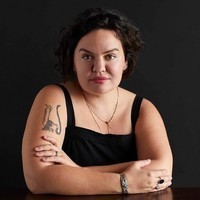
Lizzie Johnson covers wildfires for the San Francisco Chronicle.

“It’s kind of like when you’re a beginning journalist and you have to write an obituary—calling the family of the person who died seems like this insurmountable, very invasive task and you really don’t want to do it. That’s kind of how I felt about interviewing fire victims at first. I felt like I was somehow intruding on their grief and their pain. But somewhere along the way I realized there’s healing power in talking about what you’ve been through. Saying it out loud and being able to claim ownership to it. I found that time after time these people are very grateful because they need to talk. They have something to say in the aftermath of this big, massive thing that just came and wiped out everything they knew. They really do just need someone to listen to them. I have never had someone tell me, ‘Go away, we don’t want to talk to you.’ And I’m completely bowled over by that every single time.”

Thanks to MailChimp and Pitt Writers for sponsoring this week's episode.
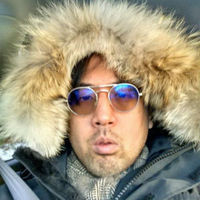
Khabat Abbas is an independent journalist and video producer from northeastern Syria, and the winner of the 2021 Kurt Schork News Fixer Award.

”I can see from my experience that there is a gap between the editors, who are kind of elites in their luxury offices, and the amazing journalists who are in the field, who all sympathize with what they are seeing on the ground and want to cover [it], but they have to satisfy the editors. And this is how we end up having little gaps in the ways of covering in general. It's not a matter of like, they shaped it in this way. The problem, I think, it’s bigger. How this industry is working, how this industry is deciding what they should cover.”

Bradley Hope and Tom Wright are former journalists at The Wall Street Journal, the co-founders of journalism studio Project Brazen, and the co-authors of the book Billion Dollar Whale.

Their new podcast is Corinna and The King. Hope’s new book is “The Rebel and the Kingdom.”

“We’re a little bit skeptical of just jumping into the big story of the day with something that doesn’t feel differentiated. It needs to have character, storytelling—it can’t just be a great topic, or an important topic, even.”

Radhika Jones is the editor-in-chief of Vanity Fair and the editor of Women on Women.

“There are a lot of people who still see the value of talking to someone, having a real conversation — about the things that they’re doing, the things that they’re caring about, the things that they’re afraid of, the things that are challenging — because in that conversation, they themselves will discover things that they didn’t realize. It obviously takes courage. It’s a payoff for the reader, certainly, but I think that there are subjects who understand that there is something there for them, too.”

Thanks to Mailchimp and Pitt Writers for sponsoring this week's episode.

James Franco Interview

FRANCO: “Straight” and “gay” are fairly recent phenomena. One of the things the great book Gay New York: Gender, Urban Culture and the Making of the Gay World, 1890–1940 is about is the way those labels have changed behavior. Between World War I and World War II, straight guys could have sex with other guys and still be perceived as straight as long as they acted masculine. Whether you were considered a “fairy” or a “queer” back then wasn’t based on sexual acts so much as outward behavior. Into the 1950s, 1960s and so on, the straight and gay thing came up based on your sexual partner. Because of those labels, you do it once and you’re gay, so you get fewer guys who are kind of in the middle zone. It sounds as though I’m advocating for an ambiguous zone or something, but I’m just interested in the way perception changes behavior.

Kelly McEvers, a former war correspondent, hosts NPR's All Things Considered and the podcast Embedded.

“Listeners want you to be real, a real person. Somebody who stumbles and fails sometimes. I think the more human you are, the more people can then relate to you. The whole point is not so everybody likes me, but it’s so people will want to take my hand and come along. It's so they feel like they trust me enough to come down the road with me. To do that, I feel like you need to be honest and transparent about what that road’s like.”

Thanks to MailChimp, Audible, and Squarespace for sponsoring this week's episode.