Showing 25 articles matching fccoins26 Coinsnight.com FC 26 coins 30% OFF code: FC2026. The best place for game coins.28oS.

Derek Thompson is a staff writer for The Atlantic and host of the podcast Plain English.

“I am an inveterate dilettante. I lose interest in subjects all the time. Because what I find interesting about my job is the invitation to solve mysteries. And once you solve one, two, three mysteries in a space, then the meta-mystery of that space begins to dim. And all these other subjects—that's the new unlit space that needs the flashlight. And that's the part of the job that I love the most: that there are so many dark corners in the world. And I've just got this flashlight, and I can just shine it wherever the hell I want.”
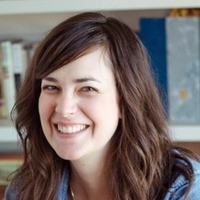

Ann Friedman is a writer, editor and co-founder of Tomorrow.

"The notion of kissing up is super weird to me. You should always be kissing down and sideways, to the people who are going to be working alongside you and coming up behind you. I'm really aware of my impending irrelevance. ... I'm waiting for that day when I'm in dire need of work and 65 years old—because none of us are retiring, obviously—and I don't understand how to write on Google Glass or whatever we're composing on then. I want there to be some journalist who remembers when I got on the phone with her in 2013 and helped her negotiate for her first salary and throws me a fucking bone. I think about that moment a lot."</i>

Thanks to TinyLetter for sponsoring this week's episode!

</blockquote>

Alexis Okeowo, a foreign correspondent, has written for The New Yorker, The New York Times Magazine and Businessweek.

“Nigeria is a deeply sexist country. It can be difficult for people to take you seriously. But that also has its benefits, because it’s very easy to disarm your subjects. If I’m interviewing people who underestimate me, I can get them to open up because they somehow think that I’m naïve or I don’t know what I’m doing. So I don’t mind if some sexist general or banker thinks I’m this young little student who doesn’t know what she’s talking about. As long as you tell me what I want to know, it’s great.”

Thanks to TinyLetter and MarketingProfs for sponsoring this week's episode.

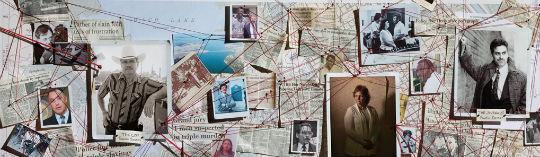
Sponsor: Texas Monthly's New, Epic Examination of a Haunting 31-Year-Old Murder Case

Our sponsor this week is Texas Monthly, which has just published a truly incredible piece of journalism. Michael Hall, whose work has appeared on Longform many times, spent a year investigating one of the most confounding criminal cases in Texas history. In the summer of 1982, three Waco teenagers were savagely murdered for no apparent reason. Four men were ultimately charged with the crime. One was executed, two others were given life sentences, and a fourth was sent to death row only to be released after six years. They all may have been innocent.

Over the next two weeks, Texas Monthly will serialize Hall's 25,000-word piece, "The Murder at the Lake," which looks at the case from five distinct perspectives. Part One is available now; you should read it.

Jeanne Marie Laskas is the author of the new book Hidden America and a correspondent for GQ.

"I'm just a writer going into [people's lives], you know? What do you do with that kind of intensity of a relationship when you're job is to invoke it on the page? It's a huge ... not just privilege but responsibility. Because, you know, it's just for a story. And I tell them that: 'I'm asking you trust me, but at the same time don't trust me. I'm kind of like a vulture in this relationship—we're not friends.'"

image

Jerry Saltz is a Pulitzer-winning art critic for New York.

“To this day I wake up early and I have to get to my desk to write almost immediately. I mean fast. Before the demons get me. I got to get writing. And once I’ve written almost anything, I’ll pretty much write all day, I don’t leave my desk, I have no other life. I’m not part of the world except when I go to see shows.”

Thanks to MailChimp, TapeACall, The Dream, Squarespace, and Pitt Writers for sponsoring this week's episode.

Bryan Fogel is the Oscar-winning director of Icarus.

“But there was a long period of time also that none of us were really thinking so much about the film. It was really that we were in a real world crisis. Gregory's life was essentially in my hands.”

Thanks to MailChimp, Read This Summer, Google Play, and Stitcher Premium for sponsoring this week's episode.

Mitchell Prothero covers intelligence and crime for Vice News. His new podcast with Project Brazen is Gateway: Cocaine, Murder, and Dirty Money in Europe.

“I’m really interested in transnational networks—crime, intelligence. I’m fascinated by the gray. Like, when is something legal and when is something illegal? One thing with this Gateway project [was that] nobody could ever tell me that moment where money goes from absolutely being illegal to being legal.”

Andrea Bernstein is a journalist and co-host of Trump, Inc., a podcast from WNYC and ProPublica. Her new book is American Oligarchs: The Kushners, the Trumps, and the Marriage of Money and Power.

“Hope is an action. And I feel that writing and documenting is an action. When I stop doing those things, I will be hopeless. But because I am still doing those things, it means that I still have hope… so long as we continue to be actors in the world, we can be hopeful human beings.”

Thanks to Mailchimp and Pitt Writers for sponsoring this week's episode.

Prodigal Sun

Energy problems are long problems that often receive short solutions. In 2000, when Mother Jones ran this history about what happened to the energy research boom of the late 70s and early 80s, I was buying $0.99 a gallon gas for my Escort. I chose this story because I think longform journalism can keep people interested in these issues that require decadal attention but are subject to year-to-year fluctuations in public interest. And it’s a great story.

-A. Madrigal

Kenneth R. Rosen has written for The New York Times, Wired, The New Yorker, and many other publications. His new book is Troubled: The Failed Promise of America's Behavioral Treatment Programs.

“When I report, I keep two journals. … I keep my reporting notebook, which is sort of an almanac of dates, times, names, quotes, phone numbers. And then I have my personal notebook, which has all my fears and anxieties. And it invariably makes its way into the reporting … which is sort of an amalgamation of those two journals, of those two experiences, the internal and the external.”

Thanks to Mailchimp for sponsoring this week's episode.

Jack Shafer covers the media for Politico.

“This is a true story, not a ‘Brian Williams story’: my first report card said ‘Jack is a very good student, but he has a tendency to start fights on the playground and bring them back into the classroom.’ That's been my career style — start a fight and bring it back to the classroom.”

Thanks to TinyLetter and Lynda for sponsoring this week's episode. If you would like to support the show, please leave a review on iTunes.

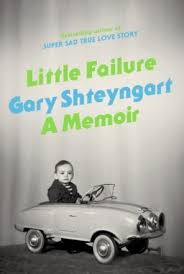
Sponsor: "Little Failure" by Gary Shteyngart

</param></param></param></embed>

Our sponsor this week is Little Failure, the new memoir by Gary Shteyngart. Already a New York Times bestseller, Little Failure tells the story of Shteyngart's American immigrant experience, moving back and forth through time and memory with self-deprecating humor, moving insights, and literary bravado. The result is a resonant story of family and belonging that feels epic and intimate and distinctly his own.

Mary Karr called Little Failure "a memoir for the ages." The Millions dubbed Shteyngart the "Chekhov-Roth-Apatow of Queens." And Nathan Eglander said the book is so honest "Dr. Freud would be proud."

Buy Little Failure today or read an exclusive excerpt on Longform.

Mary Roach is the author of seven nonfiction books, including her latest, Fuzz: When Nature Breaks the Law.

"In these realms of the taboo, there's a tremendous amount of material that is really interesting, but that people have stayed away from. ... I'm kind of a bottom feeder. It's down there on the bottom where people don't want to go. But if that's what it takes to find interesting, new material, I'm fine with it. I don't care. I'm not easily grossed out. I don't feel that there's any reason why we shouldn't look at this. And over time, I started to feel that ... the taboo was preventing people from having conversations that it would be healthy to have."

Susan Burton is an editor at This American Life, the author of the memoir Empty, and the host of the podcast The Retrievals.

“I know I have much more anger than I reveal, and I don’t think that’s uncommon. Especially for women. There’s been a lot of attention to that in recent years—the anger of women, how it’s expressed and not expressed. But I think that among the things I’ve stifled for years are just my true feelings, and I’ve always wanted to be close to people and to be intimate with people, and have often felt that I have trouble making myself known or being known or being understood. And so...it felt good to be known.”

Miles Johnson is an investigative reporter for the Financial Times. He is the author of Chasing Shadows: A True Story of Drugs, War and the Secret World of International Crime and the host of Hot Money: The New Narcos.

“I’m really fascinated always by the ways in which people just have to do really boring parts of running a crime organization … I love the banalities of this stuff. We have a fictionalized version of crime groups and it’s obviously glamorous, and they’re really smart, but there’s a lot of stuff that’s bumbling incompetence as well or just quite unglamorous.”

Sponsor: "Little Failure" by Gary Shteyngart

Our sponsor this week is Little Failure, the new memoir by Gary Shteyngart. Already a New York Times bestseller, Little Failure tells the story of Shteyngart's American immigrant experience, moving back and forth through time and memory with self-deprecating humor, moving insights, and literary bravado. The result is a resonant story of family and belonging that feels epic and intimate and distinctly his own.

Mary Karr called Little Failure "a memoir for the ages." The Millions called Shteyngart the "Chekhov-Roth-Apatow of Queens." And Nathan Eglander, responding to the book's aching honesty, said "Dr. Freud would be proud."

Buy it today or read an exclusive excerpt on Longform.