Showing 25 articles matching fc points to coins calculator Visit Buyfc26coins.com for latest FC 26 coins news..OtjT.

Sponsor: The Warby Parker Guide to Black Eyes and Secret Societies

This guide is sponsored by Warby Parker, which sells $95 glasses with prescription lenses included. Directed by Philip Andelman, their newest television commercial is a Kinks-scored ode to New York literary life.

<IMG SRC=”http://ad.doubleclick.net/ad/N884.1744599.LONGFORM.ORG/B7797079;sz=1x1;ord=[timestamp]?” BORDER=0 WIDTH=1 HEIGHT=1 ALT=”Advertisement”></A></p>

The Longform Guide to Cat Burglars

This collection is sponsored by Alarm Grid, a new kind of home security company. No contracts, no activation costs, no hidden fees. Try it today and get your first month free.

The Longform Guide to George Saunders

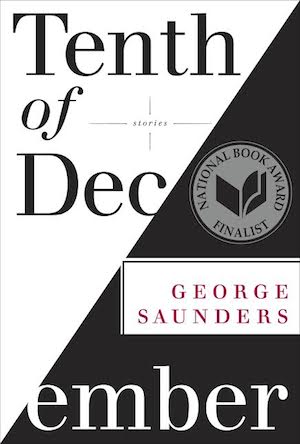
This guide is sponsored by George Saunders's Tenth of December, the acclaimed short story collection published this year by Random House. A National Book Award Finalist and one of The New York Times Book Review's Top 10 of 2013, Tenth of December has been hailed by critics as "an irresistible mix of humor and humanity," "a visceral and moving act of storytelling," and "a feat of inventiveness."</p>

It's really, really good. Makes for a great gift, too. Buy it today.

Should you need further convincing, here is a collection of classic Saunders stories, both fiction and non-fiction, from our archive:</em>

Read more

Buy Tenth of December today:</p>

AmazonBarnes & NobleIndiebound
KindleNookiBookstore</strong>

The Longform Guide to Cruises

Compiled by Elon Green.

Editor's note: No compendium of cruise stories would be complete without David Foster Wallace’s account of his week on the MV Zenith. Alas, "Shipping Out" is not available online as text, but the pdf is here.

The Moral Equivalent to Football

A former first-string tackle considers the green zone as a war zone:

Just as football has evolved in accordance with the evolving business ethic of American society, so has it evolved in accordance with the changing strategic assumptions about war. The development (or rebirth) of the T-formation in football coincided almost exactly with the development of a new era of mobility and speed in warfare best exemplified in the Blitzkrieg tactics of the German armies in Europe in 1939-40. The T-formation soon overwhelmed the “Maginot Line” mentality of traditional football, based as it was on rigid lines and massive concentrations of defensive and offensive power.

Sponsor: Nate Anderson's Guide to Internet Crime

This guide is sponsored by </i>The Internet Police: How Crime Went Online, and the Cops Followed</b></a>, the new book from Ars Technica Deputy Editor Nate Anderson.</p>

A excerpt from </i>The Internet Police is available on Longform. Already read it? Here's a collection of Nate's all-time favorite internet crime stories.

Welcome to Armageddon!

There are no resurrections in Armageddon MUD, a text-based role-playing game (RPG) set on the harsh desert planet Zalanthas. One of the Internet’s oldest extant virtual worlds, it is an amoral fairytale about dune traders and bandits, assassins and sorcerer-kings, collaboratively written by thousands of players over a period of twenty-six years. Created in 1991 by a thirteen-year-old coder named Dan Brumleve, the kernel of the story was cribbed from a Dungeons and Dragons campaign setting called “Dark Sun,” source of the game’s fantasy races (elves, dwarves, muls, halflings, half-giants), its kaiju-sized insects, and the foundational conceit of a once-verdant world desiccated by “defiling” magic.

Emily Bazelon is a staff writer at the New York Times Magazine and a co-host of Political Gabfest. Her latest book is Charged: The New Movement to Transform American Prosecution and End Mass Incarceration.

“I'm pretty convinced that if everybody went to criminal court we would not have courts that are dysfunctional the way our courts are. Because what you see every day is a lot of dysfunction and disrespect. It’s kind of deadening. Most people—especially most middle and upper-class people in this country—don’t know anything about the system. They haven’t experienced it first-hand and they prefer not to think about it. It’s very stigmatized. A lot of what I do is just bear witness.’”

Thanks to MailChimp, The Great Courses Plus, and Pitt Writers for sponsoring this week's episode.

Baxter Holmes is a senior writer for ESPN. He won the James Beard Award for his 2017 article, “The NBA's Secret Addiction.”

“If there’s anything I’m really fighting for it’s people’s memory. I love the notion of trying to write a story that sticks with people. And that requires really compelling characters. It requires in-depth reporting — you have to take people on a journey. It needs to be so rich and something they didn’t know. I look for a story that I can tell well enough that it will hold up, that it will earn someone’s memory.”

Thanks to Mailchimp, Substack, and Pitt Writers for sponsoring this week's episode.

Rebecca Traister is a writer for New York and the author of Good and Mad: The Revolutionary Power of Women’s Anger. Her latest article is "The Necessity of Hope."

“A big motivation of this piece, which I think is framed in this there’s still reason to hope is actually the inverse of that. Which is: Let us be crystal clear about what is happening, what is lost, what is violated. The cruelty, the horror, and the injustice, and that is it only moving toward worse right now. And to establish that to then say that it is the responsibility to really absorb that, and then figure out how to move forward.”

The Issuu Guide to Fashion Media Icons

This guide is sponsored by Issuu, the world's fastest growing digital publishing platform. Issuu's publishers include the biggest names in fashion, lifestyle, art, sports, and global affairs. And many more publications are created by people just like you.

Tonight, one of those publishers, The Daily Front Row, is hosting the first annual Fashion Media Awards at Fashion Week. Eight of the fashion industry's most powerful and influential people will be honored. Tomorrow, The Daily Front Row will publish its annual Media Issue, which you can read on Issuu.</i>

Until then, check out these classic profiles of fashion media icons:

Nathaniel Rich writes for Rolling Stone, Harper's and the New York Times Magazine. His latest novel is Odds Against Tomorrow.

"I'm drawn to obsession. I think I'm an obsessive in a way, probably most writers are. It's an obsessive act to sit at a desk by yourself."

Thanks to TinyLetter and EA SPORTS FIFA WORLD CUP for sponsoring this week's episode.

Eric Lach is a staff writer at The New Yorker, where he covers New York. His latest article is “The Mayor and the Con Man.”

“I think about my own trajectory, my little generation of journalists—it was easier to get jobs reporting on national politics than to get a job reporting on something that you could see and go to and that is a really strange thing, the relief and the joy that I feel like when I can just take the subway twenty minutes to go see something interesting for a story or talk to somebody interesting or explore physically and not just feel like I’m making phone calls and Googling. It’s a very different kind of work, but it’s just not something that was super available.”

Katherine Eban is an investigative journalist and contributor to Vanity Fair. Her latest article is ”The Lab-Leak Theory: Inside the Fight to Uncover COVID-19’s Origins.”

”You can't make a correction unless you know why something happened. So imagine—if this is a lab leak—the earth shattering consequences for virology. For the science community, for how research is done, for how research is regulated. Or if it is a zoonotic origin, we have to know how our human incursion into wild spaces could be unleashing these viruses. Because COVID-19 is one thing, but we're going to be looking at COVID-25 and COVID-34. We have to know what caused this.”

Thanks to Mailchimp for sponsoring this week's episode.

Adam Higginbotham has written for Businessweek, Wired and The New Yorker. His latest story is A Thousand Pounds of Dynamite, for The Atavist.

"There's always a narrative in a crime story. Something has always gone wrong. These guys are always in prison, because they all fucked something up or trusted the wrong person. They always get caught in the end. Because if they hadn't, you wouldn't be reading about it."

Thanks to TinyLetter for sponsoring this week's episode.

Nicholas Schmidle is a staff writer for The New Yorker. His latest article is "Virgin Galactic's Rocket Man."

“I think there’s a lot more pressure that I’ve put on myself to make sure that the next [article] is better than the last one. To make sure there are sourcing standards and expectations I have for myself now that I might not have had earlier. I’m putting even more priority on building long-term relationships in which I trust an individual. ... I feel like the pieces coming in are tighter in terms of sourcing, but story selection becomes a lot more difficult. You want to do a different story.”

Thanks to MailChimp, Skagen, and Pitt Writers for sponsoring this week's episode.

Luke Mogelson is a journalist and fiction writer whose work has appeared in The New Yorker, The New York Times Magazine, and other publications. His latest feature is ”Among the Insurrectionists.”

“Get to the front and document as much as you can. ... I think my approach is much more similar to photographers than other writers. I spend a lot of time with photographers and ... I feel like I've gotten pretty good at getting myself into situations where there's few or maybe no other writers around, but there's always a bunch of photographers…. I try to get in right behind the first photographers.”

Thanks to Mailchimp for sponsoring this week's episode.

Susan Casey is the former editor of O and the author of three New York Times bestselling books. Her latest is Voices in the Ocean: A Journey into the Wild and Haunting World of Dolphins.

“The funny thing is people often say, ‘You must be fearless.’ I’m always afraid of whatever it is. But for whatever reason—I think it’s partly naïvety, partly just overwhelming curiosity—I am also not going to let fear stop me from doing things even if I feel it. Unless it’s that pure…you do have to listen to your body sometimes if it tells you not to do something that could result in you really never coming up from falling on that 70-foot wave.”

Thanks to MailChimp, HelloFresh, and Squarespace, and for sponsoring this week's episode.