Showing 25 articles matching fc points to coins calculator Visit Buyfc26coins.com for latest FC 26 coins news..OtjT.

Joe Bernstein is a senior reporter for BuzzFeed News.

“The question of disinformation is almost an attempt to create a new mythology around why people act the way they do. I don’t mean to say that it’s some kind of nefarious plot. ... It’s a natural, or a convenient explanation. And that’s why I think it caught on for some time anyway.”

Seth Wickersham is a senior writer for ESPN. His latest article is "For Kraft, Brady and Belichick, Is This the Beginning of the End?"

“You want to write about something real. I hate stories that are, the tension of the story is, talk radio perception versus the reality that I see when I’m with somebody. I can’t stand those stories because to me, you’re just writing about the ether versus a real person, and that’s not a real tension to me. The inner tensions are the best tensions. You can’t get to them with everybody, but you try.”

Thanks to MailChimp and Mubi for sponsoring this week's episode.

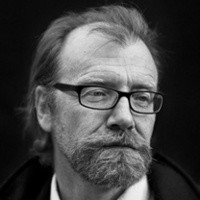
George Saunders has written for The New Yorker and GQ. His latest collection of short stories is Tenth of December.

“Maybe you would understand your artistry to be: put me anywhere. I'll find human beings, I'll find human interest, I'll find literature. And I guess you could argue the weirder, or maybe the less explored the place, the better.”

Thanks to TinyLetter and Audible for sponsoring this week's episode. For a free audiobook of your choice, go to audiblepodcast.com/longform.

Jon Mooallem, a contributing writer at The New York Times Magazine, is the author of Wild Ones and American Hippopotamus, the latest story from The Atavist.

"I'm terrible at writing nut graphs. I never know why people should keep reading. That's the menace of my professional existence, trying to figure that out. Because often you have to explain that to an editor before you even start, and I may not even know while I'm writing what the bigger point is."

Thanks to TinyLetter for sponsoring this week's episode.

Doreen St. Félix is a writer at MTV News.

“It feels like there are images of black utopias that are arising. And you can’t—even if you’re not as superstitious as me—you can’t possibly think that that doesn’t have to do with the decline, the final, to me, last gasp of white supremacy. It really does feel like we’re approaching that, [but] that approach might be a thousand years.”

Thanks to MailChimp, Texture, Harry’s, and HelloFresh, for sponsoring this week's episode.

Jon Mooallem is a journalist, author, and host of The Walking Podcast. His latest book is This is Chance!: The Shaking of an All-American City, A Voice That Held It Together.

“There is this impulse that we have, this very clearly documented impulse that people everywhere have, to help. It sounds tacky, but when the bottom drops out, when ordinary life is overturned and there’s this upheaval or this disruption—if it’s a natural disaster or even something like this, that there’s ... in the book I call it a ‘civic immune response.’ People do spontaneously help each other, they work together, they collaborate. This whole idea that society falls apart and everyone descends into madness and violence is just not true. And we know that. We have science that shows it.”

Thanks to Mailchimp and Pitt Writers for sponsoring this week's episode.

Meghan Daum's latest book of essays is The Unspeakable.

“As writers we think, well there has to be closure, there has to be a beginning middle end, the character has to go through a change. And then in life we're supposed to have some sort of arc or aha moment, as if the experience isn't legitimate unless we get something out of it. That's so culturally constructed, as they say. It's so artificial.”

Thanks to TinyLetter, Scribd, and Oscar for sponsoring this week's episode.

David Gessner is the author of ten books. His latest is Ultimate Glory: Frisbee, Obsession, and My Wild Youth.

“The ambition got in my way at first. Because I wanted my stuff to be great, and it froze me up. But later on it was really helpful. I’m startled by the way people don’t, you know, admit [they care] … it seems unlikely people wouldn’t want to be immortal.”

Thanks to Casper, Squarespace, and MailChimp for sponsoring this week's episode.

Elizabeth Kolbert, author of Field Notes from a Catastrophe: Man, Nature, and Climate Change and The Sixth Extinction: An Unnatural History, is a staff writer at The New Yorker.

“I still nurse the idea in my heart of hearts that something you write, that there’s some key to this all. We’re all looking for the skeleton key that’s going to unlock it, and people will go, ‘Oh, that’s why we have to do something!’ I don’t want to say that I completely dispensed with that. I think that’s what motivates most journalists—this information is going to somehow make a difference. On the other hand, I have dispensed a lot of that. Now we’re so deep into all of this. The more you know about climate change and the numbers involved and the scale involved of what we need to do to really mitigate this problem, you know that we’re moving in absolutely the wrong direction. It’s not like we’re moving slowly, we’re moving in the wrong direction. It’s very hard to say anything I write is going to turn this battleship around.”

Thanks to MailChimp, Skagen, Squarespace, and Pitt Writers for sponsoring this week's episode.

Excuse Me, Weren't You in the Fall?

Tracking down 40-odd members of the British band.

It's a Tuesday morning in December, and I'm ringing people called Brown in Rotherham. "Hello," I begin again. "I'm trying to trace Jonnie Brown who used to play in the Fall. He came from Rotherham and I wondered if you might be a relative." "The Who?" asks the latest Mr Brown. "No. The Fall - the band from Salford. He played bass for three weeks in 1978." "Is this some kind of joke?"

Meth, Murder, and Pirates: The Coder Who Became A Crime Boss

How a brilliant self-made software programmer from South Africa single-handedly built an online startup that became one of the largest individual contributors to America’s burgeoning painkiller epidemic. In his world, everything was for sale. Pure methamphetamine manufactured in North Korea. Yachts built to outrun coast guards. Police protection and judges’ favor. Crates of military-grade weapons. Private jets full of gold. Missile-guidance systems. Unbreakable encryption. African militias. Explosives. Kidnapping. Torture. Murder. It's a world that lurks just outside of our everyday perception, in the dark corners of the internet we never visit, the quiet ports where ships slip in by night, the back room of the clinic down the street.

David Wallace-Wells is the deputy editor of New York and the author of The Uninhabitable Earth: Life After Warming.

“Between 1.5 degrees and 2 degrees of warming, just that extra half degree of warming, is going to kill 150 million people from air pollution alone. That’s 25 times the death toll of the Holocaust. And when I say that to people, their eyes open. They’re like oh my god, this is suffering on such an unconscionable scale. And it is. But 9 million people are dying already every year from air pollution. That’s a Holocaust every year, right now. And our lives aren’t meaningfully oriented around those people and those deaths. And very few people we know have their lives meaningfully oriented around those people and those deaths. And I think it’s quite likely that, going forward, those impulses of compartmentalization and denial and narcissism will continue to govern our response to this crisis. Which is tragic.”

Thanks to MailChimp, The Great Courses Plus, The Primary Ride Home Podcast, and Pitt Writers for sponsoring this week's episode.

Michael Paterniti, a correspondent for GQ, has also written for Esquire, Rolling Stone and Outside. His latest book is The Telling Room.

"I want to see it, whatever it is. If it's war, if it's suffering, if it's complete, unbridled elation, I just want to see what that looks like—I want to smell it, I want to taste it, I want to think about it, I want to be caught up in it."

Thanks to this week's sponsors: TinyLetter and Hari Kunzru's Twice Upon a Time, the new title from and Atavist Books.

Lisa Belkin is a journalist and the author of four books. Her latest is Genealogy of a Murder: Four Generations, Three Families, One Fateful Night.

“I didn’t experience it as luck. It—and this is going to be a little woo woo—but it really felt like these people had been sitting there for 100 years saying, Well, it took you long enough, because everything just fit together. I didn’t have to manipulate anything.”

Radhika Jones is the editor-in-chief of Vanity Fair and the editor of Women on Women.

“There are a lot of people who still see the value of talking to someone, having a real conversation — about the things that they’re doing, the things that they’re caring about, the things that they’re afraid of, the things that are challenging — because in that conversation, they themselves will discover things that they didn’t realize. It obviously takes courage. It’s a payoff for the reader, certainly, but I think that there are subjects who understand that there is something there for them, too.”

Thanks to Mailchimp and Pitt Writers for sponsoring this week's episode.

Rukmini Callimachi covers ISIS for The New York Times. Part 1 of this episode is available here.

“Ever since I started in journalism, I feel like I'm perpetually winded. Like I'm just running as hard as I can to stay ahead of this train that's crashing. The caboose is falling off the back and I'm trying to run faster than the train to get to this very limited pool of amazing jobs. Once I got overseas I would say a prayer every night for the amazing life I was finally able to lead.”

Thanks to TinyLetter and Lynda for sponsoring this week's episode.

Rozina Ali is a contributing writer for The New York Times Magazine and the winner of the 2023 National Magazine Award for Reporting. Her latest article is “Raised in the West Bank, Shot in Vermont.”

“I think it’s very, very important to speak to people as people. To speak to sources—even if you have the juiciest story—to really give them the grace. I think everyone deserves it, especially people who are going through such a difficult time.”

Where Is Barack Obama?

“In fact, in private conversations, Obama rarely mentions Trump at all. Those who’ve visited the office he’s leased from the World Wildlife Fund in Washington’s West End say he’s eager to talk for hours about the world’s ills. When informed about the latest presidential tweetstorms aimed at him, he chuckles and changes the subject. One friend of Obama’s recalled that after a 45-minute meeting that avoided the subject of Trump entirely, the pair ducked into an aide’s office and saw on television that the president was claiming to have been absolved in the Russia inquiry. Obama’s eyes flicked toward the chyron and his face took on a decidedly bemused aspect for a beat before he turned back to their conversation as if nothing had happened.”