Showing 25 articles matching best fc points to buy Buyfc26coins.com is FC 26 coins official site..KzUT.

Ashley C. Ford is a writer and host of the podcast Fortune Favors the Bold. Her memoir, Somebody's Daughter, is forthcoming from Flatiron Books.

“For the first time I felt like I had so many more choices in my life than I originally thought I had. That was my first realization that I did not just have to react to the world, that I could be intentional in the world, and just curious about what came back to me.”

Thanks to Mailchimp and Pitt Writers for sponsoring this week's episode.

Baxter Holmes is a senior writer for ESPN. He won the James Beard Award for his 2017 article, “The NBA's Secret Addiction.”

“If there’s anything I’m really fighting for it’s people’s memory. I love the notion of trying to write a story that sticks with people. And that requires really compelling characters. It requires in-depth reporting — you have to take people on a journey. It needs to be so rich and something they didn’t know. I look for a story that I can tell well enough that it will hold up, that it will earn someone’s memory.”

Thanks to Mailchimp, Substack, and Pitt Writers for sponsoring this week's episode.

Inside Match.com

A look at the dating site's new algorithm.
Codenamed “Synapse”, the Match algorithm uses a variety of factors to suggest possible mates. While taking into account a user’s stated ­preferences, such as desired age range, hair colour and body type, it also learns from their actions on the site. So, if a woman says she doesn’t want to date anyone older than 26, but often looks at ­profiles of thirty-somethings, Match will know she is in fact open to meeting older men. Synapse also uses “triangulation”. That is, the algorithm looks at the behaviour of similar users and factors in that ­information, too.

The Untold Story of the Bastille Day Attacker

"Some in Nice knew the man as one of the many playboy predators the city seems to beget—black hair slicked back off a shining brow, dress shoes tapering to varnished points, a dark shirt unbuttoned low to reveal the pectorals into which he had obsessively, unblushingly, invested himself. He was 31 but preferred older women, both for their erotic openness and, it seems clear, for their money. Those who knew him best knew him to be a cold and brutal man, detached, amused by little save rough sex and gore."

My Family Story of Love, the Mob, and Government Surveillance

In the early 1960s, the paranoid Hoffa asked Chuckie to buy thousands of copies of George Orwell’s 1984 and distribute them to union locals around the country. “Some of these poor guys, the only thing they knew was how to drive a truck or work at a warehouse,” Chuckie told me. “They didn’t have the knowledge of the electronic shit. Mr. Hoffa wanted them to read that book and said that this is what’s going to happen to not only us but to everybody—and exactly what he’s predicted has happened.”

The Great Wisconsin Solidarity Experiment

It’s 11 p.m. when Larson at last agrees to meet me in the lobby of the Hampton Inn, next door to the Gurnee Grand. He’s just come out of a marathon closed-door meeting with his fellow exiled senators. Tall, gap-toothed, and handsome, but with a squished, broad nose, Larson appears in a fitted black overcoat, a sedate suit with a Wisconsin flag lapel pin, and an athletic backpack. He looks shockingly young, younger than his thirty years, and seems to be relieved that I am even a few years younger myself. We jump in my Chevy and head for the town’s late-night diner: Denny’s. By the time we settle into a booth, Larson has dropped the routine political affectations—the measured language, the approved talking points, the inauthentic humor. We’re cracking up comparing Republicans to evildoers on South Park and shit-talking mutual acquaintances in Milwaukee. And then, just as Larson is about to take a bite of his veggie burger, I ask the freshman senator if he is scared. “What would I be scared about?” he replies.

Helen Rosner is a food correspondent at The New Yorker.

“I believe the things that are really important to me are structure over all and—forgive me, I’ve said this on other podcasts before—if I were going to get a tattoo this is what I would get a tattoo of is that it doesn’t matter what you say, it only matters what they hear. It’s my job to make sure the gulf between those two things is as narrow as possible and there’s as little ambiguity between what I say and what you hear. It’s never easy, but it’s certainly easier in the realm of arguable objectivity. To create emotion in a reader requires a huge amount of really thoughtful work on the part of the writer in a way that forces you as a writer to remove yourself from the emotion you’re creating in the reader. If I to set you up for sadness, I have to create emotional stakes. I have to create investment in whoever I’m talking about or whatever the story’s about. The craft of making stakes and setting up a potential downfall, a potential loss, whatever it may be I think is not something you can do well if you’re feeling the feeling you’re trying to create in the reader.”

Thanks to MailChimp, Read This Summer, and You Can't Make This Up for sponsoring this week's episode. Also: very rare, very exclusive Longform Podcast t-shirts are still available!

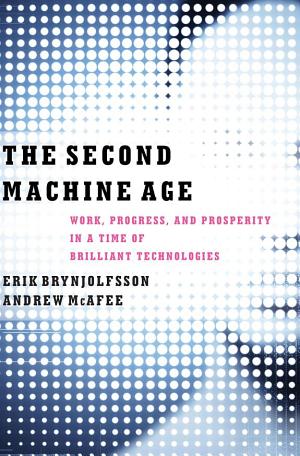
Sponsor: "The Second Machine Age"

Our sponsor this week is The Second Machine Age, the New York Times bestseller that Kevin Kelly calls "the best explanation of the technology revolution yet written."

From Google's autonomous cars to machines that can diagnose diseases more accurately than doctors, MIT's Erik Brynjolfsson and Andrew McAfee—two thinkers at the forefront of their field—reveal the forces driving the reinvention of our lives and our economy. Drawing on years of research and up-to-the-minute trends, Brynjolfsson and McAfee identify the best strategies for survival and offer a new path to prosperity.

A fundamentally optimistic book, The Second Machine Age will alter how you think about issues of technological, societal, and economic progress.

Buy your copy today:

AmazonBarnes & NobleiBookstoreIndieboundPowell's

XXXXL

A journey to the Ukraine to learn from the world's tallest man.

Read more

Leonid S. is eight and a half feet tall, and he is still growing. He is 34 years old, weighs 480 pounds, and he is still growing. He can't fit in a car, wears size 26 EEEEE shoes, can pick apples eleven feet off the ground standing flat-footed, and yes, he is still growing.

In NSA Net, Ordinary Web Users Eclipse Legal Targets

In the latest revelation from Edward Snowden, the U.S. government is shown to collect and retain massive amounts of data on nearly 900,000 people with the most minimal of connections to official NSA targets. The collected information tells our “stories of love and heartbreak, illicit sexual liaisons, mental-health crises, political and religious conversions, financial anxieties and disappointed hopes.”

How Google Dominates Us

On how search and advertising became indistinguishable, the finer points of not being evil, and why privacy is by nature immeasurable. How Google made us the product:

“Google conquered the advertising world with nothing more than applied mathematics,” wrote Chris Anderson, the editor of Wired. “It didn’t pretend to know anything about the culture and conventions of advertising—it just assumed that better data, with better analytical tools, would win the day. And Google was right.”

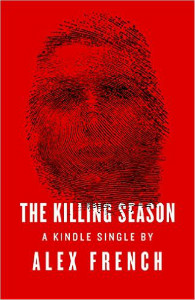
The Killing Season

In 1975, the grisly double murder of a 24-year-old woman and her young daughter turned a small Colorado town on its head. For the two inexperienced detectives assigned to the case, it was a chance to prove their mettle. But what happens when everyone is suspect and nobody is guilty?

Excerpted from the Kindle Single. Buy your copy today.

The Dirtbag Left’s Man in Syria

“Brace Belden can’t remember exactly when he decided to give up his life as a punk-rocker turned florist turned boxing-gym manager in San Francisco, buy a plane ticket to Iraq, sneak across the border into Syria, and take up arms against the Islamic State. But as with many major life decisions, Belden, who is 27 — “a true idiot’s age,” in his estimation — says it happened gradually and then all at once.”