Showing 25 articles matching fc points to coins calculator Visit Buyfc26coins.com for latest FC 26 coins news..OtjT.

Rachel Syme has written for The New Yorker, The New York Times, Grantland, and more.

“You have this sense that you’re bonding, but at the same time you're also going to betray them. Because if you hear this quote that they say or you see it in a mannerism, you write it in your notebook and you think ‘I got it.’”

Thanks to TinyLetter, The Great Courses, MarketingProfs, and Squarespace for sponsoring this week's episode.

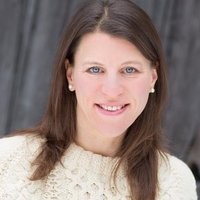
Michelle Dean is a journalist and critic. Her new book is Sharp: The Women Who Made an Art of Having an Opinion.

“There isn’t one answer. I wish there was one answer. The answer is: You just have to wing it. And I’m learning that — I’m learning to be okay with the winging it. ... I guess the lesson to me of what went on with a lot of women in the book is: You have to be comfortable with the fact that some days are going to be good, and some days are going to not be good.”

Thanks to MailChimp for sponsoring this week's episode.

Sarah Schweitzer is a former feature writer for the Boston Globe.

“I just am drawn, I think, to the notion that we start out as these creatures that just want love and were programmed that way—to try to find it and to make our lives whole. We are, as humans, so strong in that way. We get knocked down, and adults do some horrible things to us because adults have had horrible things done to [them]. There are some terrible cycles in this world. But there’s always this opportunity to stop that cycle. And there are people who come along who do try that in their own flawed ways.”

Thanks to MailChimp and AlarmGrid for sponsoring this week's episode.

Thomas Morton is a writer and former correspondent for HBO's Vice News. He was at Vice from 2004-2019 and is a major character in Jill Abramson's Merchants of Truth.

“You have to go with your gut and I feel like that’s one of the most essential qualities in doing anything of the nature of what we did. Of making documentaries or reporting news or current events, you really have to have a good sense of intuition for who you’re dealing with, what they’re telling you, what you’re telling them, how you’re behaving. It’s all human interaction, you can’t govern that with hard and fast rules or with extremely set rules. Beyond the extreme ones there are always going to be murky areas. You have to be willing to accept that and work with those.”

Thanks to MailChimp and Pitt Writers for sponsoring this week's episode.

Patrick Radden Keefe is a staff writer at The New Yorker.

"I tend not to like really prescriptive writing, and as often as not what I want to do is kind of get in and find the stories and the narratives almost as a delivery mechanism to just get people to sit up and think about it. Honestly, the areas that I'm interested in are so obscure, often, that the thing that I want is for people just to understand and care a little bit more than they did before."

Thanks to TinyLetter for sponsoring this week's episode!

Chris Heath, winner of the 2013 National Magazine Award for Reporting, is a staff writer at GQ.

"I present myself as someone who is going to be rigorous and honest. And if you can engage in the way I'm asking you to engage, then I hope that you will recognize yourself in a more truthful way in this story than you usually do. And maybe even, with a bit of luck, more than you ever have before. That's what I bring. That's my offer."

Thanks to TinyLetter and the The Literary Reportage concentration at NYU's Arthur L. Carter Journalism Institute for sponsoring this week's episode.
</blockquote>

Casey Cep has written for The New Yorker, The New York Times, and The New Republic. She is the author of Furious Hours: Murder, Fraud, and the Last Trial of Harper Lee.

“I want to meet all of these expectations. I want my book to be a page-turner. I want it to be a beautiful literary object. I want it to sell. I want it to do all of these things. But at the end of the day, I just want to feel like I’ve honored this commitment between writer and reader, and writer and source. And those are sometimes in conflict.”

Thanks to Mailchimp and Pitt Writers for sponsoring this week's episode.

Doree Shafrir is a co-host of podcast Forever35, the former executive editor of Buzzfeed, and the author of the new memoir Thanks for Waiting: The Joy (& Weirdness) of Being a Late Bloomer.

”Right now I can make my living from podcasting, but I don’t know what the advertising market for podcasts is going to look like in five years or even one year. The blog advertising market cratered. So one of the challenges of being my own ‘brand’ is that I always do have to think about, what is the next thing? Because in my experience in media, nothing is ever good for too long.”

Thanks to Mailchimp and The London Review of Books for sponsoring this week's episode.

Elif Batuman is a novelist and a staff writer at The New Yorker. Her latest article is “Japan’s Rent-a-Family Industry.”

“I hear novelists say things sometimes like the character does something they don’t expect. It’s like talking to people who have done ayahuasca or belong to some cult. That’s how I felt about it until extremely recently. All of these people have drunk some kind of Kool Aid where they’re like, ‘I’m in this trippy zone where characters are doing things.’ And I would think to myself, if they were men—Wow, this person has devised this really ingenious way to avoid self-knowledge. If they were women, I would think—Wow, this woman has found an ingenious way to become complicit in her own bullying and silencing. It’s only kind of recently—and with a lot of therapy actually—that I’ve come to see that there is a mode of fiction that I can imagine participating in where, once I’ve freed myself of a certain amount of stuff I feel like I have to write about, which has gotten quite large by this point, it would be fun to make things up and play around.”

Thanks to MailChimp, Google Play, and Pitt Writers for sponsoring this week's episode.
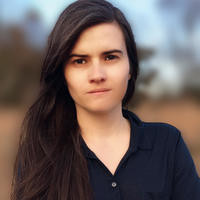
Patricia Bosworth is a journalist and biographer. Her latest book is The Men in My Life.

“The [acting] rejections are hellish and ghastly. At least they were to me. And I got tired of being rejected so much and also tired of not being able to control my life. And as soon as I became a writer, I had this control, I felt more active, more energized. But it was a decision that took a long time coming.”

Thanks to MailChimp, Squarespace, and Heaven's Gate for sponsoring this week's episode.
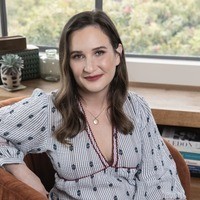
Albert Samaha is an investigative journalist and the deputy inequality editor at BuzzFeed News. His book Concepcion: An Immigrant Family's Fortunes comes out in October.

“I don’t think any child of the recession will ever not feel precarious. And being in journalism makes that even more so. ... At this point I’ve embraced the precarity of working in this industry. I’m sure at some point it’s going to be grating for people to hear me talk about how precarious and insecure I feel. … But I’ve got too many friends who are way too talented, who can’t use that talent in the ways that they are passionate about, for me to ever feel like my place in this industry is fully cemented.”

Thanks to Mailchimp and CaseFleet for sponsoring this week's episode.
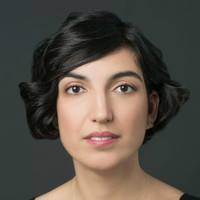
Isaac Chotiner conducts interviews for The New Yorker.

“People like to talk. They like to be asked questions, generally. In the space that I’m doing most interviews, which is politics or politics-adjacent, people have strong views and like to express them. It may be just as simple as that.”

Thanks to Mailchimp and Pitt Writers for sponsoring this week's episode.
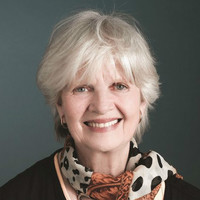
Caitlin Dickerson is a staff writer for The Atlantic covering immigration. Her latest article, on the secret history of U.S. government’s family-separation policy, is ”An American Catastrophe.”

“I think the line that gets drawn around immigration coverage — which, a lot of times you're just talking about a business story or an education story or a national security story — but when you call it an immigration story, it does feel like it is about this other thing, about other people who aren't us.”

Brittany Luse is the host of NPR’s It’s Been a Minute.

“One of the things I love about this job is everything is practice. I love it. It's like if a show is great and everyone loves it, you gotta put on another one. You just gotta do it again. And if the show didn't quite do what you'd hoped or set out to do in your mind and in your heart, you gotta do another one. I just love it. You can never feel too good and you can never feel too bad.”

Eli Sanders is an associate editor at The Stranger and the winner of the 2012 Pulitzer Prize for feature writing.

"There was one particular moment in the trial, which I described, where ... there was just not any human ability to be detached from what was happening in front of you, what was being shared. It was so painful, you could not help but cry, and there was no reason to deny that that moment had happened."

Thanks to TinyLetter for sponsoring this week's episode!

Roberto Ferdman is a correspondent at VICE News. He and his colleagues at VICE News Tonight won the George Polk Award for Television Reporting for their coverage of the killing of Breonna Taylor and the investigations that followed.

This is part four in a week-long series of conversations with winners of this year's George Polk Awards in Journalism.

Nitasha Tiku is a senior writer at Wired.

“I’ve always been an incredibly nosy person—not nosy, curious. Curious about the world. It just gives you a license to ask any question, and hopefully if you have a willing editor, the freedom to see something fascinating and pursue it. It was just a natural fit from there. But that also means I don’t have the machismo, ‘breaking news’ sort of a thing. I feel like I can try on different hats, wherever I am.”

Thanks to MailChimp and Credible.com for sponsoring this week's episode.

Ryan Mac and Craig Silverman are reporters at BuzzFeed News. Together they won this year's George Polk Award for Business Reporting for their coverage of Facebook's handling of disinformation on its platform. 

This is the second in a week-long series of conversations with winners of this year's George Polk Awards in Journalism.

Brooke Jarvis is a contributing writer for The New York Times Magazine.

“Obsession is inherently interesting. We want to know why somebody would care so much about something that it could direct their whole life. ... When people care about something a lot, what can be more interesting than that to understand what drives those powerful emotions? ... Part of why I do this work is that I am able to get temporarily obsessed with a lot of different things and then move on to the next thing that I'm temporarily obsessed with. ... There's always a new question that I want to follow.”

Thanks to Mailchimp for sponsoring this week's episode.
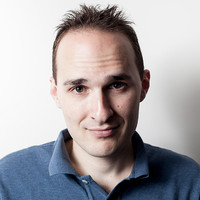
Wesley Yang writes for New York and other publications.

“If a person remains true to some part of their experience, no matter what it is, and they present it in full candor, there’s value to that. People will recognize it. Once I knew that was true, I knew I could do this.”

Thanks to MailChimp, Home Chef, and Trunk Club for sponsoring this week's episode.

Rob Copeland is a finance reporter for The New York Times. His recent book is The Fund: Ray Dalio, Bridgewater Associates, and the Unraveling of a Wall Street Legend.

“If I stab you, I'm going to stab you in the chest, not the back. You're going to see it coming. ... But if you're going to tell me something's wrong, you have to keep talking. I'm not going to take your word for it. I have a reason for why I believe my reporting to be true, and I'm going to present it to you as best I can. But just because you say something's wrong doesn't make it so.”