Showing 25 articles matching best fc points to buy Buyfc26coins.com is FC 26 coins official site..KzUT.

Jon Mooallem, a contributing writer at The New York Times Magazine, is the author of Wild Ones and American Hippopotamus, the latest story from The Atavist.

"I'm terrible at writing nut graphs. I never know why people should keep reading. That's the menace of my professional existence, trying to figure that out. Because often you have to explain that to an editor before you even start, and I may not even know while I'm writing what the bigger point is."

Thanks to TinyLetter for sponsoring this week's episode.
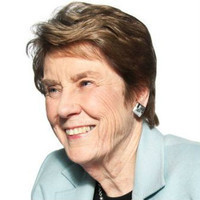
Carol Loomis retired last summer after 60 years at Fortune. She continues to edit Warren Buffett's annual report.

“Writing itself makes you realize where there are holes in things. I’m never sure what I think until I see what I write. And so I believe that, even though you’re an optimist, the analysis part of you kicks in when you sit down to construct a story or a paragraph or a sentence. You think, ‘Oh, that can’t be right.’ And you have to go back, and you have to rethink it all.” 

Thanks to TinyLetter and SquareSpace for sponsoring this week's episode.

Michelle Dean is a journalist and critic. Her new book is Sharp: The Women Who Made an Art of Having an Opinion.

“There isn’t one answer. I wish there was one answer. The answer is: You just have to wing it. And I’m learning that — I’m learning to be okay with the winging it. ... I guess the lesson to me of what went on with a lot of women in the book is: You have to be comfortable with the fact that some days are going to be good, and some days are going to not be good.”

Thanks to MailChimp for sponsoring this week's episode.

The Assassination: The Reporters’ Story

Breaking the news of the Kennedy assassination, an oral history:

Wicker: [In the press room] we received an account from Julian Reed, a staff assistant, of Mrs. John Connally’s recollection of the shooting…. The doctors had hardly left before Hawks came in and told us Mr. Johnson would be sworn in immediately at the airport. We dashed for the press buses, still parked outside. Many a campaign had taught me something about press buses and I ran a little harder, got there first, and went to the wide rear seat. That is the best place on a bus to open up a typewriter and get some work done.

Buzz Bissinger, a Pulitzer Prize winner, has written for Vanity Fair, The New York Times Magazine, GQ and more. He is the author of several books, including Friday Night Lights.

"It’s quiet. And I really felt I needed that quiet. People say, 'Well anger was your edge, and agitation was your edge, and that’s going to hurt your writing.' I don’t know, maybe. It may be that in order to live a happier life you become a shittier writer. I don't know. But I just couldn't live in that fashion anymore, I just couldn't. It would've destroyed my marriage. It was destroying me."

Thanks to this week's sponsors. Apply for the TinyLetter Writers Residency by September 26. And nominate your favorite soccer article for a chance to win a free Xbox One and EA SPORTS FIFA 15.

Paul Tough is a contributing writer to the New York Times Magazine and the author of The Years That Matter Most: How College Makes or Breaks Us.

“The nice thing about a book as opposed to a magazine article is that it’s less formulaic. As a writer, it gives you more freedom — you’re trying to create an emotional mood where ideas have a place to sit in a person’s brain. And when people are moved by a book, it’s not by being told, ‘Here’s the problem, here’s the answer, now go do it.’ It’s by having your vision of the world slightly changed.”

Thanks to MailChimp and Pitt Writers for sponsoring this week's episode.

Robert Kolker is the author of Lost Girls and a contributing editor at New York.

"For better or for worse, my heart's not in the mystery. I want [the killer] to be caught—he's obviously a predator and he's unstable. But they all are. They're all messed up people who victimize other people and they all look normal. The art and science of catching serial killers has become more than slightly overblown in our society. And you know, I love Silence of the Lambs … but I'm not entirely sure that our obsession with who the serial killer is and why a serial killer does it is in proportion with how interesting they end up being."

Thanks to TinyLetter for sponsoring this week's episode.

</blockquote>

Jonathan Goldstein is an audio producer and the host of Heavyweight.

“I wasn’t taking myself very seriously, initially. I liked working with my friends and family because I think I was a little more comfortable with them. Then in the second season people were writing in with real problems, and they were looking at me as a kind of expert. It was terrifying to meet with these people and see the look of hopefulness in their eyes. ... I realized I need to step it up and even if I didn’t feel like an expert—an expert in an invented field that doesn’t really exist—that I’d really have to take that on with seriousness.”

Jesse David Fox covers comedy for Vulture, where he hosts the podcast Good One. His new book is Comedy Book: How Comedy Conquered Culture—and the Magic That Makes It Work.

“There’s a complete lack of anyone who’s ever written about comedy seriously compared to any other art form. There’s just nothing. … So the challenge was, how do you start a conversation that no one has been participating in?”

Jonah Weiner, contributing editor at Rolling Stone, pop critic at Slate, and contributor to The New York Times Magazine and The New Yorker.

"The thing that I've found useful is really actually to delete everything that I've written and go at it fresh, and re-envision it again: this is going to be my new lede now. That's really the best way to do it, because if there are these vestigial sentences, and vestigial sequences or paragraphs that are in the draft, for me, that's just going to snap me back to where my head was at, in an unproductive way ... Often, I'll find that that is just this great cure-all. Just delete it all, go for a walk or whatever, and then sit down and start writing an entirely different feature about the exact same subject."

Thanks to TinyLetter for sponsoring this week's episode!

Molly Lambert is a writer and the host of the new podcast HeidiWorld: The Heidi Fleiss Story.

“I think as a writer… I always had this thing: I don't want to be out front. I don't want the spotlight on me. I'm not an actor. I want to be lurking in the back with the cast accepting the applause, but I don't want to be the center of attention. And so I think kind of like making peace with like, Look, man, it's fine to be the center of attention when you made something you're proud of.”

Connie Walker is an investigative reporter and podcast host. Her new show is Stolen: The Search for Jermain.

“For so long, there has been this kind of history of journalists coming in and taking stories from Indigenous communities. And that kind of extractive, transactional kind of journalism really causes a lot of harm. And so much of our work is trying to undo and address that. There is a way to be a storyteller and help amplify and give people agency in their stories.”

Thanks to Mailchimp for sponsoring this week's episode.