Andrew Cuomo's War Against a Federal Prosecutor
A call to the Obama White House that some legal experts say is impeachable fits a pattern of the Governor smearing those who scrutinize him.
Showing 25 articles matching best fc points to buy Buyfc26coins.com is FC 26 coins official site..KzUT.
A call to the Obama White House that some legal experts say is impeachable fits a pattern of the Governor smearing those who scrutinize him.
In the shallow reefs of Ayungin Shoal sits a rusted-out ship manned by eight Filipino soldiers whole sole purpose is to keep China in check.

Life with chronic migraines.
A survivor’s frightening account.
A profile.

David Sedaris on smoking and quitting.

The story of suck.com.

A profile of Mister Rogers.
On the best Super Bowl halftime show.
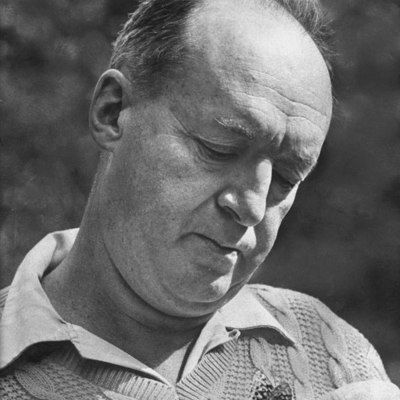
On Vladimir Nabokov.
A profile of the highest paid coach in college basketball. A pioneer of one-and-done recruiting, Calipari is also the only coach in NCAA history to have two runs to the Final Four removed from the record books for rules violations.
Why little has changed in popular American style in the last 20 years.
Why is this happening? In some large measure, I think, it’s an unconscious collective reaction to all the profound nonstop newness we’re experiencing on the tech and geopolitical and economic fronts. People have a limited capacity to embrace flux and strangeness and dissatisfaction, and right now we’re maxed out.
According to the movie version, they died side by side, guns blazing, in the crosshairs of half a Bolivian regiment. It’s a great Hollywood ending that happens to be true, mostly: they left America… then died in Bolivia. What Hollywood didn’t know is that Butch and Sundance escaped.
Liliana Segura writes for The Intercept.
"My form of advocacy against the death penalty, frankly, has always been to tell those stories that other people aren’t seeing. And to humanize the people—not just the people facing execution, but everyone around them."
Thanks to MailChimp, Mubi, and Tripping.com for sponsoring this week's episode.
I first learned about cloud lovers in a police report concerning a man who received a blowjob from a young woman and went mad. The man — let's call him Carl (police reports have the names of suspects and victims redacted) — was in his 40s, and the woman, let's call her Lisa, was almost 18. The two first met in the fall of 2003 at a local TV station that was holding a contest to find the best video footage of Northwest clouds. According to the report, which was lost when I cleaned my messy desk in 2005 (I'm recalling all of this from an imperfect memory), Carl, who was married and well-to-do, fell in love with Lisa, whose family was not so well-off, upon seeing her for the first time. He had a videocassette in his hand; she had a videocassette in her hand. He showed his tape to the station's weatherman (sun, sky, clouds). She showed hers (clouds, sky, sun). During the contest, his eyes could not escape her beauty. After the contest, the impression she made on his mind intensified. That bewitching coin in the short story by Jorge Luis Borges, "The Zahir," comes to mind. If a person sees this coin only once, the memory of its image begins to more and more dominate his/her thoughts and dreams. Soon the coin becomes the mind's sole reality. Lisa's face was Carl's Zahir.
Robert Samuels and Toluse Olorunnipa are reporters for The Washington Post and co-authors of the new book His Name Is George Floyd: One Man’s Life and the Struggle for Racial Justice.
“Looking at George Floyd's family history, looking at the poverty that he grew up in, looking at the schools that he attended, which were segregated, looking at the opportunities that were denied to him and the struggles he had in the criminal justice system—it's an extraordinary American experience, in part because it's so outside of the norm of what we think of when we think of the American dream…. And so we wanted to be able to showcase that that kind of extraordinary American experience is ordinary for so many people.”
When your house is the set of One Tree Hill:
On one shoot, I remember, I'd been confused about where they needed to set up (confession: hungover), and as a result neglected to clean the bedroom. Later, a crew guy—the same one who'd told me about Blue Velvet—said, "I'm not used to picking up other people's underwear." I felt like saying, Then don't go into their bedrooms at nine o'clock in the morning! Except… he was paying to be in my bedroom.
“Two weeks before Christmas, I was explaining to a friend in town that if I seemed more distressed than usual, it was just because I was trying to accustom myself to the fact that my cat didn’t want to be my cat anymore. ‘No way,’ she said. ‘Here’s what you do: You just call Dawn.’ And then she gave me the cat psychic’s phone number.”
The prison-industrial complex is not only a set of interest groups and institutions. It is also a state of mind. The lure of big money is corrupting the nation's criminal-justice system, replacing notions of public service with a drive for higher profits. The eagerness of elected officials to pass "tough-on-crime" legislation — combined with their unwillingness to disclose the true costs of these laws — has encouraged all sorts of financial improprieties. The inner workings of the prison-industrial complex can be observed in the state of New York, where the prison boom started, transforming the economy of an entire region; in Texas and Tennessee, where private prison companies have thrived; and in California, where the correctional trends of the past two decades have converged and reached extremes.
T. Christian Miller, senior investigative reporter at ProPublica, and Ken Armstrong, staff writer at The Marshall Project, co-wrote the Pulitzer-winning story, “An Unbelievable Story of Rape.”
“I won’t forget this: when T. and I talked on the phone and agreed that we were going to work on [“An Unbelievable Story of Rape”] together, T. created a Google Drive site, and we decided we’d both dump all our documents in it. And I remember seeing all the records that T. had gathered in Colorado, and then I dumped all the records that I had gathered in Washington, and it was like each of us had half of a phenomenal story. And in one day, by dumping our notes into a common file, we suddenly had a whole story.”
Thanks to MailChimp, Squarespace, and Trunk Club for sponsoring this week's episode.

Looking back on the George Floyd rebellion.
Armed only with their psychotic courage, they were running, dancing, singing, smashing, burning, screaming, storming heaven: all rapturous varieties of Baraka’s “magic actions.” I listened to 19-year-olds talk nonstop throughout the night we spent in jail, as they howled insults at the officers and swapped stories of humiliation by police. It struck me that they were too young to have seen even the initial phase of BLM. Though well-acquainted with power and violence, they were tasting “politics” for the first time. Whatever the fate of the movement, I suspect that much of their future thinking will be measured against the feelings that filled the nights of 2020: the vastness and immediacy, the blur and brutal clarity.
A first-person account of an arrest:
I stared at the yellow walls and listened to a few officers talk about the overtime they were racking up, and I decided that I hated country music. I hated speedboats and shitty beer in coozies and fat bellies and rednecks. I thought about Abu Ghraib and the horror to which those prisoners were exposed. I thought about my dad and his prescience. I was glad he wasn’t alive to know about what was happening to me. I thought about my kids, and what would have happened if they had been there when I got taken away. I contemplated never flying again. I thought about the incredible waste of taxpayer dollars in conducting an operation like this. I wondered what my rights were, if I had any at all. Mostly, I could not believe I was sitting in some jail cell in some cold, undisclosed building surrounded by “the authorities.”
As the critic Lewis Mumford wrote half a century ago, “The right to have access to every building in the city by private motorcar in an age when everyone possesses such a vehicle is the right to destroy the city.” Yet we continue to produce parking lots, in cities as well as in suburbs, in the same way we consume all those billions of plastic bottles of water and disposable diapers.
“I want to tell a different story, the more common yet strangely hidden one, which is that I don’t feel guilty and tortured about my abortion. Or rather, my abortions. There, I said it.”
It’s tempting to think Marco McMillian was killed because of his race, his sexuality, or because he was running for mayor. The truth is more elusive.