Showing 25 articles matching fc points to coins calculator Visit Buyfc26coins.com for latest FC 26 coins news..OtjT.

Sarah Stillman is a staff writer for The New Yorker.

"People don't really care about issues so much as they care about the stories and the characters that bring those issues to life. ... A story needs an engine or something to propel you forward and it can't just be a collection of like, 'Oh hmm, this was interesting over here and this was interesting over there.' Realizing that helped me sit down with all my stuff on trafficking and labor abuses in Iraq and Afghanistan and say 'What are the five craziest things that I found here and how could I weave them together in a way that would actually have some forward motion?'"

Thanks to TinyLetter and Hulu Plus for sponsoring this week's episode.

Javier Zamora is the author of Unaccompanied, a poetry collection, and Solito, a memoir.

“There was something that I felt eating away at me, which made me a very angry and volatile teenager. And I think I was an angry teenager because I had this trauma that nobody around me could talk about, and that I didn't have the right therapist to help me unpack. So the cheapest thing that I had was poetry.”

Joshua Davis is a contributing editor at Wired and author of the new ebook John McAfee's Last Stand.

"This is a pretty unique situation [for me]. Never has a multimillionaire tech pioneer gone on the lam for a murder and called me from hiding. Yeah, this is a first."

Thanks to TinyLetter for sponsoring this week's episode!

Patrick Symmes is a foreign correspondent and contributor to Outside and Harper's.

"They rolled us up like a cheap carpet. We were locked in a room for 14 hours. And for the first six hours that was okay. Everything was nice; there was coffee. But then the nightshift came on. You could hear gunshots in the street, and these guys were scared. And they were thugs. And they were thugs with a mission: to get rid of every foreigner who might witness what was happening."</i>

Thanks to TinyLetter for sponsoring this week's episode!

</blockquote>

Joshua Yaffa is a correspondent for The New Yorker, the author of Between Two Fires: Truth, Ambition, and Compromise in Putin's Russia, and has been reporting from Ukraine for the last several weeks. His most recent article is "What the Russian Invasion Has Done to Ukraine."

“I’m not at all a conflict reporter. I don't like it, though who would like being in these situations? But this is the story, right? If you cover this part of the world, if the war in 2014 felt like the tectonic plates of history were shifting, now they're just erupting, crashing. This is the asteroid-impact event for this part of the world with effects that will last similarly long going forward.”

Choire Sicha is co-founder of The Awl.

"People come to me pretty much every week ... and say 'I'm starting a website about ... say ... Canadian ... candy makers' and they're like 'What's the secret?' And I say, the secret is when we launched there were three of us. Two of us were doing editorial. And one of was doing business. And guess what? We had a new product and he had nothing to do all day so he had to make himself a job that was about revenue. So, who is this dedicated person at your company? And they're like 'we're both editorial' and I'm like 'you're hosed, you're done, forget about it.'"

Thanks to TinyLetter for sponsoring this week's episode!

Sponsor: Pitt Writers

This week’s sponsor is Pitt Writers, the fantastic, digitally focused MFA program at the University of Pittsburgh. A longtime partner of ours, Pitt Writers is now accepting applications for 2014. Here’s what you’ll get during your three years:

• World-class instruction and individual attention from award-winning writers of poetry, fiction, and nonfiction, including Jeanne Marie Laskas of GQ

• Opportunity to pitch book and story ideas to literary agents and editors in New York

• Classes in digital media

• A chance to intern with Longform

• Funding packages of up to $16,700 available

Get yourself in the mix: Apply by December 10th and follow Pitt Writers on Twitter and Facebook.

Katy Vine is an executive editor for Texas Monthly.

“This is a huge state. There’s so much, and it’s different everywhere you look. You just go to Houston and there’s worlds within worlds within worlds just within the one city. You go to San Antonio and you’re in a different country, and you go to Dallas, you’re in a totally different country. … It’s wild to me. It’s endlessly fascinating.”

Elizabeth Weil covers California and the climate for ProPublica. She has written for The New York Times Magazine, California Sunday, and more.

“As a journalist you’re endlessly asking people to tell you really personal, really vulnerable stuff about their lives. And I feel like you have to be willing to be in that conversation too—or really think about why you’re not willing.”

Thanks to Mailchimp for sponsoring this week's episode.

Dark Alliance

A three-part investigation into links between the cocaine trade, Nicaragua’s CIA-backed Contra rebels, and California’s crack epidemic in the 1980s.

  1. Part One

    Backers of CIA-led Nicaraguan rebels brought cocaine to poor L.A. neighborhoods in the early 1980s to help finance war – and a plague was born.

  2. Part Two

    How a smuggler, a bureaucrat and an ambitious teenager created the cocaine pipeline.

  3. Part Three

    The impact of the crack epidemic.

Alex Blumberg is a former producer for This American Life and Planet Money. Last year he founded Gimlet Media, a podcast network, and hosts its first show, StartUp.

“When someone starts talking about something difficult, when they get unexpectedly emotional, your normal human reaction is to sort of comfort and steer away. To say, ‘Oh I’m sorry, let’s move on.’ What you need to do, if you want good tape, is to say, ‘Talk more about how you’re feeling right now.’ It feels like a horrible question to ask. It feels like you're going against your every instinct as a decent human being to go toward the pain that this person is experiencing.”

Thanks to TinyLetter, Lynda and Alarm Grid for sponsoring this week's episode.

Rose Eveleth is the host of Flash Forward and the author of Flash Forward: An Illustrated Guide to Possible (and Not So Possible) Tomorrows.

“If I didn’t have that pretty bizarrely insatiable drive to do this stuff and understand things, I don’t know if I’d still be doing this. The curiosity index has to be high in order to make the rest of it worth it. Because otherwise, what’s the point?”

Thanks to Mailchimp for sponsoring this week's episode.

Susan Burton is an editor at This American Life, the author of the memoir Empty, and the host of the podcast The Retrievals.

“I know I have much more anger than I reveal, and I don’t think that’s uncommon. Especially for women. There’s been a lot of attention to that in recent years—the anger of women, how it’s expressed and not expressed. But I think that among the things I’ve stifled for years are just my true feelings, and I’ve always wanted to be close to people and to be intimate with people, and have often felt that I have trouble making myself known or being known or being understood. And so...it felt good to be known.”

Natasha Vargas-Cooper has written for GQ, Spin and BuzzFeed.

"Writing is the worst part of this gig for me. I hate sitting down and writing; it's being with my worst self. … But then, when it's over, it's the best. I have no greater joy than reading what I've published—with the exception of some editors who have fucked up my shit."</i>

Thanks to TinyLetter for sponsoring this week's episode!

</blockquote>

May Jeong is a magazine writer and investigative reporter.

“I don’t have kids, I don’t have an expensive drug habit. Everything that I do right now at this moment in my life is to serve the story. That means that sometimes I’m not the best partner. I’m not the best friend. I’m a really terrible daughter probably. If my parents had a satisfaction survey, I don’t think I’d rank really high. I have friends who are buying houses and stuff. I’m very far away from that. What else have I sacrificed? I don’t know. Sometimes I let my body atrophy because I’m on the road all the time. I think I can do it for five more years. I’m 30, so things will have to change.”

Thanks to MailChimp, Read This Summer, Casper, and You Can't Make This Up for sponsoring this week's episode. Also: Longform Podcast t-shirts are still available!

Edith Zimmerman is the founding editor of The Hairpin and a contributing writer to The New York Times Magazine.

"I never wrote anything myself or ran anything from other people that was needlessly negative. It wasn't some false grin plastered all over it — we addressed dark things too, and poked fun at things. But I didn't want there to ever be a tone of yeah, let's really just deflate this. Because ultimately you're just stabbing at a ghost among friends. And then at the end you've all just fallen on the floor and the ghost is gone. You're not really doing anything constructive."

Thanks to TinyLetter for sponsoring this week's episode.

</blockquote>

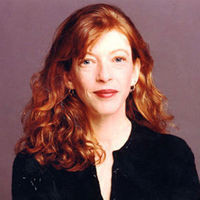
Susan Orlean is a staff writer at The New Yorker.

"There's always the fear, which comes with having done it for a long time, that you're repeating yourself. That's actually a genuine concern—you worry that you're becoming an imitiation of yourself ... The funny thing is that you spend the first half of your career wanting desperately to have a voice that's distinctive and recognizable, then you go to the other side of that and think oh my god, all my stories sound the same."

Thanks to TinyLetter and Digg for sponsoring this week's episode!

Adam Platt is the restaurant critic for New York.

“My job was described to me recently as ‘the last great job of the 20th century.’ I think there might be something to that.”

Thanks to TinyLetter, Lynda, Casper, and Wealthfront for sponsoring this week's show.

Sarah Nicole Prickett is the founding editor of Adult.

"I'll admit to being resistant to the 'by women for women' label that Adult had before because I saw it as being just 'by women,' period. That’s way more feminist than making something for women, which is very prescriptive and often comes in various shades of pink."

Thanks to TinyLetter for sponsoring this week's episode.

Naomi Klein is a senior correspondent at The Intercept and the author of The Shock Doctrine and No Logo. Her most recent book is On Fire: The (Burning) Case for a Green New Deal.

“I have no idea whether we will do this. All I know is there is a slim chance, a very slim chance, that we could make things a lot better than if we do nothing and just let it burn. The stakes of that are so high that I’m not going to spend my time trying to figure out whether our chances are good or not. I’m just gonna try to enlarge those chances.”

Thanks to Mailchimp, Literati, and Pitt Writers for sponsoring this week's episode.
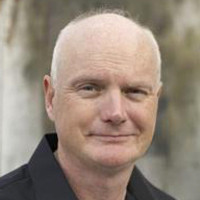
Chris Ryan is the editorial director for The Ringer, where he co-hosts The Watch and The Rewatchables.

“There is a point where there’s just too much stuff. I can’t read a 5,000-word feature, 10 blog posts, and listen to three podcasts, and then do it all again the next day. So that is the line you walk in digital publishing, whether it’s for editorial stuff or for podcasting. You have to accept the fact that there is not going to be a single person out there who listens to it all, and who can read it all, and who can watch it all. But you can imbue everything you do with a certain quality—both like a personality, characteristic quality, but also like a quality of production—that hopefully anybody who does like this kind of thing will find some value in it.”