Showing 25 articles matching best fc points to buy Buyfc26coins.com is FC 26 coins official site..KzUT.

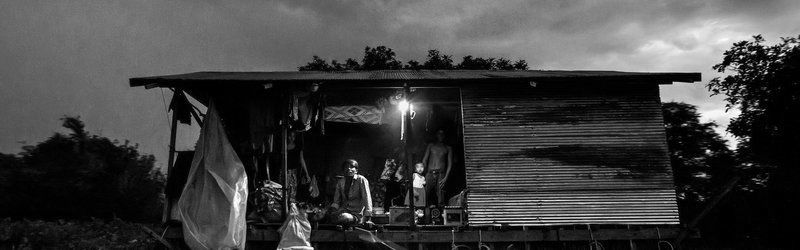
Shane Bauer, a senior reporter for Mother Jones, spent four months working undercover as a guard in a private prison.

“The thing that I grappled with the most afterward was a feeling of shame about who I was as a guard and some of the things that I had done. Sending people to solitary confinement is hard to come to terms with—even though, in that situation, I don't know what else I could have done. ... I had to do what I could to keep myself safe.”

Thanks to MailChimp for sponsoring this week's episode.
Rachel Syme has written for The New Yorker, The New York Times, Grantland, and more.

“You have this sense that you’re bonding, but at the same time you're also going to betray them. Because if you hear this quote that they say or you see it in a mannerism, you write it in your notebook and you think ‘I got it.’”

Thanks to TinyLetter, The Great Courses, MarketingProfs, and Squarespace for sponsoring this week's episode.

Robin Marantz Henig, the author of nine books, writes about science and medicine for The New York Times Magazine.

“I have my moments of thinking, ‘Well, why is this still so hard? Why do I still have to prove myself after all this time?’ If I were in a different field, or if I were even on a staff, I’d have a title that gave me more respect. I still have to wait just as long as any other writer to get any kind of response to a pitch. I still have to pitch. Nothing is automatic, even after all these years of working at this.”

Thanks to MailChimp, Johnson & Johnson, and Audible.

Ed Caesar is a freelance writer based in England whose work has appeared in The New Yorker, British GQ, and The Sunday Times Magazine. He is the author of Two Hours: The Quest to Run the Impossible Marathon.

“That was a really horrific situation. People were being killed in the street in front of us. People were firing weapons in all directions. It was really chaotic and quite scary. It freaked me out. And I thought, ‘Actually, there's not a huge amount more of this I want to do in my life.’”

Thanks to MailChimp, MasterClass, The Message, RealtyShares, and Prudential for sponsoring this week's episode.

Sam Sanders is the former host of NPR’s It’s Been a Minute. He hosts Vulture’s Into It, which launched last week.

“I don’t think I ever wanted a career where I was doing the same thing for 30 years. I think that, editorially, I had become someone who was really contemplating what kind of capital-j journalist I wanted to be, want to be, and I was questioning a lot of rules and the structure of what we think journalism is supposed to be, and I think I needed to be away from a legacy institution like NPR, at least for a spell, to work that out.”

Leslie Jamison has written for The Believer, Harper's and The New York Times. Her latest book is The Empathy Exams.

"I sort of love imagining a small army of 22-year-old men who are just like, 'Fuck that book, I wish it was never published.'"

Thanks to TinyLetter and Harry's for sponsoring this week's episode.

Grant Wahl was the founder of Fútbol with Grant Wahl, a longtime writer for Sports Illustrated, and the author of The Beckham Experiment and Masters of Modern Soccer. He died on December 10, covering the World Cup in Qatar. This interview was recorded in January 2016.

“I never would have predicted I would do soccer full time. And that’s happened. I’d love to say that this was all planned and inevitable but it really wasn’t.”

Tavi Gevinson is a writer, actor, and the founder of Rookie. Her new zine is Fan Fiction.

“Stories are unstable, and memory is unstable, and identity is unstable. All of these things that I've tried to make permanent in writing, they're actually unstable. So even though it's tempting to go, Oh, that was fake, it's more like, No, it was just temporary.”

Susan Orlean is a staff writer at The New Yorker.

"There's always the fear, which comes with having done it for a long time, that you're repeating yourself. That's actually a genuine concern—you worry that you're becoming an imitiation of yourself ... The funny thing is that you spend the first half of your career wanting desperately to have a voice that's distinctive and recognizable, then you go to the other side of that and think oh my god, all my stories sound the same."

Thanks to TinyLetter and Digg for sponsoring this week's episode!

Megan Kimble is the former executive editor of The Texas Observer and has written for The New York Times, Texas Monthly, and The Guardian. Her new book is City Limits: Infrastructure, Inequality, and the Future of America’s Highways.

“I have never lived in a city that was not wrapped in highways. It’s hard for me to imagine anything else. And I think that’s true for a lot of people today. ... [But] we have known since the origins of the interstate highways program that building highways through cities doesn’t fix traffic. And yet we keep doing it. To me, that really fueled a lot of the book. It wasn’t supposed to be this way.”

Tommy Tomlinson, a former newspaper columnist, is the host of Southbound podcast. His new book is The Elephant in the Room: One Fat Man's Quest to Get Smaller in a Growing America.

“The thing that galvanized me was the death of my sister. I signed the contract November 2014, she died Christmas Eve of that year. She had been overweight just like me. She was older than me and died from complications, an infection that was directly connected to her weight. And that more than anything made me think if I don’t deal with this now, I’m not going to be around in 10 years to write this book. So, the book helped certainly. The idea that I was going to put this stuff on paper and expose myself in this way to the world and I didn’t want to be a failure at the end of it. More than that, I didn’t want to be a failure because I didn’t want to be a failure. I don’t want to die.”

Thanks to MailChimp and Pitt Writers for sponsoring this week's episode.

Vinson Cunningham is a staff writer for The New Yorker.

“I think the job is just paying a bunch of attention. If you're a person like me, where thoughts and worries are intruding on your consciousness all the time, it is a great relief to have something to just over-describe and over-pay-attention to—and kind of just give all of your latent, usually anxious attention to this one thing. That, to me, is a great joy.”

Thanks to Mailchimp for sponsoring this week's episode.

Chana Joffe-Walt is a producer and reporter at This American Life. Her latest story is "Five Women."

“I felt like there was more to learn from these stories, more than just which men are bad and shouldn’t have the Netflix special that they wanted to have. And I was interested, also, in that there were groups of women, and that somehow, in having a group of women, you would have variation of experience. There could be a unifying person who they all experienced, but they would inevitably experience that person differently. And that would raise the question of: Why? And I feel like there is this response: ‘Why did she stay?’ Or: ‘Why didn’t she say fuck you?’ Or: ‘I wouldn’t have been upset by that. I wouldn’t have been offended by that thing.’ Which I feel like is a natural response, but also has a lack of curiosity. There are actual answers to those questions that are interesting.”

Thanks to MailChimp and Credible.com.

Pamela Colloff is an executive editor and staff writer at Texas Monthly.

"That sense of loss, that sense of normal life turning on a dime is something that, in a very different way, I’ve experienced. And I carry that with me into some of the more difficult stories."

Smiley face Mimi Swartz has written for Talk, The New Yorker and Vogue. She is an executive editor at Texas Monthly.

"Here’s this great [public interest] story that nobody’s ever told. Now how can I write it so the maximum number of people want to read it? I try to make the homework part as interesting and compelling as possible."

Thanks to TinyLetter and PillPack for sponsoring this week's episode.
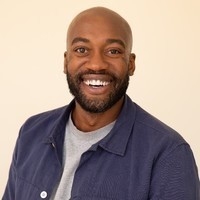
Sheila Heti is the author of seven books. Her latest is Motherhood: A Novel.

“[My parents] were afraid for me. As anybody who has a kid who wants to be a writer. I think they understood it was a hard life. It was a life in which you wouldn’t necessarily make enough money. It was a life in which you might be setting yourself up for a great amount of disappointment. My dad’s father was a painter, so there was in him this idea that it wasn’t so crazy to him. It wasn’t so outside his understanding. And, yeah, my mom thought it was a bad idea. And it probably is a bad idea in a lot of ways, but my dad was supportive but also cautioning. I think the book really moved [my mom] and really had an effect on her, so maybe you understand that it’s not necessarily a frivolous thing to be doing. Maybe it’s not just playing. I think my mom always had this idea that writing is playing, and it is playing, but it’s a serious kind of playing.”

Thanks to MailChimp, MUBI, and Tripping.com for sponsoring this week's episode.