Showing 25 articles matching best fc points to buy Buyfc26coins.com is FC 26 coins official site..KzUT.

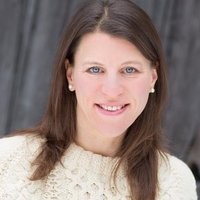
Maria Streshinsky is the executive editor at Wired.

“Sometimes a story comes in and it’s really lovely and well done. And you think if you just got on the phone with this person and pointed out the structure is wrong here and the chronology is wrong here, ask them to change that and send them what is known at Wired as the ‘praise sandwich letter’: how wonderful something is, how much work it will need, how wonderful it will be. … It’s not the kiss of death, it’s ‘we have a lot of work to do.’ … There are lots of pieces that come in that you’ve assigned because it’s the person with the right information with the right access, and they’re a good reporter, but maybe not a terrific wordsmith. So, you do more rewriting. Then there’s the other person that’s a really lovely, lovely writer that doesn’t have the structure and the reporting so you push on that. It’s sort of a three or four-pronged thing—it depends on the piece. I will say, somewhat controversially, there aren’t that many pieces that come in pretty clean.”

Thanks to MailChimp, Skagen, and Pitt Writers for sponsoring this week's episode.

Leah Finnegan, a former New York Times and Gawker editor, is the managing news editor at Genius.

“After the Condé Nast article, Nick Denton decided Gawker needed to be 20% nicer, and I took a buyout because I was not 20% nicer.”

Thanks to MailChimp, Audible, Squarespace, and Trunk Club for sponsoring this week's episode.

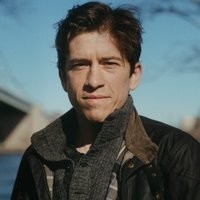
Brendan I. Koerner is a contributing editor at Wired and the author of The Skies Belong to Us.

"It was this big review in The New York Times and I was terrified that it was going to say something awful about the book or about me as a writer. And my son said to me — he's 5, I should say — "If it's bad, you won't die." That's a good point, you know? So I always think of that when I pick up a new review and take that risk of someone slamming something that I've genuinely poured my heart and soul into. You'll live to fight another day."

Thanks to TinyLetter and the The Literary Reportage concentration at NYU's Arthur L. Carter Journalism Institute for sponsoring this week's episode.

</blockquote>

Ben Anderson is a war journalist and documentary filmmaker for Vice News. His latest book is The Interpreters.

"You're surrounded by people who are so poor. Maybe their family members have already been killed. And they still can't leave. So compared to that, I can't really take the idea that I've suffered and that I need stop and go to a spa for a few days. I can't take that idea that seriously. Compared to them, it feels like I am leading an almost privileged existence."

Thanks to TinyLetter and GoDaddy for sponsoring this week's episode.

Sponsor: Zinio

Whether you are looking for exceptional longform journalism, dazzling photography, or a new way to explore your passions, Zinio has you covered. Zinio is the world’s largest digital newsstand with more than 5,500 magazines from 35 countries. Read your favorites online or off; Zinio has apps for iOS, Google Play, PC, and Mac.

This week, Zinio recommends “In a Dangerous Place,” an amazing article from Elephant about the trials and tribulations of acclaimed artist Marcus Harvey.

Read it for free on Zinio.

Reihan Salam is the executive editor of National Review.

"I’m incredibly curious about other people. I’m curious about what they think of as the constraints operating on their lives. Why do they think what they think? If I weren’t doing this job, I’d want to be a high school guidance counselor."

Thanks to TinyLetter, Bonobos, and Cards Against Humanity’s Ten Days or Whatever of Kwanzaa for sponsoring this week's episode.

Voices from Chernobyl

“'You have to understand: This is not your husband anymore, not a beloved person, but a radioactive object with a strong density of poisoning. You’re not suicidal. Get a hold of yourself.' And I was like someone who’d lost her mind: 'But I love him! I love him!' He’s sleeping, and I’m whispering: 'I love you!' Walking in the hospital courtyard, 'I love you.' Carrying his sanitary tray, 'I love you.'”

Read more

Excerpted from Voices from Chernobyl: The Oral History of a Nuclear Disaster.

Evan Osnos is a staff writer for The New Yorker. His new book is Wildland: The Making of America’s Fury.

“I'm always trying to get inside a subculture. That's the thing that I think has been the most enduring, attractive element for me. Is there a world that has its own manners and vocabulary and internal rhythms and status structure? And who looks down on whom? And why? And who venerates whom? Who's a big deal in these worlds? And if I can get into that, it doesn't even really matter to me that much what the subculture is. I'm fascinated by trying to map that thing out.”

Tavi Gevinson is the founder and editor-in-chief of Rookie.

"I just want our readers to know that they are already smart enough and cool enough."

Thanks to this week's sponsors, TinyLetter and Atavist Books.

Janet Malcolm: The Art of Nonfiction No. 4

“I think you are asking me, in the most tactful way possible, about my own ­aggression and malice. What can I do but plead guilty? I don’t know ­whether journalists are more aggressive and malicious than people in other professions. We are certainly not a ‘helping profession.’ If we help anyone, it is ourselves, to what our subjects don’t realize they are letting us take. I am hardly the first writer to have noticed the not-niceness of journalists. Tocqueville wrote about the despicableness of American journalists in Democracy in America. In Henry James’s satiric novel The Reverberator, a wonderful rascally journalist named George M. Flack appears. I am only one of many contributors to this critique. I am also not the only journalist contributor. Tom Wolfe and Joan Didion, for instance, have written on the subject. Of course, being aware of your rascality doesn’t excuse it.”

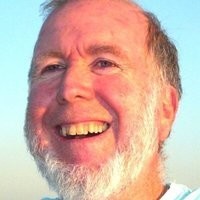
Kevin Kelly is a writer and a founding executive editor of Wired Magazine. He is the author of What Technology Wants, Out of Control and The Inevitable: Understanding the Twelve Technological Forces That Will Shape Our Future.

“I always try to write about the future—and it became harder and harder because things would catch up so fast. If you read Out of Control now, I’ve heard that people say, ‘well, this is obvious.’ I have to tell you, it was dismissed as entirely pie-in-the-sky, wild-eyed craziness twenty-five years ago.”

Thanks to Mailchimp and Pitt Writers for sponsoring this week's episode.
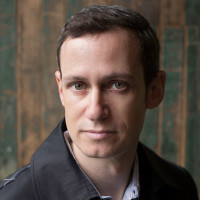
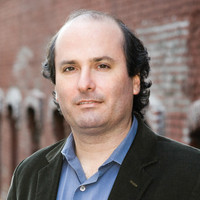
David Grann is a staff writer at The New Yorker. His new book is Killers of the Flower Moon: The Osage Murders and the Birth of the FBI.

“The more stories I reported over time, the more I just realized there are parts of the story I can’t always get to. You know, unless this is a reality show and there’s 18 cameras in every room, and people [talk] before they sleep, and maybe you have some mind-bug in their brain for their unconscious, there are just parts you’re just not gonna know. You get as close as you can. And so the struggle to me is to get as close as I can, to peel it back as close as I can, but understanding that there will be elements, there will be pieces, that will remain lingering doubts.”

Thanks to Stamps.com, Squarespace, and MailChimp for sponsoring this week's episode.

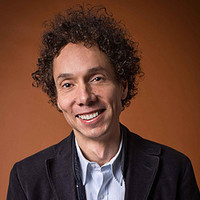
Malcolm Gladwell is a staff writer at The New Yorker. His latest book is David and Goliath: Underdogs, Misfits, and the Art of Battling Giants.

"The categories are in motion. You turn into a Goliath, then you topple because of your bigness. You fall to the bottom again. And Davids, after a while, are no longer Davids. Facebook is no longer an underdog—it's now everything it once despised. I am everything I once despised. When I was 25, I used to write these incredibly snotty, hostile articles attacking big-name, nonfiction journalists. Now I read them and I'm like, 'Oh my God, they're doing a me on me!'"

Thanks to TinyLetter and EA SPORTS FIFA 14 for sponsoring this week's episode.

Andrew Marantz is a staff writer at The New Yorker. His new book is Antisocial: Online Extremists, Techno-Utopians, and the Hijacking of the American Conversation.

“Some nonfiction can be reduced to a bulletpoint primer, but a good book is a good book. Whether it’s fiction or nonfiction, it should create a feeling, it should create a world, it should be a feeling that you want to live in and that tilts the way you see things. Isn’t that the point?”

Thanks to Mailchimp and Pitt Writers for sponsoring this week's episode.
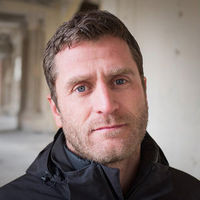
Michael Schulman is a staff writer for The New Yorker. He recently profiled Jeremy Strong of Succession.

”There's an interesting moment that's part of this job where you’ve spent a lot of time with someone and it often feels very personal and very intimate. And then when you go to write the piece, you have to sort of take a breath and say to yourself, Okay, I'm not writing this for this person. I'm writing this for the reader.

Sarah Schweitzer is a former feature writer for the Boston Globe.

“I just am drawn, I think, to the notion that we start out as these creatures that just want love and were programmed that way—to try to find it and to make our lives whole. We are, as humans, so strong in that way. We get knocked down, and adults do some horrible things to us because adults have had horrible things done to [them]. There are some terrible cycles in this world. But there’s always this opportunity to stop that cycle. And there are people who come along who do try that in their own flawed ways.”

Thanks to MailChimp and AlarmGrid for sponsoring this week's episode.

Max Chafkin is a features editor and reporter for Bloomberg Businessweek. His new book is The Contrarian: Peter Thiel and Silicon Valley’s Pursuit of Power.

“I think there's like a really good way to come up with story ideas where you basically just look for people who have given TED Talks and figure out what they're lying about. And there's also a tendency in the press to pump up these startups based on those stories. ... It's worth taking a critical look at these stars of the moment. Because often there's not as much there as we think. And if you’re talking about Theranos or something, there's some potential to do harm—but also it means that maybe more worthwhile efforts are not getting the attention they deserve.”

Vann Newkirk II is a senior editor at The Atlantic and the host of Floodlines: The Story of an Unnatural Disaster. His new podcast is Holy Week: The Story of a Revolution Undone.

“I’m often toggling between environmental justice, between the history of race and racial organization in America. And to me, they’re all one story, and I’m trying to tell the story about how the conditions of marginalization in America have made and shaped the present. That’s it. That’s one story.”

Tessie Castillo, a journalist covering criminal justice reform, and George Wilkerson, a prisoner on death row in North Carolina, are two of the co-authors of Crimson Letters: Voices from Death Row.

“I want other people to see what I see, which is that the men on death row are human beings. They’re incredibly intelligent and insightful and they have so many redemptive qualities...I don’t think I could really convey that as well as if they get their own voice out there. So I wanted this book to be a platform for them and for their voices.” –Tessie Castillo

“For me, writing was like a form of conversation with myself or with my past, like therapy. So I just chose these periods in my life that I didn’t really understand and that were really powerful and impactful to me, and I just sat down and started writing to understand them and make peace with them.” –George Wilkerson

Thanks to Mailchimp for sponsoring this week's episode.
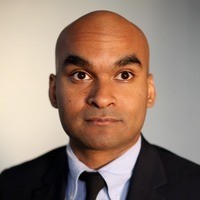
Charles Duhigg is a New York Times reporter and author of The Power of Habit.

"The stuff that gets cut out gets cut out for a reason. The discipline of space is always a good discipline. If it deserves to be read, it shouldn't be on the cutting room floor ... If it ends up on the cutting room floor, there's usually a reason why."

Thanks to TinyLetter for sponsoring this week's episode!

Wright Thompson is a senior writer for ESPN. His new book is Pappyland: A Story of Family, Fine Bourbon, and the Things That Last.

“If you’re going to write a profile of someone … you have to find some piece of common ground with them so that no matter how famous or good or noble or bad—or no matter how cartoonish their most well-known attributes are—it shrinks them. And once they’re small enough to fit in your hand, I think it changes the entire experience of asking questions about their lives.”

Thanks to Mailchimp for sponsoring the show.

Ross Andersen is the deputy editor of Aeon Magazine.

“One of the things that’s been really refreshing in dealing with scientists—as opposed to say politicians or most business people—is that scientists are wonderfully candid, they’ll talk shit on their colleagues. They’re just firing on all cylinders all the time because they traffic in ideas, and that’s what’s important to them.”

Thanks to TinyLetter and Alarm Grid for sponsoring this week's episode.
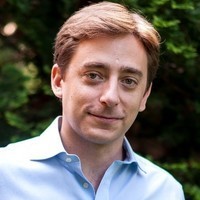
Samin Nosrat is a food writer, educator, and chef. Her new book is Salt, Fat, Acid, Heat: Mastering the Elements of Good Cooking.

“I kind of couldn’t exist as just a cook or a writer. I kind of need to be both. Because they fulfill these two totally different parts of myself and my brain. Cooking is really social, it’s very physical, and also you don’t have any time to become attached to your product. You hand it off and somebody eats it, and literally tomorrow it’s shit. … Whereas with writing, it’s the exact opposite. It’s super solitary. It’s super cerebral. And you have all the time in the world to get attached to your thing and freak out about it.”

Thanks to MailChimp, Squarespace, Away, and Masters of Scale for sponsoring this week's episode.

Melissa del Bosque is an investigative journalist covering the U.S.-Mexico border.

“What I really want people to know is the context within which this traumatic event is happening. It doesn’t have to happen. It’s happening because certain people made certain decisions. Or they made a decision to do nothing. … There are laws, there are policies on the books that are either being ignored or could be changed.”

Thanks to Mailchimp for sponsoring this week's episode.