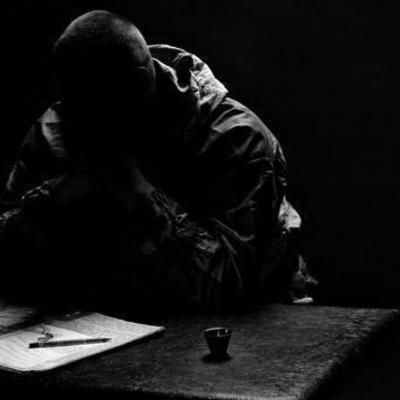
The War in Chechnya: Diary of a Spetsnaz
The excerpts from a diary of an anonymous Russian special-forces officer who served twenty tours of duty in Chechnya during the Second Chechen War (1999-2009).
Showing 25 articles matching best fc points to buy Buyfc26coins.com is FC 26 coins official site..KzUT.
The excerpts from a diary of an anonymous Russian special-forces officer who served twenty tours of duty in Chechnya during the Second Chechen War (1999-2009).

He helped build an artists’ utopia. Now he faces trial for 36 deaths there.
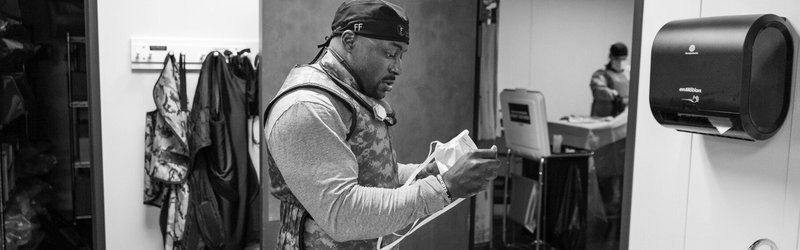
Black patients were losing limbs at triple the rate of others. The doctor put up billboards in the Mississippi Delta. Amputation Prevention Institute, they read. He could save their limbs, if it wasn’t too late.

How John, a father of 14, lost Christmas.
He was a powerful executive at some of the best-known companies in the world. Then he started robbing banks. The meteoric rise and dramatic fall of Steve Carroll, the high-flying corporate executive who wanted it all.
Margalit Fox is a senior obituary writer for The New York Times.
"You do get emotionally involved with people, even though as a journalist you're not supposed to. But as a human being, how can you not? Particularly people who had difficult, tragic, poignant lives. But there are also people that you just wish you had known. And, of course, the painful irony is that you're only getting to know them by virtue of the fact that it's too late."
Thanks to this week's sponsor, TinyLetter!
</blockquote>
Katie Engelhart is a journalist and the author of the new book The Inevitable: Dispatches on the Right to Die.
“Billions of dollars of government money goes to the nursing home industry every year. And nobody has a nursing home correspondent. Nobody has an assisted living correspondent…. That's wild to me. As a journalist, someone tells me, Oh, there's an industry. It's hugely underregulated. It's getting billions of dollars a year. It is not super-accountable for that money. Who wouldn't want to cover that?”
Thanks to Mailchimp for sponsoring this week's episode.
Jen Percy is the author of Demon Camp: A Soldier's Exorcism.
"As is the nature of obsession, you just start gathering materials, hoarding documents and taking notes in a way that’s totally chaotic and overwhelming. You don’t even care yet because you’re so excited by what you’re gathering. If you start trying to make a narrative out of it too soon it will be false or fall apart."
Thanks to TinyLetter and Dear Thief, the new novel by Samantha Harvey, for sponsoring this week's episode.
On leaving a very successful TV show:
"I’m me, the guy that thinks all of this is sort of ridiculous. It was a joke. Leaving was a joke that I thought would be a good joke because the show would grow and change. It seemed like a funny trick to play on everyone. It’s just like, what if Kramer [Michael Richards] left in the middle of Seinfeld’s height? And also what if that guy never said the n-word on a stage? What if that was the end of this character? I just thought that would be really fascinating."
Bryan Fogel is the Oscar-winning director of Icarus.
“But there was a long period of time also that none of us were really thinking so much about the film. It was really that we were in a real world crisis. Gregory's life was essentially in my hands.”
Thanks to MailChimp, Read This Summer, Google Play, and Stitcher Premium for sponsoring this week's episode.
Eli Sanders is an associate editor at The Stranger and the winner of the 2012 Pulitzer Prize for feature writing.
"There was one particular moment in the trial, which I described, where ... there was just not any human ability to be detached from what was happening in front of you, what was being shared. It was so painful, you could not help but cry, and there was no reason to deny that that moment had happened."
Thanks to TinyLetter for sponsoring this week's episode!
Kelly McEvers, a former war correspondent, hosts NPR's All Things Considered and the podcast Embedded.
“Listeners want you to be real, a real person. Somebody who stumbles and fails sometimes. I think the more human you are, the more people can then relate to you. The whole point is not so everybody likes me, but it’s so people will want to take my hand and come along. It's so they feel like they trust me enough to come down the road with me. To do that, I feel like you need to be honest and transparent about what that road’s like.”
Thanks to MailChimp, Audible, and Squarespace for sponsoring this week's episode.
Rachel Monroe is a freelance writer based in Texas.
“I will totally go emotionally deep with people. If I can find a subject who is into that then it will probably be a good story. Whether that person is a victim of a crime, or a committer of a crime, or a woman who spends a lot of time on the internet looking for hoaxes, or whatever it may be—I guess I just think people are interesting. Particularly when those people have gone through some sort of extreme situation.”
Thanks to MailChimp, Club W, and Igloo for sponsoring this week's episode.
Jeanne Marie Laskas is the author of the new book Hidden America and a correspondent for GQ.
"I'm just a writer going into [people's lives], you know? What do you do with that kind of intensity of a relationship when you're job is to invoke it on the page? It's a huge ... not just privilege but responsibility. Because, you know, it's just for a story. And I tell them that: 'I'm asking you trust me, but at the same time don't trust me. I'm kind of like a vulture in this relationship—we're not friends.'"

Erika Hayasaki has written for The New York Times Magazine, Wired, and The Atlantic. Her new book is Somewhere Sisters: A Story of Adoption, Identity, and the Meaning of Family.
“I don’t subscribe to the belief that it’s our story because we’re the journalist that wrote it — especially when people are sharing these really intimate, deep, painful moments. That is not my story. That’s their story that they've collaborated in a way with me to share through these interviews.”
David Wolman is the author of six books and a magazine features writer who has written for Wired, Outside, and The New York Times. His latest article is ”Vanished in the Pacific.”
“I feel like conversations about characters, character development, strong characters gets a little nauseating in my field sometimes because it’s like, of course — you need that like you need periods at the ends of sentences. Do we really have to keep saying it? But in this conversation it’s worth saying, because there are great ideas out there where the sources or the characters just really weren't there and then you’re tucking your tail in between your legs to look for the next one.”
Theo Padnos is a journalist and author of the book Blindfold: A Memoir of Capture, Torture, and Enlightenment.
“I'm trying to tell a story about a person who's attracted to dangerous places and people. I think we all have that within us. I wanted to bring my readers along. So I selected details that we all have in common... I'm trying to invite you along on a journey that you yourself might have taken.”
Thanks to Mailchimp for sponsoring this week's episode.
Ezra Edelman is the director of O.J.: Made in America.
“When I say what I learned is that America is even more fucked up than I had previously thought, it’s that—the superficiality of it. How we are willingly seduced by these shiny people and these shiny things. And, again, when I looked at O.J.’s trajectory, that was an operating principle.”
Thanks to MailChimp, Squarespace, Casper, and Secrets, Crimes, & Audiotape for sponsoring this week's episode.
Samin Nosrat is a food writer, educator, and chef. She is the author of Salt, Fat, Acid, Heat and hosts a series by the same name on Netflix.
“I kind of couldn’t exist as just a cook or a writer. I kind of need to be both. Because they fulfill these two totally different parts of myself and my brain. Cooking is really social, it’s very physical, and also you don’t have any time to become attached to your product. You hand it off and somebody eats it, and literally tomorrow it’s shit. … Whereas with writing, it’s the exact opposite. It’s super solitary. It’s super cerebral. And you have all the time in the world to get attached to your thing and freak out about it.”
Thanks to MailChimp, and Pitt Writers for sponsoring this episode.
Alexis C. Madrigal is an editor-at-large for Fusion, where he’s producing the upcoming podcast, Containers.
“Sometimes you think like, 'Man the media business is the worst. This is so hard.' When you spend time with all these other business people, you probably are going to say, ‘Capitalism is the worst. This is hard.’ Competition that’s linked to global things is so hard because global companies are locked in this incredible efficiency battle that just drives all of the slack out of the system. Like media, there’s no slack left, and I don’t know where things go after that.”
Thanks to MailChimp, Stamps.com, and Casper for sponsoring this week's episode.
Sarah Maslin Nir, a reporter for The New York Times, recently published an exposé of labor practices in the nail salons of New York.
“The idea of a discount luxury is an oxymoron. And it’s an oxymoron for a reason: because someone is bearing the cost of that discount. In nail salons it’s always the person doing your nails, my investigation found. That has put a new lens on the world for me.”
Thanks to TinyLetter, Trunk Club, and Aspiration for sponsoring this week's episode.
Wesley Morris, a Pulitzer Prize winner, covers film at Grantland.
"That's what writing about race and popular culture is for me: it's crime reporting. It's not me looking for an agenda when I go to the movies ... but I feel a moral responsibility to report a crime being committed. That's what I'm forced to do over and over again."
Thanks to this week's sponsors, Warby Parker and TinyLetter.
Rolf Potts is a veteran travel writer.
"Instead of seeking out the stories, the stories sort of found me. I miss those days. I mean, I make more money from my writing now and I'm probably a better journalist. But having seven-day weeks to wander, month after month, for two years, was a great way to find real and spontaneous and human travel stories."</i>
Thanks to TinyLetter for sponsoring this week's episode!
</blockquote>

The story of Dean Corll and his accomplices, who killed over 20 teenage boys in the Heights neighborhood of Houston in the early 1970s, and the families searching for their missing sons.

As Europe, led by Greece and Ireland and followed by Portugal and Spain, tumbles towards economic catastrophe, only one nation can save the continent from financial ruin: a highly reluctant Germany.