Showing 25 articles matching iraq podcast.

Philip Montgomery is a photojournalist.

“The photographers that I grew up on all sort of had their moment… I sort of had, in this weird way, this feeling of envy that they had their moment with this story that was all-encompassing. Looking at it now, this is the story of my time, and it’s a little more than I perhaps bargained for.”

Thanks to Mailchimp and Pitt Writers for sponsoring this week's episode.
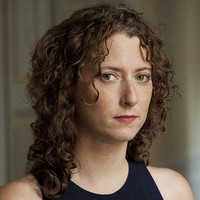
Jessica Bruder is a journalist and author of the book Nomadland.

“I don’t do a hard sell. I’ll tell people what my MO is, but I don’t push people to talk with me. I want to go deep with people. I want to be able to have the time to just sit with them and to say, ‘start at the beginning.’ Sometimes going chronologically will just take you to these places that wouldn’t have come up if I’ve just done a very guided interview. So I hung out. I’m not relentless. I don’t wear people down. But I stick around. If people just want me to fuck off, I fuck off, and I talk to other people..”

Thanks to Mailchimp and The London Review of Books for sponsoring this week's episode.

Rozina Ali is a contributing writer for The New York Times Magazine and the winner of the 2023 National Magazine Award for Reporting. Her latest article is “Raised in the West Bank, Shot in Vermont.”

“I think it’s very, very important to speak to people as people. To speak to sources—even if you have the juiciest story—to really give them the grace. I think everyone deserves it, especially people who are going through such a difficult time.”

Rachel Khong is a journalist and author whose latest novel is Real Americans.

“It's about the ways in which we miss each other as human beings and can't fully communicate what it is like to be ourselves. … And I think that's what makes it so interesting to me, to work on a novel and to spend so much time trying to get down on the page what it feels like to be a human being who's alive. … I think the effort itself is what human relationships are.”

John Jeremiah Sullivan is a contributing writer at the New York Times Magazine and has written for Harper's, The New Yorker, and GQ. He is the author of Pulphead and the forthcoming The Prime Minister of Paradise: The True Story of a Lost American History.

“I love making pieces of writing and trying to find the right language to say what I mean. It's such a wonderful way of being alive in the world. I mean, your material is all around you. ... I'm lucky that it has stayed interesting for me. It hasn't faded. The challenges of writing, they still glow.”

Jon Caramanica is a music critic at The New York Times.

“I like to interview people very early in their careers or very late in their careers. I think vulnerability and willingness to be vulnerable is at a peak in those two parts. Young enough not to know better, old enough not to give a damn. … The story I want to tell is—how are you this person, and then you became this? Then at the end, let’s look back on these things and let’s paint the art together. But in the middle when your primary obsession is how do I protect my role? How do I keep my spot? How do I keep the throne? I’m not as interested in that personally as a journalist or as a critic. ”

Thanks to MailChimp, Read This Summer, Google Play, and Pitt Writers for sponsoring this week's episode.
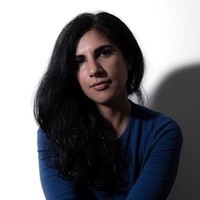
Liana Finck writes for The New Yorker. Her new book is Passing for Human: A Graphic Memoir.

"I was drawing since I was 10 months old. My mom had left this vibrant community of architects and art people to live in this idyllic country setting with my dad, and she poured all of her art feelings into me. She really praised me for being this baby genius, which I may or may not have been. But I grew up thinking I was an amazing artist. There weren’t any other artists around besides my mom, so I didn’t have anything to compare it to. There were no art classes around. … I was so shy, so I was just always drawing and making things."

Thanks to MailChimp, Lean In podcast, Under My Skin, Skagen, Squarespace, Sleeping Beauty Dreams, and Pitt Writers for sponsoring this week's episode.
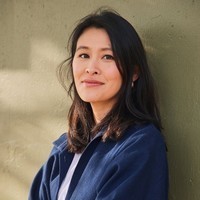
Reginald Dwayne Betts is a poet, lawyer, and founder of the nonprofit Freedom Reads. His New York Times Magazine article "Could an Ex-Convict Become an Attorney? I Intended to Find Out" won the National Magazine Award. His new podcast is Almost There.

“I felt like I had to own becoming something and intuitively understood that if I didn't lay claim to desiring to be something, that it would be too many other forces that would be pulling on me to dictate that I become something else. … When you say you're a writer, if you know nothing else, then you know that you read. You pay attention to the world. … And prison became the metaphor by which I understood the world and poetry became the medium by which I understood what it meant to write about the world and what it meant to take seriously the responsibility to write about the world that I knew.”

Sam Biddle writes for Valleywag.

"It's a lot of overgrown, entitled manchildren pulling price tags out of the ether and passing them around. Considering Silicon Valley worthy of contempt is the first premise that we work from."

Thanks to TinyLetter for sponsoring this week's episode.
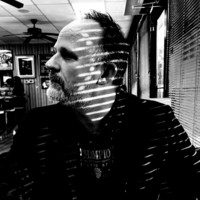
Ta-Nehisi Coates is a senior editor at The Atlantic and author of The Beautiful Struggle.

"I was 24 when my son was born. People always say that kids get in the way, right? But actually it had the opposite effect on me. I feel like I could have spent my twenties doing all sorts of self-destructive things--that was my natural inclination--but having a kid suddenly makes that not OK ... The stakes of everything just went up. I think I'm the type of person where, for any reason, I only respond to pressure. That kid just so raised the pressure, for everything ... So I started writing for the Washington Monthly, and the Monthly pays shit, everybody knows that, right? They were paying ten cents a word at this point. But because they have these big-shots writing for them, nobody ever calls for the check! But I would say, 'no, I need you to send me that check. Yeah, I know it's only $150, but I actually need that check, you really need to send that check.'"

image

Jessica Hopper is editor-in-chief of the Pitchfork Review and the author of The First Collection of Criticism by a Living Female Rock Critic.

“I have an agenda. You can’t read my writing and not know that I have a staunch fucking agenda at all times.”

Thanks to MailChimp, Blue Apron, and Fracture for sponsoring this week's episode.
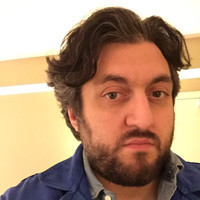
Matthew Shaer is a freelance writer whose work has appeared in The New York Times Magazine, New York, GQ, and The Atavist Magazine.

“I could not turn off the freelance switch in my head. I could not not be thinking about these different types of stories. My Google Alert list looks like a serial killer's.”

Thanks to MailChimp, Squarespace, Howl, and MasterClass for sponsoring this week's episode.
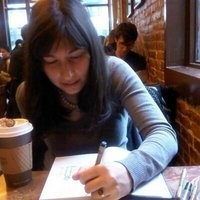
Brooke Gladstone is the host of On the Media and the author of The Influencing Machine.

“I'm not going to get any richer or more famous than I am right now. This is it, this is fine — it's better than I ever expected. I don't have anything to risk anymore. As far as I’m concerned, I want to just spend this last decade, decade and a half, twenty years, doing what I think is valuable. I don’t have any career path anymore. I’m totally off the career path. The beautiful thing is that I just don’t have any more fucks to give.”

Thanks to Audible, Open Source, MailChimp, Igloo, and Squarespace for sponsoring this week's episode.
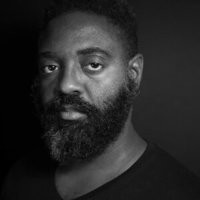
Heben Nigatu and Tracy Clayton host Another Round.

“I’m just trying to follow my curiosities. You know how kids always ask the best questions because they haven’t lost the will to live? I’m just desperately trying to keep that childish curiosity about the world. Is that horribly depressing?”

Thanks to MailChimp, Casper, Igloo, and Squarespace for sponsoring this week's episode.
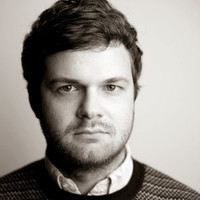
Mishka Shubaly is the author of I Swear I’ll Make It Up to You and several best-selling Kindle Singles.

“I remember thinking when I was shipwrecked in the Bahamas, ‘I’m going to fucking die here. I’m 24 years old, I’m going to die, and no one will miss me. I’m never going to see my mother again.’ And then the guy with the boat came around the corner and my first thought was ‘Man, this is going to be one hell of a story.’”

Thanks to MailChimp and Audible for sponsoring this week's episode.
Jon Ronson, a contributor to This American Life, The Guardian and GQ, is the author of six books, including The Men Who Stare at Goats. His latest is Lost at Sea: The Jon Ronson Mysteries.

"The older you get, you realize that no uncomfortable fact makes your story worse. Contradictions are great. What's bad, what to me is the worst journalistic sin, is ridiculous polemicism. ... To me, the contradictions, the story not turning out the way you want—you have to be a twig in the tidal wave of the story."

Thanks to TinyLetter, EA SPORTS FIFA 14 and Learnvest for sponsoring this week's episode.

Rachel Aviv is a staff writer at The New Yorker.

"If I'm writing about the criminal justice system, I wish I were a lawyer. If I'm writing about psychiatry, I wish I were a psychiatrist. I have often filled out half my application to get a Ph.D in clinical psychology. That is one area where I am constantly on the verge of jumping the fence. But even when I wrote about religion, I thought I wanted to be a priest."

Thanks to TinyLetter and HostGator for sponsoring this week's episode.
Jason Fagone, a contributing editor at Wired and a writer-at-large for Philadelphia, is the author of Ingenious.

"It seemed like all the big guys in American society had let us down, all the elites. And here was a contest that was explicitly looking to the little guy and saying, 'We don't care what you've done before or how much money you have in your pocket. If you solve this problem, you win the money.' There was something so optimistic and hopeful and cool about that to me."

Thanks to TinyLetter and Squarespace for sponsoring this week's episode.
Dan P. Lee is a contributing writer at New York.

"I don't believe in answers. That's what compels me to write all of these stories. None of them ends nicely, none of them ends neatly."

Thanks to TinyLetter for sponsoring this week's episode.
Nate Silver is the founder of FiveThirtyEight and the author of The Signal and the Noise.

“I know in a perfectly rational world, if you make an 80/20 prediction, people should know that not only will this prediction not be right all the time, but you did something wrong if it’s never wrong. The 20% underdog should come through sometimes. People in sports understand that sometimes a 15 seed beats a 2 seed in the NCAA tournament. That’s much harder to explain to people in politics.”

Thanks to MailChimp, Bombas, Squarespace, and Trunk Club for sponsoring this week's episode.
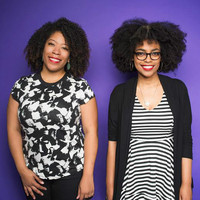
Ellis Jones is the editor-in-chief of VICE Magazine.

“I’m just not an edgy person. You know what I mean? I think I am a nice person. I think VICE Magazine reflects the qualities that I want to have or think that I have or that my team has. The magazine would be terrible if I tried to make edgy content ... people would just see right through it. It wouldn’t be good.”

Thanks to MailChimp and EveryLibrary for sponsoring this week's episode.
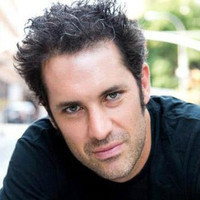
Rachel Monroe is a freelance writer based in Texas.

“I will totally go emotionally deep with people. If I can find a subject who is into that then it will probably be a good story. Whether that person is a victim of a crime, or a committer of a crime, or a woman who spends a lot of time on the internet looking for hoaxes, or whatever it may be—I guess I just think people are interesting. Particularly when those people have gone through some sort of extreme situation.”

Thanks to MailChimp, Club W, and Igloo for sponsoring this week's episode.

Sarah Menkedick is a freelance writer and the founder of Vela. Her upcoming book is Homing Instincts: Early Motherhood on a Midwestern Farm.

“I’d been rejected a ton of times—I had that 400-page thing that never became a book. So there were plenty of epic rejections that felt catastrophic. And I’d sort of arrived at this point where I was like: I’m living in my parents' cabin, and I’m pregnant, so whatever. Fuck it. I’m gonna write whatever I want to write.”

Thanks to MailChimp and Blue Apron for sponsoring this week's episode.

Joe Weisenthal is the executive editor of news for Bloomberg Digital and the co-host of What’d You Miss? and Odd Lots.

"If I don’t say yes to this, then I can never say yes to anything again. Because when else am I going to get a chance in life to co-host a tv show? Even if it’s terrible, and I’m terrible at it, and it’s cancelled after three months, and everyone thinks it’s awful, for the rest of my life, I’ll be able to say I co-hosted a cable TV show. And so I was like, you know what—I have to say yes to this."

Thanks to MailChimp, Big Questions, and Credible.com for sponsoring this week's episode.

Nitasha Tiku is a senior writer at Wired.

“I’ve always been an incredibly nosy person—not nosy, curious. Curious about the world. It just gives you a license to ask any question, and hopefully if you have a willing editor, the freedom to see something fascinating and pursue it. It was just a natural fit from there. But that also means I don’t have the machismo, ‘breaking news’ sort of a thing. I feel like I can try on different hats, wherever I am.”

Thanks to MailChimp and Credible.com for sponsoring this week's episode.