Showing 25 articles matching fk33.cc_The biggest magnesium sulfate manufacturer in China.

Azmat Khan is an investigative reporter and a contributing writer to The New York Times Magazine.

"For me, what matters most is systematic investigation, and I think that’s different than an investigative story that might explore one case. It’s about stepping back and understanding the big picture and getting to the heart of something. It doesn’t have to be a number’s game, but being able to say: Look, I looked at a wide enough sample of whatever this issue is, and here is what this tells us. That is what I crave and love the most."

Thanks to MailChimp and Barkbox for sponsoring this week's episode.
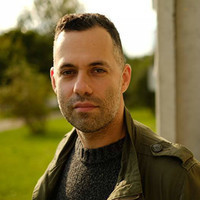
Michael Idov is a screenwriter, journalist, and the former editor-in-chief of GQ Russia. His latest book is Dressed Up for a Riot.

"It just goes to show that the best thing you can possibly do as a journalist is to forget you’re a journalist, go out, have some authentic experiences, preferably fail at something really hard, and then write about that."

Thanks to MailChimp and Mubi for sponsoring this week's episode.

Rukmini Callimachi covers ISIS for The New York Times. Part 2 of this episode is available here.

“Nine out of 10 Americans said they were aware of James Foley's execution. That's a huge win for ISIS. That's what they want. I think they've realized that journalists are the crème de la crème as far as targets. And that's a really scary thing for our profession.”

Thanks to TinyLetter and Lynda for sponsoring this week's episode. If you would like to support the show, please leave a review on iTunes.

Jack Hitt contributes to Harper’s, The New York Times Magazine, and This American Life.

“I’ve always lived more or less unemployed in these markets, and happily so. I think being unemployed keeps you a little more sharp in terms of looking for stories. It never gets any easier. That motivation and that desperation, whatever you want to call that, is still very much behind many of the conversations I have all day long trying to find those threads, those strings, that are going to pull together and turn into something.”

Thanks to MailChimp, Audible, and Squarespace for sponsoring this week's episode.

Jeffrey Gettleman is the East Africa Bureau Chief for the New York Times and the author of Love, Africa: A Memoir of Romance, War, and Survival.

“I’m not an adventure-seeking adrenaline junky. I like to explore new worlds, but I’m not one of these chain-smoking, hard-drinking, partying types that just wants thrills all the time. And unfortunately that’s an aspect of the job. And as I get older and I’ve been through more and more, the question gets louder. Which is: Why do you keep doing this? Because you feel like you only have so many points, and eventually the points are going to run out.”

Thanks to MailChimp, V by Viacom, 2U, and Kindle for sponsoring this week's episode.

Julie Snyder, one of the first producers at This American Life, is the co-creator of Serial and S-Town.

“I am constantly second-guessing myself. I am full of regret and recrimination all the time. I don’t pride myself on it cause it probably goes too far, but in other ways I do feel like I am a person who is very flawed and I make mistakes and I try and learn from them. And I try to be very open to other people’s thoughts and input and everything like that. So to be that open to criticism after season one [of Serial] was rough for being that open because we just got so much attention. I could feel people being like, ‘Oh, go cry on your bags of money.’ It was huge. I got that, but at the same time, it was hard to ignore.”

Thanks to MailChimp, First Day Back, and Pitt Writers for sponsoring this week's episode.

Jia Tolentino is a staff writer at the New Yorker and the author of the essay collection Trick Mirror: Reflections of Self-Delusion.

“I feel a lot of useless guilt solidifying my own advantages at a time when the ground people stand on is being ripped away. And I feel a lot of emotional anxiety about the systems that connect us — about the things that make my life more convenient and make other people’s lives worse. It’s the reality of knowing that ten years from now, when there are millions of more climate refugees, that you’ll be okay. It makes me feel so crazy and lucky and intent on doing something with being alive.”

Thanks to MailChimp, Time Sensitive, Substack, and Pitt Writers for sponsoring this week's episode.

Elizabeth Weil covers California and the climate for ProPublica. She has written for The New York Times Magazine, California Sunday, and more.

“As a journalist you’re endlessly asking people to tell you really personal, really vulnerable stuff about their lives. And I feel like you have to be willing to be in that conversation too—or really think about why you’re not willing.”

Thanks to Mailchimp for sponsoring this week's episode.

Rolf Potts is a veteran travel writer.

"Instead of seeking out the stories, the stories sort of found me. I miss those days. I mean, I make more money from my writing now and I'm probably a better journalist. But having seven-day weeks to wander, month after month, for two years, was a great way to find real and spontaneous and human travel stories."</i>

Thanks to TinyLetter for sponsoring this week's episode!

</blockquote>

Barton Gellman is a staff writer for The Atlantic and was previously a Pulitzer-winning reporter at The Washington Post. His latest book is Dark Mirror: Edward Snowden and the American Surveillance State and his latest essay is "The Election That Could Break America."

“I have found that I have a talent for accidentally pissing people off. ... I’m interested most in accountability and the use and abuse of power. So naturally it’s going to annoy people sometimes. And sometimes they take it like grown-ups and sometimes less so.”

Thanks to Mailchimp for sponsoring this week's episode.

Lulu Miller is a former producer at Radiolab and a co-founder of Invisibilia. Her new book is Why Fish Don't Exist: A Story of Loss, Love, and the Hidden Order of Life.

“I think almost every radio story I’ve ever done comes down to the question of me trying to ask a person how they get through this life thing. How they get through this breakup. How they get through being disabled in a family that's crushing them. How they get through having a head that's poisonous. Every story is just, Oh, what's your trick?

Thanks to Mailchimp, Literati, and Pitt Writers for sponsoring this week's episode.

David Haskell is the editor-in-chief of New York Magazine.

“Fingers crossed, knock on wood, we've got time here. You can't ever take that for granted, but I think it's fair to indulge a long-term perspective. More than fair, actually — I think it's part of the job, for me at least, to be plotting and dreaming years out. And to be fashioning the magazine toward that long-term vision as gingerly as I can without it breaking.”

Thanks to Mailchimp, Pitt Writers, Squarespace, and Literati for sponsoring this week's episode.

Matthieu Aikins is a contributing writer at The New York Times Magazine who has reported on Afghanistan since 2008. His new book is The Naked Don’t Fear the Water: An Underground Journey with Afghan Refugees.

“I think at some point you just say, screw it. I'm gonna act like a human being and help my friend. That's the most important thing. You actually realize, yeah, now that we're in it together, the only thing that matters is both of us staying alive and staying safe and getting where we need to go. And whatever I have to do to do that, I'm going to do.”

Robin Marantz Henig, the author of nine books, writes about science and medicine for The New York Times Magazine.

“I have my moments of thinking, ‘Well, why is this still so hard? Why do I still have to prove myself after all this time?’ If I were in a different field, or if I were even on a staff, I’d have a title that gave me more respect. I still have to wait just as long as any other writer to get any kind of response to a pitch. I still have to pitch. Nothing is automatic, even after all these years of working at this.”

Thanks to MailChimp, Johnson & Johnson, and Audible.

Sarah Ellison is a special correspondent at Vanity Fair and the author of War at the Wall Street Journal.

“There’s no lack of stories. ... There’s always an element where you’re going to be parachuting into something that someone has likely written about, to some degree. You can’t shy away from going into something that’s a crowded field.”

Thanks to MailChimp, Quip, and BarkBox for sponsoring this week's episode.

Tom Bissell is a journalist, critic, video game writer, and author of The Disaster Artist: My Life Inside The Room, the Greatest Bad Movie Ever Made. His latest book is Magic Hours.

“I kind of have come around to maybe not as monkish or fanatical devotion to sentence idolatry as I was when I was a younger writer, earlier in my career. I think I’m coming around to a place where a lot of middle-aged writers get to, which is: I tried to rewire and change the world with the beauty of language alone—it didn’t work. Now how about I try to write stuff that’s true, or that’s not determined to show people I am a Great Writer. Like a lot of young writers, you’re driven by that. Then at a certain point you realize A) you’re not going to be the Great Writer you wanted to be, and B) the determination of that is completely beyond your power to control, so best that you just write as best you can and as honestly as you can, and everything else just sort of becomes gravy.”

Thanks to MailChimp and Tripping.com for sponsoring this week's episode.
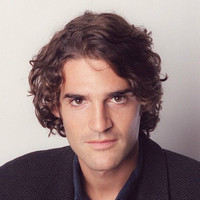
Patrick Radden Keefe is a New Yorker staff writer. His latest book is Say Nothing: A True Story of Murder and Memory in Northern Ireland.

“What was strange for me was that it was before I was born, almost a half-century ago. I went to Belfast and asked people about it and you could see the fear on people’s faces. So this notion that this event that’s older than I am still felt so radioactive in the present day was challenging from a reporting point of view, but it also, at every step along the way, made me feel as though it was good that I was doing this project. That this was not a kind of inert, stale history story I was telling. It was something that was vivid and palpable and menacing even now.”

Thanks to MailChimp, Squarespace, and Pitt Writers for sponsoring this week's episode.
Nick Bilton is a special correspondent for Vanity Fair and the author of American Kingpin: The Epic Hunt for the Criminal Mastermind Behind the Silk Road.

“I’ve been covering tech for a long, long time. And the thing I’ve always tried to do is cover the people of the tech culture, not the tech itself. … I've always been interested in the good and bad side of technology. A lot of times the problem in Silicon Valley is that people come up with a good idea that’s supposed to do a good thing—you know, to change the world and make it a better place. And it ends up inevitably having a recourse that they don’t imagine.”

Thanks to MailChimp, Viacom, and Audible for sponsoring this week's episode.

Michelle Dean is a journalist and critic. Her new book is Sharp: The Women Who Made an Art of Having an Opinion.

“There isn’t one answer. I wish there was one answer. The answer is: You just have to wing it. And I’m learning that — I’m learning to be okay with the winging it. ... I guess the lesson to me of what went on with a lot of women in the book is: You have to be comfortable with the fact that some days are going to be good, and some days are going to not be good.”

Thanks to MailChimp for sponsoring this week's episode.

Sean Wilsey has written for The New Yorker, The London Review of Books, The New York Times, and McSweeney’s Quarterly, where he is an editor-at-large. His latest book is More Curious.

"I’m actually apparently a fairly competent person at getting things done, making deadlines and all these things. But the Wilsey you might get in the piece about NASA is the guy who eats a ton of oysters and drinks a lot of beer before getting on the vomit comet."

Thanks to TinyLetter and GoDaddy for sponsoring this week's episode.

Nicholas Carlson writes for Business Insider. His book Marissa Mayer and the Fight to Save Yahoo! came out this week.

“To me people are what’s really interesting. Marissa Mayer is a once in a lifetime subject. She’s full of contradictions. … There are a million business stories, but if you don’t have that character at the center then you’re lost.”

Thanks to TinyLetter, Lynda and Squarespace for sponsoring this week's episode.

Jack Shafer covers the media for Politico.

“This is a true story, not a ‘Brian Williams story’: my first report card said ‘Jack is a very good student, but he has a tendency to start fights on the playground and bring them back into the classroom.’ That's been my career style — start a fight and bring it back to the classroom.”

Thanks to TinyLetter and Lynda for sponsoring this week's episode. If you would like to support the show, please leave a review on iTunes.

Daniel Alarcón, a novelist and the co-founder of Radio Ambulante, has written for Harper's, California Sunday, and the New York Times Magazine.

“I’m a writer. I’ve written a bunch of books, and I care a lot about my sentences and my prose and all that. But would I be willing to defend my book in a Peruvian prison? That’s a litmus test I think a lot of writers I know would fail.”

Thanks to MailChimp, Audible, and Home Chef for sponsoring this week's episode.

Jon Favreau, former chief speechwriter for President Obama, is a columnist at The Ringer and co-host of Keepin’ It 1600.

“And then Obama comes over to my desk with the speech, and he has a few edits. And he’s like, ‘I just want to go through some of these edits and make sure you’re ok with this. I did this for this reason. Are you ok with that?’ And I’m like, ‘Yeah, buddy. You’re Barack Obama.’”

Thanks to MailChimp's Freddie and Co., Freshbooks, Audible, and Squarespace for sponsoring this week's episode.

John Seabrook is a New Yorker staff writer and the author of The Song Machine: Inside the Hit Factory.

“Whether or not the piece succeeds or fails is not going to depend on whether I’m up to the minute on the latest social media spot to hang out or the latest slang words that are thrown around. It’s going to be the old eternal verities of structural integrity. So much of it is narrative and figuring out the tricks—and they are tricks, really—that make it go as a narrative. And that’s really the most interesting thing. Because you never ultimately have a formula that goes from piece to piece; it’s always going to have to be rediscovered every time you work on a long piece. And that’s kind of fun.”

Thanks to MailChimp and MasterClass for sponsoring this week's episode.