Showing 25 articles matching fccoins26 Coinsnight.com FC 26 coins 30% OFF code: FC2026. The best place for game coins.28oS.

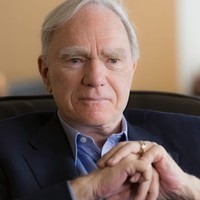
Wesley Lowery is a correspondent for “60 in 6” from 60 Minutes. He is the author of They Can't Kill Us All: Ferguson, Baltimore, and a New Era in America's Racial Justice Movement and won the 2016 Pulitzer Prize for "Fatal Force," a Washington Post project covering fatal shootings by police officers.

“The police are not, in and of themselves, objective observers of things. They are political and government entities who are the literal characters in the story. They are describing the actions of people who are protesting them. They have incentives.”

Thanks to Mailchimp for sponsoring this week's episode.
How Rating Firms' Calls Fueled Subprime Mess

By 2006, S&P was making its own study of such loans' performance. It singled out 639,981 loans made in 2002 to see if its benign assumptions had held up. They hadn't. Loans with piggybacks were 43% more likely to default than other loans, S&P found. In April 2006, S&P said it would raise by July the amount of collateral underwriters must include in many new mortgage portfolios. For instance, S&P could require that mortgage pools have extra loans in them, since it now expected a larger number to go bad. Still, S&P didn't lower its ratings on existing securities, saying it had to further monitor the performance of loans backing them. It thus helped the market for these loans hold up through the end of 2006.

Joshuah Bearman discusses "The Great Escape," his article about a CIA operation in Iran that became the basis for the new film Argo.

"We were sitting there and we were like, 'This would be perfect for George Clooney.' And it very quickly in fact turned out that George Clooney wanted it. So not long after David and I had been having our daydream, we had this project that Clooney had taken quickly into the empyrean heights of Hollywood."

Thanks to TinyLetter for sponsoring this week's episode!

Gideon Lewis-Kraus is the author of A Sense of Direction.

"My best friend, who is a fiction writer, she once said to me that she saw a lot of the things I was doing as 'wring tenderness from absurdity.' That wouldn't have occurred to me to put it that way, but that does seem to me [what] I like to do ... I am someone who can very easily be dismissive, or even contemptuous. And one of the things I like about reporting a story, particularly reporting a story that is ultimately, counterintuitively, positive, is that it gives me a chance to work through that, and be the more tender, sympathetic person that I would like to be in real life."

Sloane Crosley is the author of I Was Told There’d Be Cake and several other books. Her new memoir is Grief Is for People.

“You take a little sliver of yourself and you offer it up to be spun around in perpetuity in the public imagination. That is the sacrifice you make. And it makes everything just a little bit worse. So it's the opposite of catharsis, but it's worth it. It's worth it for what you get in return: a book.”

Sponsor: MATTER

Our sponsor this week is MATTER, the new home for great longform writing about science, technology, and the ideas that are shaping our future. Each month MATTER publishes a major new piece of journalism, and for just 99c a month, subscribers get to read it wherever they want — on the web, for their Kindle or iPad, or even as an audiobook — as well as a slew of other benefits.

You can get a free taster with Do No Harm, a harrowing investigation into a condition that makes sufferers want to amputate their own limbs.

Or sign up now to read the latest release, The Ghost in the Cell: an extraordinary account of families riven by violence and the scientists who are trying to pinpoint the cause.

Should Occupy Wall Street Take Up Arms?

“It’s striking that for all the talk about polarization in the US, the Tea Party Movement and Occupy Wall Street are entirely non-violent. Overseas, no one expected the Arab Spring protests to be as nonviolent as they were,” Pinker wrote in an email. The threat of overwhelming reprisal from authorities may have brought some peace to seventeenth- and eighteenth-century England, but Pinker also pointed to research that, today, “nonviolent protest movements achieve their aims far more often than violent ones.” Still, the story of violence’s decline contains much violence, and America is no exception.

Insider Baseball

On the 1988 presidential election and the boys on the bus.

Read more

“American reporters ‘like’ covering a presidential campaign (it gets them out on the road, it has balloons, it has music, it is viewed as a big story, one that leads to the respect of one’s peers, to the Sunday shows, to lecture fees and often to Washington), which is one reason why there has developed among those who do it so arresting an enthusiasm for overlooking the contradictions inherent in reporting that which occurs only in order to be reported.”

How Rajat Gupta Came Undone

The downfall of a Goldman Sachs director:

"Now from, for the last three or four, I mean four or five years, I've given him a million bucks a year, right?" says Rajaratnam. "Yeah, yeah," says Gupta, who doesn't appear taken aback at all by Rajaratnam's next remark: "After taxes. Offshore. Cash."

“Today is May 13th, and Today You Graduate, and My Friends, You Ain’t Seen Nothin’ Yet.”

In a speech that’s getting a bit of flak for recycling some of his past lines, the stage- and screenwriter says it’s okay to make mistakes along the way:

And make no mistake about it, you are dumb. You're a group of incredibly well-educated dumb people. I was there. We all were there. You're barely functional. There are some screw-ups headed your way. I wish I could tell you that there was a trick to avoiding the screw-ups, but the screw-ups, they're a-coming for ya. It's a combination of life being unpredictable, and you being super dumb.

Robert McKee is an author and screenwriting lecturer. His new book is Character: The Art of Role and Cast Design for Page, Stage, and Screen.

”When I'm in conversation with others, I'm always aware—or sensitive, at least—to what they're really thinking and feeling. And writers must have that. They can't possibly create excellent nonfiction or fiction if they're not aware of what is going on inside of other people, really, even subconsciously, while they go about saying whatever they do consciously in the world. Because if you just recorded the surface, if you were just paying attention to the surface, you'd be missing the whole show.”

Thanks to Mailchimp for sponsoring this week's episode.

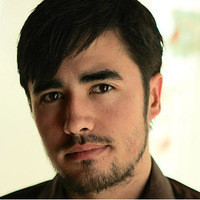
Matthieu Aikins, on the eve of a move to Kabul. Aikins is a correspondent for GQ, Harper's and Wired.

"There's no real objective framework for deciding what the value of your life is, versus the value of a story ... Especially when you go to places where people are getting killed for the silliest reasons, and a life is worth so little, you realize you don't necessarily have to value yourself as this, like, precious commodity that can't be risked in any way. And that's just a personal choice, and it's actually a very selfish one, because obviously, if you have loved ones, you're affecting them by making that choice. In any case, it's just a different headspace that you inhabit."

Rajneeshees: From India to Oregon (Parts 1-20)

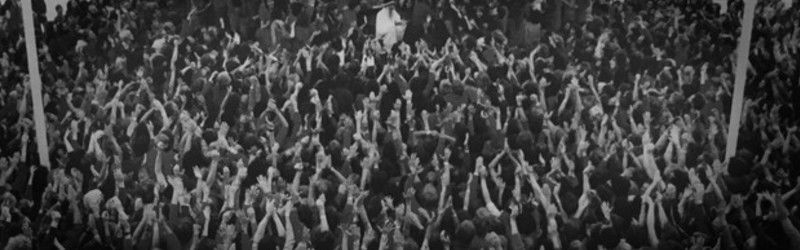
Bhagwan Shree Rajneesh and his spokeswoman Ma Anand Sheela moved their commune and its thousands of followers from India to an Oregon ranch. The poisoning of a nearby town, election manipulation, and plans to murder government officials and the writer of this story soon followed.

The events chronicled in this original 1985 series are the basis for the Netflix documentary Wild Wild Country.

  1. Part 1

    How followers of Bhagwan Shree Rajneesh came to Oregon from India, and transformed eastern Oregon’s Big Muddy Ranch into Rancho Rajneesh.

  2. Part 2

    How a small-town Indian boy became a religious guru that followers compared to Jesus Christ, Buddha and Krishna.

  3. Part 3

    Before coming to Oregon, the Bhagwan built his following in Poona, India, attracting disciples from around the world.

  4. Part 4

    What are the real reasons the Rajneeshees left India for Oregon? Rising tensions with the Indian government and police, and a lot of unpaid taxes.

  5. Part 5

    Tales of smuggling – gold, money and drugs – dogged the Rajneesh movement since the late 1970s, and continued when they arrived in the United States.

  6. Part 6

    Somewhere between India and Oregon, the life-or-death melodrama surrounding Bhagwan Shree Rajneesh’s failing health dissipated like a contrail against a summer sky.

  7. Part 7

    How Ma Anand Sheela used family ties to help purchase the land for the Rajneeshees’ Oregon commune.

  8. Part 8

    Ma Anand Sheela was much more than the guru’s personal secretary. She was a tigress of the two-minute TV interview, and wielded words like weapons.

  9. Part 9

    To turn Racho Rajneesh from farmland to a city, the Rajneeshees needed to incorporate. It was a blurring of church and state that caught the eye of Oregon Attorney General Dave Frohnmayer.

  10. Part 10

    While followers talked about free love, the Rajneeshees armed themselves with assault weapons, grenade launchers and submachine guns, turning Rajneeshpuram into one of the most-heavily armed places in the state.

  11. Part 11

    Followers of the Bhagwan saw their ranch as a place of peace, but the universal bliss was laced with threats of violence and threads of paranoia.

  12. Part 12

    Antics by the Rajneeshees during legal proceedings – including making faces and obscene gestures – confounded lawyers and judges.

  13. Part 13

    Bhagwan Shree Rajneesh hardly led a humble life, with his diamond-encrusted Rolex watches and fleet of 74 Rolls-Royces.

  14. Part 14

    The Rajneesh financial machine reached around the globe, and channeled millions of dollars to its Oregon headquarters.

  15. Part 15

    How a lust for money propelled the Rajneesh movements into the arms of Big Business.

  16. Part 16

    Ma Anand Sheela and other ranch officials kept a tight grip on followers.

  17. Part 17

    Rajneesh used various techniques – some of them strong-armed – to separate followers from their cash, property and jewelry.

  18. Part 18

    Rajneeshees bristled at the word “cult,” but it was clearly one according to religious experts.

  19. Part 19

    Of all the threats to the Rajneesh movement, an immigration fraud investigation that was four years in the making loomed the largest, and focused on arranged marriages and fake relationships

  20. Part 20

    The Rajneeshees took advantage of sleepy immigration officials to sneak followers into the United States. The government then bungled cases, and irritated potential witnesses to the point that they no longer cooperated.

Sponsor: Contents Magazine

What can be salvaged from publishing? What does it mean to write for the 50% of US adults who have trouble reading? What happens to crime reporting when you cover every victim, every suspect, every murder with the same care?

Contents publishes open-source editorial ideas for new journalism, digital publishing, content strategy, and everything in between. Always free, always online, fresh each week.

We recommend their latest piece, "House of Cards" by Robin Sloan.

For information about sponsoring Longform, click here.

Readers' Poll: These Are Your Five Favorite Soccer Articles

Last week we celebrated the launch of our beloved EA SPORTS FIFA 15 by asking you to vote for your all-time favorite soccer article. The results are in!

</a>

See the list

Thanks to EA SPORTS for its continued support of Longform. Buy your copy today.

Insider Baseball

Joan Didion versus the boys on the bus:

American reporters “like” covering a presidential campaign (it gets them out on the road, it has balloons, it has music, it is viewed as a big story, one that leads to the respect of one’s peers, to the Sunday shows, to lecture fees and often to Washington), which is one reason why there has developed among those who do it so arresting an enthusiasm for overlooking the contradictions inherent in reporting that which occurs only in order to be reported.

Sears – Where America Shopped

An uncertain future for the retailer.

"Sears was so powerful and so successful at one time that they could build the tallest building in the world that they did not need," says James Schrager, a professor of entrepreneurship and strategy at the University of Chicago's Booth School of Business. "The Sears Tower stands as a monument to how quickly fortunes can change in retailing, and as a very graphic example of what can go wrong if you don't 'watch the store' every minute of every day."

Sponsor: Distance Magazine

Distance is a quarterly journal with long essays about design and technology, making this the most well-targeted advertisement ever.

Our second issue is out now, with essays from: Cassie McDaniel, about how designers can change the world in far-flung industries; Sharlene King, about homework’s role in our daily work; and Francisco Inchauste, about how to build more meaningful businesses.

Single copies and subscriptions are available at distance.cc. Thanks for reading.

For information about sponsoring Longform, click here.

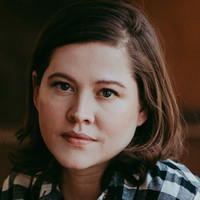
Laura June is author of Now My Heart Is Full.

“Parenting wasn’t considered literary fodder for a long time. I think women in particular are raised not to complain. Which is not what I was doing. If you have to boil it down, it’s base emotion. Then you’re complaining about how hard it is. Or, the opposite end, you’re bragging. There’s no in between. Most of my writing is in between.”

Thanks to MailChimp, Read This Summer, Google Play, and Pitt Writers for sponsoring this week's episode.

"I Just Called to Say I Love You"

On cell phones and the decline of public space.

One of the great irritations of modern technology is that when some new development has made my life palpably worse and is continuing to find new and different ways to bedevil it, I'm still allowed to complain for only a year or two before the peddlers of coolness start telling me to get over it already Grampaw--this is just the way life is now.