Showing 25 articles matching fccoins26 Coinsnight.com FC 26 coins 30% OFF code: FC2026. The best place for game coins.28oS.

A Conversation With New York Times Film Critic A.O. Scott

“There are critics who see their job as to be on the side of the artist, or in a state of imaginative sympathy or alliance with the artist. I think it's important for a critic to be populist in the sense that we’re on the side of the public. I think one of the reasons is, frankly, capitalism. Whether you’re talking about restaurants or you’re talking about movies, you’re talking about large-scale commercial enterprises that are trying to sell themselves and market themselves and publicize themselves. A critic is, in a way, offering consumer advice.”

Stories to Live With

Coping with a brother’s suicide.

We tell stories about the dead in order that they may live, if not in body then at least in mind—the minds of those left behind. Although the dead couldn’t care less about these stories—all available evidence suggests the dead don’t care about much—it seems that if we tell them often enough, and listen carefully to the stories of others, our knowledge of the dead can deepen and grow. If we persist in this process, digging and sifting, we had better be prepared for hard truths; like rocks beneath the surface of a plowed field, they show themselves eventually.

Guantanamo: An Oral History

On Thanksgiving weekend, I received a phone call informing me that we had just captured approximately 300 al-Qaeda and Taliban. I asked all our assistant secretaries and regional bureaus to canvass literally the world to begin to look at what options we had as to where a detention facility could be established. We began to eliminate places for different reasons. One day, in one of our meetings, we sat there puzzled as places continued to be eliminated. An individual from the Department of Justice effectively blurted out, What about Guantánamo?

Spurned by ESPN, Barstool Sports Is Staying on Offense

There exists a swarm of angry sports fans who maintain that they do not want to talk about Colin Kaepernick or the national anthem, and Barstool has cleared a space for them to gather and talk, mostly, about just how much they don’t want to talk about politics. They claim to be an overlooked majority — the vast market inefficiency that will richly reward anyone who will let them watch their games, memes and funny videos without having to feel bad about themselves. Barstool is their safe space.

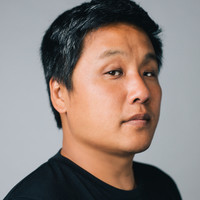
Jay Caspian Kang is a contributor at New York Times Magazine. His new book is The Loneliest Americans.

”I have a lot of thoughts and talk to people to make sure my thoughts are right, or change them because I think they're wrong. What more does one want out of an intellectual life? It's good work.”

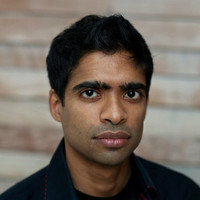
Venkatesh Rao is the founder of Ribbonfarm and the author of Breaking Smart.

“I would say I was blind and deaf and did not know anything about how the world worked until I was about 25. It took until almost 35 before I actually cut loose from the script. The script is a very, very powerful thing. The script wasn’t working for me.”

Thanks to MailChimp and CreativeLive for sponsoring this week's episode.

A Brutally Honest Accounting of Writing, Money, and Motherhood

A secret hope of mine, which I now find hilarious: I imagined that once I had a child, I would become a faster writer. Faster, and also better. It’s hard for me to reconstruct the optimistic logic that led me to this hypothesis. I think I honestly believed that if I did not have the option to write badly, I would simply evolve, like that Lamarckian giraffe, into a more efficient creature.

Joseph Cox is a cybersecurity journalist and co-founder of 404 Media. His new book is Dark Wire: The Incredible True Story of the Largest Sting Operation Ever.

“In the not too distant future, I will be a very old man, and maybe I won't be able to spend all day talking to drug traffickers. I will be mentally and physically exhausted. So I will doggedly pursue the story right now while I can.”

Where We All Will Be Received

Paul Simon’s Graceland at 25.

The Paul Simon who, on a bus en route to New York City told his sleeping girlfriend that he was empty and aching and he didn’t know why, that Simon belongs to our parents. My generation may love him but he’s not ours. The Simon who is soft in the middle (or at least feels an affinity for men who happen to be), however, the one who reminds young women of money, who has been divorced and has a kid to prove it, and who has the means to catch a cab uptown and take it all the way downtown talking dispassionately while doing so about the comings and goings of breakdowns, that Simon belongs to us as much as he does to our folks because he is our folks.

Mike Issac covers Silicon Valley for The New York Times. He is the author of Super Pumped: The Battle for Uber.

“People try to use journalists all the time. Your job as a journalist is to figure out who’s using you, why they’re using you, and whether you can do something legitimately without playing into one side or another.”

Thanks to MailChimp, Pitt Writers, and Wolverine Podcast for sponsoring this week's episode.

Graciela Mochkofsky is a writer for The New Yorker and dean of CUNY's Newmark Graduate School of Journalism. She has written six nonfiction books in Spanish. Her new book, her first in English, is The Prophet of the Andes.

“It connects with me as a journalist, actually — it’s this idea of just seeking truth and how elusive that is. So this is a person who thinks he can get to the true meaning of God and of how he needs to live. And he thinks that by asking the right questions, and by reading, and reading, and reading, and by discussing collectively, he can get to the truth. And he can’t.”

My Life as an Undocumented Immigrant

There are believed to be 11 million undocumented immigrants in the United States. We’re not always who you think we are. Some pick your strawberries or care for your children. Some are in high school or college. And some, it turns out, write news articles you might read. I grew up here. This is my home. Yet even though I think of myself as an American and consider America my country, my country doesn’t think of me as one of its own.

Charles Duhigg is a New York Times reporter and author of The Power of Habit.

"The stuff that gets cut out gets cut out for a reason. The discipline of space is always a good discipline. If it deserves to be read, it shouldn't be on the cutting room floor ... If it ends up on the cutting room floor, there's usually a reason why."

Thanks to TinyLetter for sponsoring this week's episode!

Vodka Nation

How the spirit became a billion-dollar business.

Michael Roper, owner of Chicago’s Hopleaf bar and restaurant, recalls what bartending was like in the early seventies. While Smirnoff was considered top shelf, he remembers lesser varieties such as Nikolai, Arrow, Wolfschmidt, and another brand that was then ubiquitous called Mohawk. “Mohawk was cheap, cheap, cheap,” Roper remembers. “Mohawk had a factory just outside Detroit along the expressway and .  .  . all their products were made there. It’s almost like they turned a switch—whiskey, vodka, gin. And it was all junk.” Still, by 1976, vodka had surpassed bourbon and whiskey as the most popular spirit in America. Roper attributes vodka’s rise partially to women, who started drinking more spirits and ordering them on their own: “Women were not going to like Scotch—that was for cigar-smoking burly men,” he speculates. “And .  .  . it was unladylike to drink Kentucky whiskey. But it was considered somewhat ladylike to have a fancy cocktail with an olive in it.” He also remembers when a salesman first brought Miller Lite into his bar, explaining “it’s for women.” In a similar vein, Roper considers vodka a low-calorie option with “a less challenging flavor.”

Anand Gopal has written for The Wall Street Journal, Harper’s and Foreign Policy. He’s the author of No Good Men Among the Living: America, the Taliban, and the War Through Afghan Eyes.

“When I got to the Taliban, I got out my notebook and tried to ask the hard-hitting questions. ‘What are you fighting for? Why are you doing this? What’s happening with the civilians you’re killing?’ And of course you do that and you get boilerplate answers and icy stares. So I just started asking them questions about their childhood. ... People love to talk about themselves and he began to open up and very subtly something shifted and it no longer became about the war and America versus the Taliban, it became about him being an Afghan and his experience.”

Thanks to TinyLetter and Lynda for sponsoring this week's episode. If you would like to support the show, please leave a review on iTunes.

Alex Mar has written for The Believer, Wired, and New York. She is the author of Witches of America and the director of the documentary American Mystic.

“I really do believe that all of us run on some kind of desire for meaning. And if someone is an atheist and they don’t subscribe to an organized system, it doesn’t mean that they don’t crave something. Maybe it’s their job. Or maybe it’s the way that they raise their children with a certain kind of intense focus. Or something else. As humans, we are built to crave meaning, right? For me, that was something that I wanted to explore about myself.”

Thanks to MailChimp, On the Media, The TED Interview,and Pitt Writers for sponsoring this week's episode.

Inside Scientology

A journey into the controversial religion:

In the next hour or so, Laurie asks me a number of questions: Am I married? Am I happy? What are my goals? Do I feel that I’m living up to my potential? A failure to live up to potential is one of the things known in Scientology as one’s "ruin." In trying to get at mine, Laurie is warm and nonaggressive. And, to my amazement, I begin to open up to her. While we chat, she delivers a soft sell for Scientology’s "introductory package": a four-hour seminar and twelve hours of Dianetics auditing, which is done without the E-meter. The cost: just fifty dollars. "You don’t have to do it," Laurie says. "It’s just something I get the feeling might help you." She pats my arm, squeezes it warmly.

David Wolman is the author of six books and a magazine features writer who has written for Wired, Outside, and The New York Times. His latest article is ”Vanished in the Pacific.”

“I feel like conversations about characters, character development, strong characters gets a little nauseating in my field sometimes because it’s like, of course — you need that like you need periods at the ends of sentences. Do we really have to keep saying it? But in this conversation it’s worth saying, because there are great ideas out there where the sources or the characters just really weren't there and then you’re tucking your tail in between your legs to look for the next one.”

Peggy Orenstein is a journalist and author. Her latest book is Unraveling.

“The challenge is… to not want to say, I need to know what the book is about. I need to have my chapters. I need to know what exactly I'm looking for. Because it's really scary to just go out and report and have trust that there's going to be interesting things and that if you just keep going, you're going to find them. So to not foreclose possibility and options and ideas is the biggest reporting challenge for those sorts of books for me.”

Lulu Garcia-Navarro is a former war correspondent and host of NPR’s Weekend Edition. Her new podcast, for the New York Times, is First Person.

“I would always say that if you go cover a story and you already know what people are going to say, and you already have it in your head what the outcome is, and there's no surprise there, then that's a story that you shouldn't be working on. You have to allow the opportunity for there to be a journey. And for there to be something at the end of it, that is gonna be like, Wow. I really never thought that. I didn't think that I was coming here to report on that, but I guess that's what I'm here to report on.”

Zoë Schiffer is the managing editor for Platformer. Her new book is Extremely Hardcore: Inside Elon Musk’s Twitter.

“Being the person where it's a fireable offense to leak to you … is kind of a badge of honor.”