Showing 25 articles matching fccoins26 Coinsnight.com FC 26 coins 30% OFF code: FC2026. The best place for game coins.28oS.

Caitlin Dickerson is a staff writer for The Atlantic covering immigration. Her latest article, on the secret history of U.S. government’s family-separation policy, is ”An American Catastrophe.”

“I think the line that gets drawn around immigration coverage — which, a lot of times you're just talking about a business story or an education story or a national security story — but when you call it an immigration story, it does feel like it is about this other thing, about other people who aren't us.”
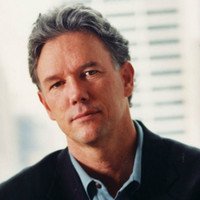

William Finnegan is a New Yorker staff writer and the author of Barbarian Days: A Surfing Life.

“I suppose in retrospect I was just trying to find out what the world held that nobody could tell me about until I got there. I was a big reader and had a couple of degrees by that point, but there was something out well over the horizon that I wanted to get near and record and understand, and I even felt like it would transform me.”

Thanks to TinyLetter, SquareSpace, and The Great Courses for sponsoring this week's episode.

Sponsor: Aeon Magazine

Our sponsor again this week is Aeon, a great new digital magazine covering ideas and culture. Aeon publishes an original essay every weekday, several of which have been picked for Longform. Here are three recent favorites:

No Drama, King Obama, by Edward L. Fox
In Javanese culture, a ruler must stand chivalrously above strife: cool, intelligent and self-contained. Sound familiar?

Mortal Remains, by Thomas Lynch
The dead are no longer welcome at their own funerals. So how can the living send them on their way?

Animal Spirits, by Stephen T. Asma
The more we learn about the emotions shared by all mammals, the more we must rethink our own human intelligence.

Read those stories and more at aeonmagazine.com.

Aminatou Sow and Ann Friedman are co-hosts of the podcast Call Your Girlfriend and co-authors of the new book Big Friendship: How We Keep Each Other Close.

“People telling you about their lives is a real privilege and honor. No one owes you to tell you their story. Sometimes in the world of people who write or people who make media there is just this expectation that everything is on the table, especially if you’re two women who make media, that we’re supposed to just share our pain and everything that’s going on in our lives but that’s not fair and it’s not true and I think the larger project of this book is really sharing these stories in service of having an honest dialogue about how other people are doing friendship.”

Thanks to Mailchimp for sponsoring this week's episode.

David Grann is a staff writer at The New Yorker. His new book is Killers of the Flower Moon: The Osage Murders and the Birth of the FBI.

“The more stories I reported over time, the more I just realized there are parts of the story I can’t always get to. You know, unless this is a reality show and there’s 18 cameras in every room, and people [talk] before they sleep, and maybe you have some mind-bug in their brain for their unconscious, there are just parts you’re just not gonna know. You get as close as you can. And so the struggle to me is to get as close as I can, to peel it back as close as I can, but understanding that there will be elements, there will be pieces, that will remain lingering doubts.”

Thanks to Stamps.com, Squarespace, and MailChimp for sponsoring this week's episode.

Rosecrans Baldwin is a writer and regular contributor to GQ. His latest novel is The Last Kid Left.

“It requires a lot of preparation in order to just have lunch with Roger Federer. Being a person who tends toward anxiety and also a former Boy Scout—put those two things together and I will exhaustively prepare so that I can come across like a complete idiot. The idea of sitting down with someone like that is that you should know everything about their life and their career so that you can go in with 12 questions in the back of your mind.”

Thanks to MailChimp, Breach, CoinTalk, and Pitt Writers for sponsoring this week's episode.

Jenny Kleeman is a journalist, broadcaster and the author of the new book Sex Robots and Vegan Meat: Adventures at the Frontier of Birth, Food, Sex, and Death.

“It’s better to cover one thing in a really illuminating way than to try and explore every single aspect of a topic in a really superficial way. So if there’s one thing that particularly interests you or fascinates you, if there’s just one question you want to ask, do as much research as you can on that one question and you’ll end up with a much more illuminating interview than something that is a precis of their entire field. Because anyone can do that.”

Thanks to Mailchimp for sponsoring this week's episode.

Hanna Rosin is a senior editor at The Atlantic and a founder and editor at DoubleX.

“I often think of reporting as dating, or even speed dating. You’re looking for someone where there’s a spark there between you and them. Sometimes that happens right away and sometimes it takes forever. ... You have to determine if they're reflective, friendly, open. It could be love at first sight and they're still all wrong, which is really heartbreaking.”

Thanks to TinyLetter, Bonobos and The Los Angeles Times' Bookshelf Newsletter for sponsoring this week's episode.

Pamela Colloff is an executive editor and staff writer at Texas Monthly.

"There are many, many people who write and they have tragic stories, but they're not necessarily compelling magazine articles. Figuring out what is a compelling magazine article and what isn't is one of the more painful things about this. You can't look into every case. But your job is to be a storyteller."

Thanks to TinyLetter for sponsoring this week's episode!

Laurel Braitman is a science writer, the author of Animal Madness: Inside Their Minds, and the founder of Writing Medicine. Her new book is What Looks Like Bravery: An Epic Journey Through Loss to Love.

“My life was becoming unmanageable, in a way. I was using success in many ways like a drug, and I’d say like an analgesic on the sorts of difficult feelings I hadn’t wanted to face truly since childhood. And we are rewarded in this culture for these kinds of outward forms of success that often have nothing to do with what’s going on inside of you.”

Mac McClelland has written for Mother Jones, The New York Times Magazine, Matter and others. Her book Irritable Hearts: A PTSD Love Story came out this week.

“I would just suddenly start sobbing, which is not something I usually do. I felt like I needed to be drunk all the time, which is also not something I usually do. I was having nightmares and I was having flashbacks. I was terrified and confused and disoriented all the time. I was a completely different person, completely unrecognizable even to myself.”

Thanks to TinyLetter and Alarm Grid for sponsoring this week's episode. If you would like to support the show, please leave a review on iTunes.

Katherine Eban is an investigative journalist and contributing writer at Fortune Magazine. Her new book is Bottle of Lies: The Inside Story of the Generic Drug Boom.

“I am not known for my optimism. I think it’s hard to do this work and retain a sunny view of humankind. I hate to say that. On the other hand, I do believe there will always be whistleblowers. And it’s interesting to me that even in the darkest spaces, even when it looks like everything is arrayed against them, there are people who will say: ‘This just isn’t right, and I must do something.’ Which is kind of extraordinary.”

Thanks to Mailchimp and Pitt Writers for sponsoring this week's episode.

Nate Silver is the founder of FiveThirtyEight and the author of The Signal and the Noise.

“I know in a perfectly rational world, if you make an 80/20 prediction, people should know that not only will this prediction not be right all the time, but you did something wrong if it’s never wrong. The 20% underdog should come through sometimes. People in sports understand that sometimes a 15 seed beats a 2 seed in the NCAA tournament. That’s much harder to explain to people in politics.”

Thanks to MailChimp, Bombas, Squarespace, and Trunk Club for sponsoring this week's episode.

David Grann is a staff writer for The New Yorker. His new book is The Wager: A Tale of Shipwreck, Mutiny and Murder.

“I became very haunted by the stories that [nations] don't tell. Nations and empires preserve their powers not only by the stories they tell, but also by the stories they leave out. … Early in my career, if I came across the silences in a story, I might not have highlighted them, because I thought, Well, there's nothing to tell there. And now I try to let the silences speak.”

Sarah Schweitzer is a former feature writer for the Boston Globe.

“I just am drawn, I think, to the notion that we start out as these creatures that just want love and were programmed that way—to try to find it and to make our lives whole. We are, as humans, so strong in that way. We get knocked down, and adults do some horrible things to us because adults have had horrible things done to [them]. There are some terrible cycles in this world. But there’s always this opportunity to stop that cycle. And there are people who come along who do try that in their own flawed ways.”

Thanks to MailChimp and AlarmGrid for sponsoring this week's episode.

Mitchell S. Jackson is a journalist and author. His profile of Ahmaud Arbery, ”Twelve Minutes and a Life,” won the 2021 Pulitzer Prize for Feature Writing.

”What is 'great'? 'Great' isn’t really sales, right? No one cares what James Baldwin sold. So: Are you doing the important work?”

Rachel Monroe is a freelance writer based in Texas.

“I will totally go emotionally deep with people. If I can find a subject who is into that then it will probably be a good story. Whether that person is a victim of a crime, or a committer of a crime, or a woman who spends a lot of time on the internet looking for hoaxes, or whatever it may be—I guess I just think people are interesting. Particularly when those people have gone through some sort of extreme situation.”

Thanks to MailChimp, Club W, and Igloo for sponsoring this week's episode.

Katie Engelhart is a journalist and the author of the new book The Inevitable: Dispatches on the Right to Die.

“Billions of dollars of government money goes to the nursing home industry every year. And nobody has a nursing home correspondent. Nobody has an assisted living correspondent…. That's wild to me. As a journalist, someone tells me, Oh, there's an industry. It's hugely underregulated. It's getting billions of dollars a year. It is not super-accountable for that money. Who wouldn't want to cover that?”

Thanks to Mailchimp for sponsoring this week's episode.

Evan Ratliff, a co-host of the Longform Podcast, is host of the new podcast Persona: The French Deception.

“One of these big scams is like a story. And in the story, what they're doing is they're manipulating you to be a participant in the story, and they're getting you so hooked that you will not just do anything they say, but you will invest yourself in bringing the story to its conclusion. And like, isn't that what you're doing if you're trying to get someone to listen to eight episodes, spend that much of their life listening to your voice? … The idea that every story has this person pulling the strings... I like revisiting that in everything that I do."

Susan Glasser, the former editor of Politico and Foreign Policy, writes the "Letter from Washington" column for the The New Yorker. Her most recent book, written with Peter Baker, is The Divider: Trump in the White House, 2017-2021.

“There’s a great benefit to leaving Washington and then coming back, or frankly leaving anywhere and then coming back. I think you have much wider open eyes. Washington, like a lot of company towns, takes on a logic of its own, and things that can seem crazy to the rest of the country, to the rest of the world, somehow end up making more sense than they should when you’re just doing that all day long, every day.”

Julie Snyder, one of the first producers at This American Life, is the co-creator of Serial and S-Town.

“I am constantly second-guessing myself. I am full of regret and recrimination all the time. I don’t pride myself on it cause it probably goes too far, but in other ways I do feel like I am a person who is very flawed and I make mistakes and I try and learn from them. And I try to be very open to other people’s thoughts and input and everything like that. So to be that open to criticism after season one [of Serial] was rough for being that open because we just got so much attention. I could feel people being like, ‘Oh, go cry on your bags of money.’ It was huge. I got that, but at the same time, it was hard to ignore.”

Thanks to MailChimp, First Day Back, and Pitt Writers for sponsoring this week's episode.

Hanif Abdurraqib is a poet, essayist, and critic whose work has appeared in The New Yorker, The New York Times Magazine and many other publications. His new book is A Little Devil in America: In Praise of Black Performance.

“I learn from hearing my elders tell stories. There’s an inherent knowing of yourself as a vessel for narration who also has to—is required to—hold the attention of others at all costs. And that’s essentially what I’m trying to do. The broader project of my writing is almost a constant pleading of: Don’t leave yet. Stay here with me for just a little bit longer.

Sponsor: Pitt Writers

This week’s sponsor is Pitt Writers, the fantastic, digitally focused MFA program at the University of Pittsburgh. A longtime partner of ours, Pitt Writers is now accepting applications for 2014. Here’s what you’ll get during your three years:

• World-class instruction and individual attention from award-winning writers of poetry, fiction, and nonfiction, including Jeanne Marie Laskas of GQ

• Opportunity to pitch book and story ideas to literary agents and editors in New York

• Classes in digital media

• A chance to intern with Longform

• Funding packages of up to $16,700 available

Get yourself in the mix: Apply by December 10th and follow Pitt Writers on Twitter and Facebook.

Carvell Wallace is a podcast host and has written for The New Yorker and The New York Times Magazine. He is the co-author, with Andre Iguodala, of The Sixth Man.

“So much of my life experience coalesces into things that are useful… All those years that I was obsessing over this that or the other thing, all the weird stuff that I would do, all the weird things that happened to me, all the places I found myself in that I didn’t want to be in but were interesting - this is all part of what makes me the writer that I am today.”

Thanks to Mailchimp, Pitt Writers, Native, and Villains for sponsoring this week's episode.