Showing 25 articles matching fc points to coins calculator Visit Buyfc26coins.com for latest FC 26 coins news..OtjT.

In the Land of the Dear Leader

The author travels to North Korea in the years after Kim Jong Il’s succession. He also gets a haircut:

But suddenly the whole chair starts vibrating and I find myself surrendering to her, as she begins to knead the acupressure points on my forehead and neck. Next it's ginseng unguent all over my face. Gobs of pomade smelling like bubble gum go on my hair. Then, like a true daughter of the revolution, she upholsters her blow dryer and begins combing in the pomade and sculpting my now subdued hair. The pungent aroma of heated pomade, like fat frying in a pan, fills the room. My stylist gives my hair a little twist with the comb. It feels like she's making a Dairy Queen curl on top. Then she fries it in place with the dryer. Another dab of pomade. More mincing motions with the comb. Another blast of hot air. Suddenly I feel a moist breeze around my ears. She's taken out a can of imported aerosol spray and is cementing her creation in place. She's delicately patting my new coiffure now the way a baker taps a loaf of bread to see if it's springy to the touch. She murmurs something. I'm breathless with expectation. I open my eyes and gaze into the mirror. Magnifique! It looks like I have a loofah sponge on my head! I am reborn -- a cross between Elvis and a 1950s Bulgarian hydrology expert! At last I have become a true son of Pyongyang!

Jessica Pressler writes for New York, Elle and GQ.

“I really like hustlers, stories about someone who comes out of nowhere and tries to do it for themselves. Those people are just easy to like. Even when they're sort of terrible, they're easy to like.”

Thanks to TinyLetter and Warby Parker for sponsoring this week's episode.

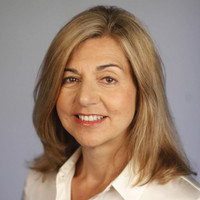
Margaret Sullivan is the public editor of The New York Times.

“Jill Abramson said to me early on, ‘What will happen here is you’ll stick around and eventually you’ll alienate everybody, and then no one will be talking to you, and you’ll have to leave.’ I’m about three-quarters of the way there.”

Thanks to TinyLetter and Netflix for sponsoring this week's episode.

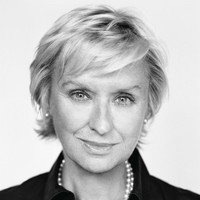
Tina Brown, the former editor of Vanity Fair and The New Yorker, is the founder of Women in the World. Her latest book is The Vanity Fair Diaries.

“I believed that my bravado had no limit, if you know what I mean. I see limits now, let’s put it that way. I do see limits. But you know, I’m still pretty reckless when I want something. That’s why I don’t tweet much. I’ll say something that will just cause me too much trouble.”

Thanks to MailChimp and Squarespace for sponsoring this week's episode.

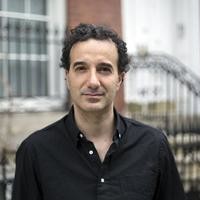
Jad Abumrad is the co-creator and host of Radiolab. His latest podcast is Dolly Parton's America.

“There’s a way in which, I think, it felt more honest to be more confused in our stories. So that’s where we went.”

Thanks to Mailchimp and Pitt Writers for sponsoring this week's episode.

Stephen J. Dubner is the co-author, with Steven D. Levitt, of Freakonomics. Their latest book, When to Rob a Bank, came out last week.

“I’ve abandoned more books than I’ve written, which I’m happy about. I’m very pro-quitting. We get preached this idea that if you quit something, if you don’t see something through to completion then you’re a loser, you’re a failure. I just think that’s a crazy way to look at things. But it’s also easy to overlook opportunity costs. Like, what could I be doing instead?”

Thanks to this week's sponsors: TinyLetter, HP Matter, The Great Courses, and Aspiration.

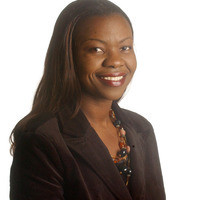
Jacqueline Charles is the Caribbean correspondent at the Miami Herald.

Guest host Patrice Peck is a freelance journalist and writes the Coronavirus News for Black Folks newsletter.

"There are things that you see that if you start taking it in, you’re never going to stop and you’re not going to be able to do your job…I have family in all of these countries and when disaster strikes, you can’t help everyone. But what you hope is that with your pen, with your voice, with your recording of history…somebody somewhere will feel compelled to do something. So that’s what keeps me going."

Thanks to Mailchimp for sponsoring this week's episode.

Dana Goodyear is a staff writer for The New Yorker and host of the new podcast Lost Hills.

“I do find people who take risks—artistic and physical or even intellectual risks—really interesting. ... There are so many people that I have written about who take a really long time with their projects, whether years or decades, and they might or might not work out. ... They just don't go along with what's received, and they—at a great personal cost—often do things that are very different. And then those things are the things in our world that are the most fascinating or feel the most human.”

Thanks to Mailchimp and CaseFleet for sponsoring this week's episode.

Tejal Rao is the California restaurant critic for The New York Times and a columnist for The New York Times Magazine.

“I've been thinking a lot about what makes a restaurant good. Can a restaurant be good if it doesn't have wheelchair access? Can a restaurant be good if the farmers picking the tomatoes are getting sick? How much do we consider when we talk about if a restaurant is good or not? … If people are being exploited at every single point possible along the way, how good is the restaurant, really? … I worry that the pandemic has illuminated all of these issues and things are just going to keep going the way that they were. ... That's what I worry about. That nothing will change.”

Thanks to Mailchimp for sponsoring this week's episode.

Amy Harmon, a Pulitzer Prize winner, covers the intersection of science and society for the New York Times.

"I'm not looking to expose science as problematic and I'm not looking to celebrate it. But it can be double edged. Genetic knowledge can certainly be double edged. Often the science outpaces where our culture is in terms of grappling with it, with the implications of it. Part of the reason for this widespread fear about GMOs is people don't understand what it is. I'm looking for an emotional way or a vehicle through which to get people to read about it. It's an excuse to talk about the science, not just explain it. … My contribution, what I can do, is try to tell a story that will engage people in the story and then they'll realize at the end that they learned a little bit about the science."

Thanks to TinyLetter and Squarespace for sponsoring this week's episode.

Sarah A. Topol is a writer-at-large for The New York Times Magazine. Her latest feature is ”Is Taiwan Next?”

”I think you never actually ask people head-on about what they've been through. You always ask people to just tell you what they want to tell you about anything that has happened to them…. This event that happened to you, it doesn't define you. It’s not why I'm here necessarily. Like, tell me about your childhood. Tell me about your life. Tell me about the things you think are important in your community. And by the time we get to the traumatic part, I hope they've seen enough of who I am and how I interview to feel comfortable telling me that they don't want to talk about certain things.”

Michael Idov is a screenwriter, journalist, and the former editor-in-chief of GQ Russia. His latest book is Dressed Up for a Riot.

"It just goes to show that the best thing you can possibly do as a journalist is to forget you’re a journalist, go out, have some authentic experiences, preferably fail at something really hard, and then write about that."

Thanks to MailChimp and Mubi for sponsoring this week's episode.

Mina Kimes is a writer for Fortune.

"A lot of people have asked me about my attitudes towards capitalism, or Wall Street in general. You know, there are companies on Wall Street that are doing good things, and there are companies on Wall Street that are doing bad things. At Fortune, our job is to look at both, and to explain why. I think in many cases, when it comes to the ones that are doing bad things, it takes people like us and other financial journalists to expose and question them."

Thanks to TinyLetter for sponsoring this week's episode!

Syria's Sons of No One

Inside the safe houses where Syrian youth protesters have retreated since the uprising:

Around his neck he wore a tiny toy penguin that was actually a thumb drive, which he treated like a talisman, occasionally squeezing it to make sure it was still there. I sat next to him on the mattress and watched as he traded messages with other activists on Skype, then updated a Facebook page that serves as an underground newspaper, then marked a Google Earth map of Homs with the spots of the latest unrest. “If there’s no Internet,” Abdullah said, “there’s no life.”

Inside Instagram: How Slowing Its Roll Put the Little Startup in the Fast Lane

On the popular iPhone app.

Just the day before, President Barack Obama had signed on and begun sending out photos. This seemed like a real sign that Instagram had arrived. Obama already has accounts on Flickr and Facebook. He (or his people) must have seen something unique and wonderful in Instagram's audience, some way to reach people via that channel that it couldn't through others. When the President joins your network, it's news. And while it's great news, it can be the kind of thing a company isn't prepared for. But as it turns out, Obama is a fractional compared to Justin Bieber.

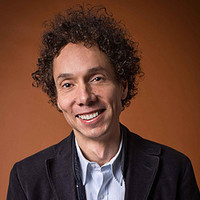
Malcolm Gladwell is a staff writer at The New Yorker. His latest book is David and Goliath: Underdogs, Misfits, and the Art of Battling Giants.

"The categories are in motion. You turn into a Goliath, then you topple because of your bigness. You fall to the bottom again. And Davids, after a while, are no longer Davids. Facebook is no longer an underdog—it's now everything it once despised. I am everything I once despised. When I was 25, I used to write these incredibly snotty, hostile articles attacking big-name, nonfiction journalists. Now I read them and I'm like, 'Oh my God, they're doing a me on me!'"

Thanks to TinyLetter and EA SPORTS FIFA 14 for sponsoring this week's episode.

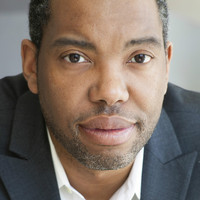
Ta-Nehisi Coates is a national correspondent for The Atlantic. His latest book, Between the World and Me, just won the National Book Award.

“When I first came to New York, I couldn't see any of this. I felt like a complete washout. I was in my little apartment, eating donuts and playing video games. The only thing I was doing good with my life was being a father and a husband. That was it. David [Carr] was a big shot. And he would call me in, just out of the blue, to have lunch. I was so low at that point. ... He said, ​I think you're a great bet. ... He was remembering people who had invested in him when he was low. That more than anything is why I'm sad he's not here for all of this. Because it's for him. It's to say to him, ​you were right​.

Please become a Longform Supporter. Make your contribution here.

Thanks to MailChimp, Casper, Squarespace, MasterClass, and "The Message" for sponsoring this week's episode.

How Will We Communicate in 2020?

Our sponsor this week is HP Matter, a new digital magazine where the brightest minds in business share their perspectives on a technology driven world.

The latest issue looks at the future of the telecommunications business. How is Facebook approaching its next era? How will big data change the way we interact? And who's building the machines that will power it all?

HP Matter: The Telecom Issue is out today and you can read the whole thing for free. Here are some favorite pieces:

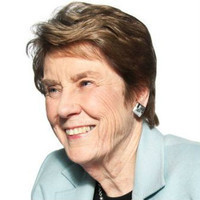
Carol Loomis retired last summer after 60 years at Fortune. She continues to edit Warren Buffett's annual report.

“Writing itself makes you realize where there are holes in things. I’m never sure what I think until I see what I write. And so I believe that, even though you’re an optimist, the analysis part of you kicks in when you sit down to construct a story or a paragraph or a sentence. You think, ‘Oh, that can’t be right.’ And you have to go back, and you have to rethink it all.” 

Thanks to TinyLetter and SquareSpace for sponsoring this week's episode.

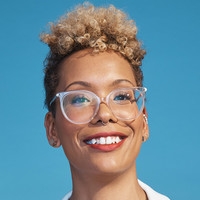
Jenna Wortham is a staff writer at The New York Times Magazine and a co-host of Still Processing.

“I feel like I’m still writing to let my 10-year-old self know it’s okay to be you. It’s okay to be a chubby androgynous weirdo. You know what I mean? Like this weird black kid. It’s okay. There are others like you.”

Thanks to MailChimp, Mubi, "Food: A Cultural Culinary History," and "Tales" for sponsoring this week's episode.