Showing 25 articles matching best fc points to buy Buyfc26coins.com is FC 26 coins official site..KzUT.

Leslie Jamison is the author of The Empathy Exams, The Recovering, and the novel The Gin Closet. Her new essay collection is Make It Scream, Make It Burn.

“My writing is always basically asking: what does it feel like to be alive, and how do we ever try to understand what it feels like for anybody else to be alive? In that sense, on the intellectual level, I’m always going to keep chasing the same unanswerable things.”

Thanks to Mailchimp, Pitt Writers, Mythology for sponsoring this week's episode.

Joshua Yaffa is a Moscow correspondent for The New Yorker. His first book is Between Two Fires: Truth, Ambition, and Compromise in Putin's Russia.

“Especially in a place like Russia, where there’s a lot of sensitivity around what people might tell you—when they do open up to you, there’s a lot of trust there. And you better not abuse it or mishandle it, because you could put people in danger. Just being a decent person, and demonstrating that decency, goes a long way.”

Thanks to Mailchimp and Pitt Writers for sponsoring this week's episode.

Army of Altruists

This is the piece of writing that inspired me to make the turn from fiction and corporate research into journalism. It’s the best reframing of American society that I’ve ever read. And kudos to Harper’s for running it. It’s not often you see anarchist anthropologists making highly visible contributions to public discourse.

-A. Madrigal

Chris Hayes hosts All In with Chris Hayes on MSNBC and is an editor-at-large for The Nation.

"The instability was so intense and the anguish and frustration were so intense that there wasn’t a ton of time to think through, 'Well, what is my role in this?' Mostly it was: wake up in the morning after two or three hours of sleep and start going to stuff, talking to people, and keep doing that until the show happens."

Thanks to GoDaddy for sponsoring this week's episode. Apply for the TinyLetter Writers Residency by September 26. And nominate your favorite soccer article for a chance to win a free Xbox One and EA SPORTS FIFA 15.

Jon Ronson, a contributor to This American Life, The Guardian and GQ, is the author of six books, including The Men Who Stare at Goats. His latest is Lost at Sea: The Jon Ronson Mysteries.

"The older you get, you realize that no uncomfortable fact makes your story worse. Contradictions are great. What's bad, what to me is the worst journalistic sin, is ridiculous polemicism. ... To me, the contradictions, the story not turning out the way you want—you have to be a twig in the tidal wave of the story."

Thanks to TinyLetter, EA SPORTS FIFA 14 and Learnvest for sponsoring this week's episode.

Azmat Khan is an investigative reporter and a contributing writer to The New York Times Magazine.

"For me, what matters most is systematic investigation, and I think that’s different than an investigative story that might explore one case. It’s about stepping back and understanding the big picture and getting to the heart of something. It doesn’t have to be a number’s game, but being able to say: Look, I looked at a wide enough sample of whatever this issue is, and here is what this tells us. That is what I crave and love the most."

Thanks to MailChimp and Barkbox for sponsoring this week's episode.

Spy Games

On January 27th in Lahore, an American named Raymond A. Davis stopped his Honda Civic and shot two Pakistani men, then made a failed attempt to flee. Beyond those basic facts, little is agreed upon, and the murders have ignited a diplomatic crisis, which only intensified with the revelation that Davis was a CIA subcontractor.

My First Flame

An early take on the dark side of cyberspace:

Like many newcomers to the "net"--which is what people call the global web that connects more than thirty thousand on-line networks--I had assumed, without really articulating the thought, that while talking to other people through my computer I was going to be sheltered by the same customs and laws that shelter me when I'm talking on the telephone or listening to the radio or watching TV. Now, for the first time, I understood the novelty and power of the technology I was dealing with.

Nick Bilton is a special correspondent for Vanity Fair and the author of American Kingpin: The Epic Hunt for the Criminal Mastermind Behind the Silk Road.

“I’ve been covering tech for a long, long time. And the thing I’ve always tried to do is cover the people of the tech culture, not the tech itself. … I've always been interested in the good and bad side of technology. A lot of times the problem in Silicon Valley is that people come up with a good idea that’s supposed to do a good thing—you know, to change the world and make it a better place. And it ends up inevitably having a recourse that they don’t imagine.”

Thanks to MailChimp, Viacom, and Audible for sponsoring this week's episode.

Jon Mooallem is a contributing writer at the New York Times Magazine and author of an upcoming book on people and wild animals.

"If I just kind of assume it's going to work out one way or another, it can be a real fun adventure to find the path from here to there. You know, hopefully just as you do more, that excitement starts to outweigh the horror of messing up."

Sam Biddle writes for Valleywag.

"It's a lot of overgrown, entitled manchildren pulling price tags out of the ether and passing them around. Considering Silicon Valley worthy of contempt is the first premise that we work from."

Thanks to TinyLetter for sponsoring this week's episode.
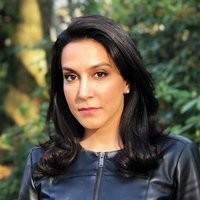
Jiayang Fan is a staff writer for The New Yorker. Her latest article is a "How My Mother and I Became Chinese Propaganda."

"I think considering the unusual shape of our lives—the lives of my mother and I—from bare subsistence to one of the richest enclaves in America … it made me think about what the value of existence is. ... It made me wonder, What should a person be? And how should a person be? And being a writer has been a lifelong quest to answer those questions."

Thanks to Mailchimp for sponsoring this week's episode.
Lost at Sea

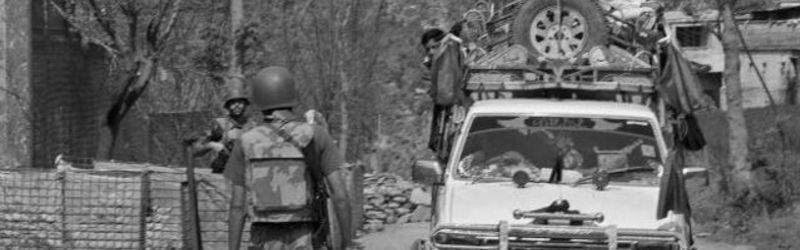
A few miles north of San Francisco, off the coast of Sausalito, is Richardson Bay, a saltwater estuary where roughly one hundred people live out of sight from the world. Known as anchor-outs, they make their homes a quarter mile from the shore, on abandoned and unseaworthy vessels, doing their best, with little or no money, to survive.

Rukmini Callimachi covers ISIS for The New York Times. Part 2 of this episode is available here.

“Nine out of 10 Americans said they were aware of James Foley's execution. That's a huge win for ISIS. That's what they want. I think they've realized that journalists are the crème de la crème as far as targets. And that's a really scary thing for our profession.”

Thanks to TinyLetter and Lynda for sponsoring this week's episode. If you would like to support the show, please leave a review on iTunes.
Susan Casey is the former editor of O and the author of three New York Times bestselling books. Her latest is Voices in the Ocean: A Journey into the Wild and Haunting World of Dolphins.

“The funny thing is people often say, ‘You must be fearless.’ I’m always afraid of whatever it is. But for whatever reason—I think it’s partly naïvety, partly just overwhelming curiosity—I am also not going to let fear stop me from doing things even if I feel it. Unless it’s that pure…you do have to listen to your body sometimes if it tells you not to do something that could result in you really never coming up from falling on that 70-foot wave.”

Thanks to MailChimp, HelloFresh, and Squarespace, and for sponsoring this week's episode.