Showing 25 articles matching iraq podcast.

Andrew Marantz is a staff writer at The New Yorker. His new book is Antisocial: Online Extremists, Techno-Utopians, and the Hijacking of the American Conversation.

“Some nonfiction can be reduced to a bulletpoint primer, but a good book is a good book. Whether it’s fiction or nonfiction, it should create a feeling, it should create a world, it should be a feeling that you want to live in and that tilts the way you see things. Isn’t that the point?”

Thanks to Mailchimp and Pitt Writers for sponsoring this week's episode.

Dean Baquet is executive editor of The New York Times.

"I always tried to question what is the difference between what is truly tradition and core, and what is merely habit. A lot of stuff we think are core, are just habits. The way we write newspaper stories, that’s not core, that’s habit. I think that’s the most important part about leading a place that’s going through dramatic change and even generational change. You’ve got to say, here’s what’s not going to change. This is core. This is who we are. Everything else is sort of up for grabs."

Thanks to Mailchimp and Apple Books for sponsoring this week's episode.

Ed Yong spent 2020 covering the pandemic for The Atlantic. His latest feature is "How Science Beat the Virus."

“I am trying to give readers a platform that they can stand on to observe this raging torrent that is the pandemic, this cascade of information that is threatening to sweep us all away. I’m trying to give people a rock on which they can stand so that they can observe what is happening without themselves being submerged by it. But I am trying to construct that platform while also being submerged in it.”

Thanks to Mailchimp for sponsoring this week's episode.

Chuck Klosterman is a journalist and author of eleven books, including his latest, The Nineties.

”Selling out… was very much injected into the way I understood the world…. And I am now supposed to do all of these interviews and all of these podcasts promoting this book. And because it's a book about the nineties… it feels incredibly uncomfortable to me…. I think young people assume that selling out is only about money: that if you try to do something to make money, that means you're selling out, because the word ‘sell’ is in there. But that's not really how it was. I mean, what you were selling out was this idea of your integrity. And what your integrity was, was somehow not doing anything to make other people like you.”

Rebecca Traister is a writer for New York and the author of Good and Mad: The Revolutionary Power of Women’s Anger. Her latest article is "The Necessity of Hope."

“A big motivation of this piece, which I think is framed in this there’s still reason to hope is actually the inverse of that. Which is: Let us be crystal clear about what is happening, what is lost, what is violated. The cruelty, the horror, and the injustice, and that is it only moving toward worse right now. And to establish that to then say that it is the responsibility to really absorb that, and then figure out how to move forward.”

Chris Ryan is the editorial director for The Ringer, where he co-hosts The Watch and The Rewatchables.

“There is a point where there’s just too much stuff. I can’t read a 5,000-word feature, 10 blog posts, and listen to three podcasts, and then do it all again the next day. So that is the line you walk in digital publishing, whether it’s for editorial stuff or for podcasting. You have to accept the fact that there is not going to be a single person out there who listens to it all, and who can read it all, and who can watch it all. But you can imbue everything you do with a certain quality—both like a personality, characteristic quality, but also like a quality of production—that hopefully anybody who does like this kind of thing will find some value in it.”

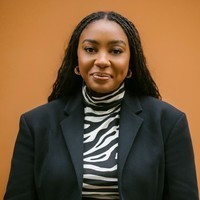
Lindsay Peoples is the editor-in-chief of The Cut.

“You see so many incredible people make one mistake and lose their job or they speak out about something and then the next day something blows up. And so I do think that I often feel like I have to be so careful. And that's hard to do because I'm just naturally curious and I want to know and I want to find and explore and do the things. But I'm aware that … people think I'm too young. I'm too Black. I'm aware of all those things and I'm still going to try.”

Tavi Gevinson is a writer, actor, and the founder of Rookie. Her new zine is Fan Fiction.

“Stories are unstable, and memory is unstable, and identity is unstable. All of these things that I've tried to make permanent in writing, they're actually unstable. So even though it's tempting to go, Oh, that was fake, it's more like, No, it was just temporary.”

Paul Ford is a writer and programmer.

"You don't really read a newspaper to preserve journalism, or save great journalism, or to keep the newspaper going. You read it because it gives you a sense of power or control over the environment that you're in, and actually sort of helps you define what your personal territory is, and what the things are that matter for you. As long as products serve that need—as long as books allow you to explore spaces that it's otherwise really hard for you to explore and so on—I think people will continue to read them."

Choire Sicha is co-founder of The Awl.

"People come to me pretty much every week ... and say 'I'm starting a website about ... say ... Canadian ... candy makers' and they're like 'What's the secret?' And I say, the secret is when we launched there were three of us. Two of us were doing editorial. And one of was doing business. And guess what? We had a new product and he had nothing to do all day so he had to make himself a job that was about revenue. So, who is this dedicated person at your company? And they're like 'we're both editorial' and I'm like 'you're hosed, you're done, forget about it.'"

Thanks to TinyLetter for sponsoring this week's episode!

Matthieu Aikins, on the eve of a move to Kabul. Aikins is a correspondent for GQ, Harper's and Wired.

"There's no real objective framework for deciding what the value of your life is, versus the value of a story ... Especially when you go to places where people are getting killed for the silliest reasons, and a life is worth so little, you realize you don't necessarily have to value yourself as this, like, precious commodity that can't be risked in any way. And that's just a personal choice, and it's actually a very selfish one, because obviously, if you have loved ones, you're affecting them by making that choice. In any case, it's just a different headspace that you inhabit."

Eva Holland is a freelance journalist and a correspondent for Outside. Her new book is Nerve: Adventures in the Science of Fear.

“I'm less caught up in my freelance career anxieties every day that this goes on. Maybe I'll become a paramedic, who knows? Magazines I write for are already shutting down because of this. You can only freak out so much before you decide that if you end up having to find a new way to make a living, that's what you'll do.”

Thanks to Mailchimp and Pitt Writers for sponsoring this week's episode.
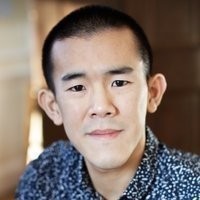
Katy Vine is an executive editor for Texas Monthly.

“This is a huge state. There’s so much, and it’s different everywhere you look. You just go to Houston and there’s worlds within worlds within worlds just within the one city. You go to San Antonio and you’re in a different country, and you go to Dallas, you’re in a totally different country. … It’s wild to me. It’s endlessly fascinating.”

Hrishikesh Hirway is the host of Song Exploder.

“I love the idea that somebody would listen to an episode [of Song Exploder] and then the feeling that they would have afterwards is, ‘Now I want to make something.’ That’s the best possible reaction. Whether it’s music or not, just that idea: ‘I want to make something.’ Because that is the thing that I love most, getting that feeling.”

Thanks to MailChimp and MeUndies for sponsoring this week's episode.

Jad Abumrad is the co-creator and host of Radiolab. His latest podcast is Dolly Parton's America.

“There’s a way in which, I think, it felt more honest to be more confused in our stories. So that’s where we went.”

Thanks to Mailchimp and Pitt Writers for sponsoring this week's episode.
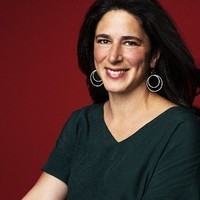
Alexandra Lange is a design critic whose work has appeared in The New Yorker, The New York Times, and many other publications. Her new book is Meet Me by the Fountain: An Inside History of the Mall.

“I really like to write about things that I can hold and experience. I'm not that interested in biography, but I am very interested in the biography of an object. ... Like I feel about the objects, I think, how most people feel about people. So what I'm always trying to do is communicate that enthusiasm and that understanding to my reader, because these objects really have a lot of speaking to do.”

Jesse David Fox covers comedy for Vulture, where he hosts the podcast Good One. His new book is Comedy Book: How Comedy Conquered Culture—and the Magic That Makes It Work.

“There’s a complete lack of anyone who’s ever written about comedy seriously compared to any other art form. There’s just nothing. … So the challenge was, how do you start a conversation that no one has been participating in?”

Eli Sanders is an associate editor at The Stranger and the winner of the 2012 Pulitzer Prize for feature writing.

"There was one particular moment in the trial, which I described, where ... there was just not any human ability to be detached from what was happening in front of you, what was being shared. It was so painful, you could not help but cry, and there was no reason to deny that that moment had happened."

Thanks to TinyLetter for sponsoring this week's episode!

Wesley Morris is a critic at large for The New York Times, a staff writer for The New York Times Magazine, and the co-host of Still Processing.

“I think that the taking of extra time to be more thoughtful and less reactive is, to the extent that I have any wisdom to impart, that is it. Just wait a second. Because someone’s going to get there before you get there anyway.”

Thanks to MailChimp and Pitt Writers for sponsoring this week's episode.

Tara Westover is the author of Educated.

“I used to be so fearful. ... I was afraid of losing my family. Then, after I had lost them, I was afraid that I made the wrong decision. Then I wrote the book and I was afraid that was the wrong decision. Everything made me frightened back then, and I just—I don't have that feeling now.”

Janet Reitman is a Rolling Stone contributing editor and author of Inside Scientology.

"I'm very open about the fact that I know nothing ... Every reporter should admit you know nothing, and when you do, there will be people that will take pity on you, and try to teach you. And then you have to be shrewd enough to know who's spinning you, and who is being genuine."

Joshuah Bearman discusses "The Great Escape," his article about a CIA operation in Iran that became the basis for the new film Argo.

"We were sitting there and we were like, 'This would be perfect for George Clooney.' And it very quickly in fact turned out that George Clooney wanted it. So not long after David and I had been having our daydream, we had this project that Clooney had taken quickly into the empyrean heights of Hollywood."

Thanks to TinyLetter for sponsoring this week's episode!

Mina Kimes is a writer for Fortune.

"A lot of people have asked me about my attitudes towards capitalism, or Wall Street in general. You know, there are companies on Wall Street that are doing good things, and there are companies on Wall Street that are doing bad things. At Fortune, our job is to look at both, and to explain why. I think in many cases, when it comes to the ones that are doing bad things, it takes people like us and other financial journalists to expose and question them."

Thanks to TinyLetter for sponsoring this week's episode!

Jay Caspian Kang is a writer at large at The New York Times Magazine and a correspondent for Vice News Tonight.

“I make a pretty provocative argument about how Asian American identity doesn’t really exist—how it’s basically just an academic idea, and it’s not lived within the lives of anybody who’s Asian. Like you grow up, you’re Korean, you’re a minority. You don’t have any sort of kinship with, like, Indian kids. You know? And there’s no cultural sharedness where you’re just like, ‘oh yeah…Asia!’”

Thanks to MailChimp, "Mussolini’s Arctic Airship," and Blinkist and for sponsoring this week's episode.
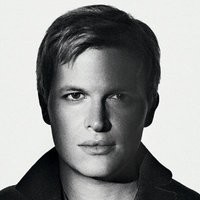
Ronan Farrow is a Pulitzer-winning investigative reporter for The New Yorker. He is the author of Catch and Kill: Lies, Spies, and a Conspiracy to Protect Predators and hosts The Catch and Kill Podcast.

“It was the opposite of anything I would’ve expected, breaking a story like that. It wasn’t a moment of celebration. I was immensely relieved, and immensely grateful for the sources … and I was so grateful for those people at the New Yorker who had worked so hard. But it was a strange, numb time for me that ended, at the end of that day, with me bursting into tears.”

Thanks to Mailchimp and Pitt Writers for sponsoring this week's episode.