Showing 25 articles matching fc points to coins calculator Visit Buyfc26coins.com for latest FC 26 coins news..OtjT.

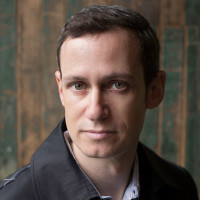
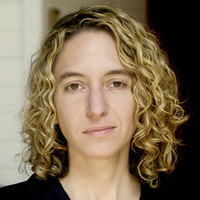
Kathryn Schulz is a staff writer for The New Yorker. "The Really Big One," her article about the rupturing of the Cascadia fault line, won the 2016 Pulitzer Prize.

“I can tell you in absolute sincerity: I didn't realize I was writing a scary story. Obviously I know the earthquake is going to be terrifying, and that our lack of preparedness is genuinely really scary. But, as I think often happens as a reporter, you toggle between professional happiness, which is sometimes, frankly, even professional glee—you’re just so thrilled you’re getting what you’re getting—and then the sort of more human and humane response, which comes every time you really set down your pen and think about what it is you’re actually reporting about.”

Thanks to MailChimp and Squarespace for sponsoring this week's episode.
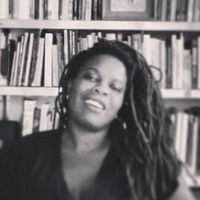
Rachel Kaadzi Ghansah has written for The Believer, The LA Review of Books, Transition and The Paris Review. "If He Hollers Let Him Go," her essay on Dave Chappelle, was a 2014 National Magazine Award finalist.

"So the stakes are high. I’m not just writing this to write. I’m writing because I think there’s something I need to say. And there’s something that needs to be said. ... What I hope is that a young kid or an older person will see that you have choices, that you don't have to accept what people hand to you. That you have control."

Thanks to TinyLetter for sponsoring this week's episode.

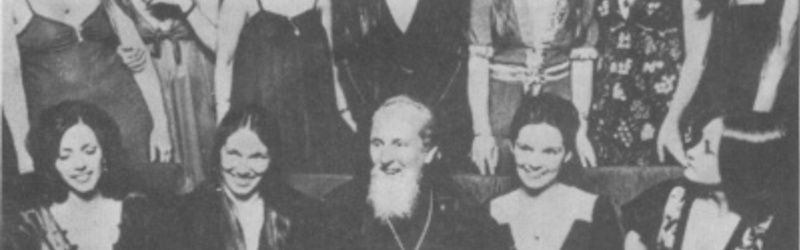
Interview: Gloria Steinem

SHRIVER: Regarding your Playboy exposé, I know you've discussed this a great deal, but I'd like to ask you this: You've said that you were glad you did it. What role do you think that exposé played in your early career and the notoriety you've achieved? Is there a similar exposé that someone could do today--something that would be as shocking? STEINEM: It took me a very long time to be glad. At first, it was such a gigantic mistake from a career point of view that I really regretted it. I'd just begun to be taken seriously as a freelance writer, but after the Playboy article, I mostly got requests to go underground in some other semi-sexual way. It was so bad that I returned an advance to turn the Playboy article into a paperback, even though I had to borrow the money. Even now, people ask why I was a Bunny, Right-Wingers still describe me only as a former Bunny, and you're still asking me about it-almost a half-century later. But feminism did make me realize that I was glad I did it--because I identified with all the women who ended up an underpaid waitress in too-high heels and  a costume that was too tight to breathe in. Most were just trying to make a living and had no other way of doing it. I'd made up a background as a secretary, and the woman who interviewed me asked, "Honey, if you can type, why would you want to work here?" In the sense that we're all identified too much by our outsides instead of our insides and are mostly in underpaid service jobs, I realized we're all Bunnies--so yes, I'm glad I did it. If a writer wants to do a similar exposé now, there's no shortage of stories that need telling. For instance, go as a pregnant woman into so-called crisis pregnancy centers and record what you're told to scare or force you not to choose an abortion-including harassing you, calling your family or employer. Or pretend to be a woman with a criminal record and see how difficult it is to get a job. Or use a homeless center as an address and see what happens in your life. Or work at an ordinary service job in the pink-collar ghetto, as Barbara Ehrenreich did in Nickel and Dimed. But be warned that if you're a woman journalist and you choose an underground job that's related to sex or looks, you may find it hard to shake the very thing you were exposing.

Meet Your Neighbor, Thomas Pynchon

Thomas Pynchon walks down a New York City street in the middle of the morning. He has a light gait. He floats along. He looks canny and whimsical, like he'd be fun to talk to; but, of course, he's not talking. It's a drizzling day, and the writer doesn't have an umbrella. He's carrying his own shopping bag, a canvas tote like one of those giveaways from public radio. He makes a quick stop in a health-food store, buys some health foods. He leaves the store, but just outside, as if something had just occurred to him, he turns around slowly and walks to the window. Then, he peers in, frankly observing the person who may be observing him. It's raining harder now. He hurries home. For the past half-dozen years, Thomas Pynchon, the most famous literary recluse of our time, has been living openly in a city of 8 million people and going unnoticed, like the rest of us.

“About the Real World…I’ll Be Blunt. We Broke It.”

Speaking to a group that started their college lives in September, 2001, the host of The Daily Show embraces how difficult the real world is:

I want to address is the idea that somehow this new generation is not as prepared for the sacrifice and the tenacity that will be needed in the difficult times ahead. I have not found this generation to be cynical or apathetic or selfish. They are as strong and as decent as any people that I have met. And I will say this, on my way down here I stopped at Bethesda Naval, and when you talk to the young kids that are there that have just been back from Iraq and Afghanistan, you don’t have the worry about the future that you hear from so many that are not a part of this generation but judging it from above.

When Reality-TV Fame Runs Dry

Less than half a decade after The Hills brought them massive celebrity, Heidi Montag and Spencer Pratt are broke and his living in his parent’s vacation house. Their onscreen relationship was mostly fake, but the reality, as their current situation attests, was far worse:

By the end of 2009 (and the show’s fifth season), their lives seemed insane. Instead of riding bikes, Spencer was holding guns. Heidi’s plastic surgeries gave her a distorted quality, but she vowed to have more. Spencer grew a thick beard, became obsessed with crystals, and was eventually told to leave the series. There were daily updates on gossip sites about them “living in squalor,” publicly feuding with their families, and attacking The Hills producers (or claiming The Hills producers attacked them). By the time they announced they were (fake) splitting, followed by Spencer threatening to release various sex tapes, and Heidi (fake) filing for divorce, it seemed like they had ventured into, at best,Joaquin Phoenix-like, life-as-performance-art notoriety and, at worst, truly bleakStar 80 territory that could end with one or both of them dead.

Janet Malcolm: The Art of Nonfiction No. 4

“I think you are asking me, in the most tactful way possible, about my own ­aggression and malice. What can I do but plead guilty? I don’t know ­whether journalists are more aggressive and malicious than people in other professions. We are certainly not a ‘helping profession.’ If we help anyone, it is ourselves, to what our subjects don’t realize they are letting us take. I am hardly the first writer to have noticed the not-niceness of journalists. Tocqueville wrote about the despicableness of American journalists in Democracy in America. In Henry James’s satiric novel The Reverberator, a wonderful rascally journalist named George M. Flack appears. I am only one of many contributors to this critique. I am also not the only journalist contributor. Tom Wolfe and Joan Didion, for instance, have written on the subject. Of course, being aware of your rascality doesn’t excuse it.”

Mirin Fader is a staff writer for The Ringer.

“Nobody ever makes it makes it, right? You make it, and every day, you have to keep making it. That’s how I feel. Would I be the reporter I am if I wasn’t like that? I’m afraid to see what happens if I’m not. I’m afraid what type of reporter or writer I’ll be if I take my foot off the gas.”

Thanks to Mailchimp for sponsoring this week's episode.

Adrian Chen is a staff writer at Gawker and editor at The New Inquiry.

"I've never written a magazine feature. [My writing is] similar, in that I try to bring in the bigger issues, and not just, you know, be funny or tell a sensational story. But I think it's also kind of rough and sketchy in the way that blog posts are. Longform blog writing is like, I don't spend a long time editing or looking it over. It's like, just type as fast as you can and try to cram all of your research in, and then it goes up."

Thanks to TinyLetter for sponsoring this week's episode!

Brooke Gladstone is the host of On the Media and the author of The Influencing Machine.

“I'm not going to get any richer or more famous than I am right now. This is it, this is fine — it's better than I ever expected. I don't have anything to risk anymore. As far as I’m concerned, I want to just spend this last decade, decade and a half, twenty years, doing what I think is valuable. I don’t have any career path anymore. I’m totally off the career path. The beautiful thing is that I just don’t have any more fucks to give.”

Thanks to Audible, Open Source, MailChimp, Igloo, and Squarespace for sponsoring this week's episode.

Max Chafkin is a features editor and reporter for Bloomberg Businessweek. His new book is The Contrarian: Peter Thiel and Silicon Valley’s Pursuit of Power.

“I think there's like a really good way to come up with story ideas where you basically just look for people who have given TED Talks and figure out what they're lying about. And there's also a tendency in the press to pump up these startups based on those stories. ... It's worth taking a critical look at these stars of the moment. Because often there's not as much there as we think. And if you’re talking about Theranos or something, there's some potential to do harm—but also it means that maybe more worthwhile efforts are not getting the attention they deserve.”

Jake Silverstein is editor-in-chief of Texas Monthly.

"Texas is not a frontier in the same way it was 150 years ago, but it still has a frontier mentality. And that's definitely true from a journalistic standpoint. ... You have more of a feeling that you're figuring things out for yourself. Which means that you make more mistakes, but you also have a little bit more leeway and freedom to find a certain path down here than you would if you were surrouded by other magazines and media companies."</i>

Thanks to TinyLetter for sponsoring this week's episode!

</blockquote>

Joseph Cox is a cybersecurity journalist and co-founder of 404 Media. His new book is Dark Wire: The Incredible True Story of the Largest Sting Operation Ever.

“In the not too distant future, I will be a very old man, and maybe I won't be able to spend all day talking to drug traffickers. I will be mentally and physically exhausted. So I will doggedly pursue the story right now while I can.”

The Life and Death of the Chosen One

Ricky Rodriguez was born in the role of the messiah. His father was David Berg, the leader of the polygamous/incestuous cult The Children of God, which published a book documenting his early life:

In 1982 a shop in Spain printed several thousand copies of a book that was then distributed to group members around the world. Bound in faux leather, illustrated with hundreds of photographs, the 762-page tome meticulously chronicled Ricky's young life and was intended as a child-rearing manual for families. Its title, The Story of Davidito, was stamped in gold. With its combination of earnest prose and unabashed child pornography, it is perhaps the most disturbing book ever published in the name of religion.

Eventually, he left the cult and found work as an electrician. But revenge called him back.

Alex Mar has written for The Believer, Wired, and New York. She is the author of Witches of America and the director of the documentary American Mystic.

“I really do believe that all of us run on some kind of desire for meaning. And if someone is an atheist and they don’t subscribe to an organized system, it doesn’t mean that they don’t crave something. Maybe it’s their job. Or maybe it’s the way that they raise their children with a certain kind of intense focus. Or something else. As humans, we are built to crave meaning, right? For me, that was something that I wanted to explore about myself.”

Thanks to MailChimp, On the Media, The TED Interview,and Pitt Writers for sponsoring this week's episode.

Mac McClelland has written for Mother Jones, The New York Times Magazine, Matter and others. Her book Irritable Hearts: A PTSD Love Story came out this week.

“I would just suddenly start sobbing, which is not something I usually do. I felt like I needed to be drunk all the time, which is also not something I usually do. I was having nightmares and I was having flashbacks. I was terrified and confused and disoriented all the time. I was a completely different person, completely unrecognizable even to myself.”

Thanks to TinyLetter and Alarm Grid for sponsoring this week's episode. If you would like to support the show, please leave a review on iTunes.

Linda Villarosa directs the journalism program at the City College of New York and is a contributing writer at the New York Times Magazine. Her article "Why America’s Black Mothers and Babies Are in a Life-or-Death Crisis" was one of Longform's Top Ten of 2018. She is at work on a new book, Under the Skin: Race, Inequality and the Health of a Nation, due out in 2020.

“I think at the beginning I was afraid to say it right out, so I think I was saying ‘racial bias’ or something like that. Then I stopped. ... I think how I learned about it both in earlier reporting and in grad school and in my own research was that race is a risk factor for a bunch of different health problems, whether it’s heart disease, infant and maternal mortality, or HIV. It’s just said that race is a risk factor. It’s disproportionate. What it really is is that race is a risk factor, but it’s also a risk marker. Instead of looking at what individuals are doing wrong, it’s what society is doing wrong in creating problems for individual people which lead to health crisis. It’s sort of like bias, related to racism, is creating problems in people’s actual bodies. That’s what I came to understand. It really shifts the blame off the individual.”

Thanks to MailChimp, The Great Courses Plus, and Pitt Writers for sponsoring this week's episode.

Brendan I. Koerner is a contributing editor at Wired and the author of The Skies Belong to Us.

"It was this big review in The New York Times and I was terrified that it was going to say something awful about the book or about me as a writer. And my son said to me — he's 5, I should say — "If it's bad, you won't die." That's a good point, you know? So I always think of that when I pick up a new review and take that risk of someone slamming something that I've genuinely poured my heart and soul into. You'll live to fight another day."

Thanks to TinyLetter and the The Literary Reportage concentration at NYU's Arthur L. Carter Journalism Institute for sponsoring this week's episode.

</blockquote>