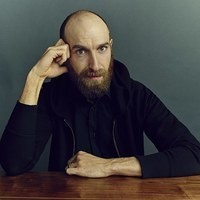
Brian Reed, a senior producer at This American Life, is the host of S-Town.
“It’s a story about the remarkableness of what could be called an unremarkable life.”
Thanks to MailChimp, Babbel, and Squarespace for sponsoring this episode.
Showing 25 articles matching iraq podcast.
Brian Reed, a senior producer at This American Life, is the host of S-Town.
“It’s a story about the remarkableness of what could be called an unremarkable life.”
Thanks to MailChimp, Babbel, and Squarespace for sponsoring this episode.
Andy Greenberg is a senior writer for Wired. His new book is Sandworm.
“I kind of knew I was never going to get access to Sandworm, which is the title of the book - so it was all about drawing a picture around this invisible monster.”
Thanks to Mailchimp, Pitt Writers, and Family Ghosts for sponsoring this week's episode.
Isaac Chotiner conducts interviews for The New Yorker.
“People like to talk. They like to be asked questions, generally. In the space that I’m doing most interviews, which is politics or politics-adjacent, people have strong views and like to express them. It may be just as simple as that.”
Thanks to Mailchimp and Pitt Writers for sponsoring this week's episode.
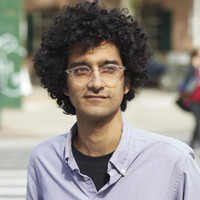
Latif Nasser co-hosts Radiolab. He also hosted The Other Latif and the Netflix documentary series Connected.
“It’s so easy to hate everything and be cynical. There’s a kind of ease to that. It takes a lot more courage to go up in front of everybody and be like, This is awesome. I love this. That takes a lot of guts, I think.”
Thanks to Mailchimp for sponsoring this week's episode.
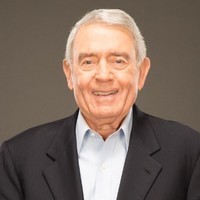
Dan Rather is a journalist, author, and the former anchor of CBS Evening News.
”I knew that being named to succeed Walter Cronkite would put me in a position of inhaling—every day—a kind of NASA-grade rocket fuel for the ego. And that could be dangerous…. In the end, when the red light goes on, it's just you. You're by yourself.… And the longer you're in that role, the more difficult it is to stay true to yourself and to remember who you are and who you want to be.”
Thanks to Mailchimp for sponsoring this week's episode.
Miles Johnson is an investigative reporter for the Financial Times. He is the author of Chasing Shadows: A True Story of Drugs, War and the Secret World of International Crime and the host of Hot Money: The New Narcos.
“I’m really fascinated always by the ways in which people just have to do really boring parts of running a crime organization … I love the banalities of this stuff. We have a fictionalized version of crime groups and it’s obviously glamorous, and they’re really smart, but there’s a lot of stuff that’s bumbling incompetence as well or just quite unglamorous.”
Lisa Belkin is a journalist and the author of four books. Her latest is Genealogy of a Murder: Four Generations, Three Families, One Fateful Night.
“I didn’t experience it as luck. It—and this is going to be a little woo woo—but it really felt like these people had been sitting there for 100 years saying, Well, it took you long enough, because everything just fit together. I didn’t have to manipulate anything.”
Zoë Schiffer is the managing editor for Platformer. Her new book is Extremely Hardcore: Inside Elon Musk’s Twitter.
“Being the person where it's a fireable offense to leak to you … is kind of a badge of honor.”
Megan Kimble is the former executive editor of The Texas Observer and has written for The New York Times, Texas Monthly, and The Guardian. Her new book is City Limits: Infrastructure, Inequality, and the Future of America’s Highways.
“I have never lived in a city that was not wrapped in highways. It’s hard for me to imagine anything else. And I think that’s true for a lot of people today. ... [But] we have known since the origins of the interstate highways program that building highways through cities doesn’t fix traffic. And yet we keep doing it. To me, that really fueled a lot of the book. It wasn’t supposed to be this way.”
Jon Mooallem, a contributing writer at The New York Times Magazine, is the author of Wild Ones and American Hippopotamus, the latest story from The Atavist.
"I'm terrible at writing nut graphs. I never know why people should keep reading. That's the menace of my professional existence, trying to figure that out. Because often you have to explain that to an editor before you even start, and I may not even know while I'm writing what the bigger point is."
Thanks to TinyLetter for sponsoring this week's episode.
Ariel Levy is a staff writer at The New Yorker and the author of The Rules Do Not Apply.
“I don’t believe in ‘would this’ and ‘would that.’ There’s no ‘everything happens for a reason.’ Everything happens, and then you just fucking deal. I mean we could play that game with everything, but time only moves in one direction. That’s a bad game. You shouldn’t play that game—you’ll break your own heart.”
Thanks to MailChimp, Kindle, V by Viacom, and 2U for sponsoring this week's episode.
Chana Joffe-Walt is a producer and reporter at This American Life. Her latest story is "Five Women."
“I felt like there was more to learn from these stories, more than just which men are bad and shouldn’t have the Netflix special that they wanted to have. And I was interested, also, in that there were groups of women, and that somehow, in having a group of women, you would have variation of experience. There could be a unifying person who they all experienced, but they would inevitably experience that person differently. And that would raise the question of: Why? And I feel like there is this response: ‘Why did she stay?’ Or: ‘Why didn’t she say fuck you?’ Or: ‘I wouldn’t have been upset by that. I wouldn’t have been offended by that thing.’ Which I feel like is a natural response, but also has a lack of curiosity. There are actual answers to those questions that are interesting.”
Thanks to MailChimp and Credible.com.
Nicholas Schmidle is a staff writer for The New Yorker. His latest article is "Virgin Galactic's Rocket Man."
“I think there’s a lot more pressure that I’ve put on myself to make sure that the next [article] is better than the last one. To make sure there are sourcing standards and expectations I have for myself now that I might not have had earlier. I’m putting even more priority on building long-term relationships in which I trust an individual. ... I feel like the pieces coming in are tighter in terms of sourcing, but story selection becomes a lot more difficult. You want to do a different story.”
Thanks to MailChimp, Skagen, and Pitt Writers for sponsoring this week's episode.
Thomas Morton is a writer and former correspondent for HBO's Vice News. He was at Vice from 2004-2019 and is a major character in Jill Abramson's Merchants of Truth.
“You have to go with your gut and I feel like that’s one of the most essential qualities in doing anything of the nature of what we did. Of making documentaries or reporting news or current events, you really have to have a good sense of intuition for who you’re dealing with, what they’re telling you, what you’re telling them, how you’re behaving. It’s all human interaction, you can’t govern that with hard and fast rules or with extremely set rules. Beyond the extreme ones there are always going to be murky areas. You have to be willing to accept that and work with those.”
Thanks to MailChimp and Pitt Writers for sponsoring this week's episode.
Mirin Fader is a staff writer for The Ringer.
“Nobody ever makes it makes it, right? You make it, and every day, you have to keep making it. That’s how I feel. Would I be the reporter I am if I wasn’t like that? I’m afraid to see what happens if I’m not. I’m afraid what type of reporter or writer I’ll be if I take my foot off the gas.”
Thanks to Mailchimp for sponsoring this week's episode.
Jonah Weiner is a contributing writer for The New York Times Magazine and co-author of the newsletter Blackbird Spyplane.
“It's a version of myself. It's a hyperbolic version of myself. And I think it keeps it fun for me. It doesn't feel like a job. Ideally, it keeps it fun for readers. And I think that there actually is this function where X out of 10 people coming to it, their eyes are going to cross and they're going say, I'm out. No thanks. And that's fine, because the Y out of 10 who stick around feel that much more in on something and it just makes it feel like a funky, special place.”
Helen Rosner is a food correspondent at The New Yorker.
“I believe the things that are really important to me are structure over all and—forgive me, I’ve said this on other podcasts before—if I were going to get a tattoo this is what I would get a tattoo of is that it doesn’t matter what you say, it only matters what they hear. It’s my job to make sure the gulf between those two things is as narrow as possible and there’s as little ambiguity between what I say and what you hear. It’s never easy, but it’s certainly easier in the realm of arguable objectivity. To create emotion in a reader requires a huge amount of really thoughtful work on the part of the writer in a way that forces you as a writer to remove yourself from the emotion you’re creating in the reader. If I to set you up for sadness, I have to create emotional stakes. I have to create investment in whoever I’m talking about or whatever the story’s about. The craft of making stakes and setting up a potential downfall, a potential loss, whatever it may be I think is not something you can do well if you’re feeling the feeling you’re trying to create in the reader.”
Thanks to MailChimp, Read This Summer, and You Can't Make This Up for sponsoring this week's episode. Also: very rare, very exclusive Longform Podcast t-shirts are still available!
Hamilton Morris is the science editor for Vice and a contributor to Harper's.
"It's a shame that there isn't more of an interdisciplinary approach to a lot of scientific investigations, because often the result is that misinformation is produced. Again, there's misinformation in journalism and there's misinformation in science. And if you combine the best elements of both of those disciplines you can come a little bit closer to the truth. If you want to understand a drug phenomenon, you're going to need to look at it medically, chemically, anthropologically, you need to talk to people, you need to interview people, you need to look at the drug policy, the chemistry, the history—there's a lot of different factors that need to be examined in order to understand even the most simple, minute drug phenomenon. And if you're approaching something purely as a scientist, as an academic, there are huge limitations as to what you can do."
Thanks to TinyLetter and Hulu Plus for sponsoring this week's episode.
Andrew Leland is an editor at The Believer and hosts The Organist
"I think a good editor has a strong stomach for crazy assholes. Because often crazy assholes are really brilliant great writers."
Thanks to TinyLetter and Squarespace for sponsoring this week's episode.
Jeanne Marie Laskas is the author of the new book Hidden America and a correspondent for GQ.
"I'm just a writer going into [people's lives], you know? What do you do with that kind of intensity of a relationship when you're job is to invoke it on the page? It's a huge ... not just privilege but responsibility. Because, you know, it's just for a story. And I tell them that: 'I'm asking you trust me, but at the same time don't trust me. I'm kind of like a vulture in this relationship—we're not friends.'"

Joshua Davis is a contributing editor at Wired and author of the new ebook John McAfee's Last Stand.
"This is a pretty unique situation [for me]. Never has a multimillionaire tech pioneer gone on the lam for a murder and called me from hiding. Yeah, this is a first."
Thanks to TinyLetter for sponsoring this week's episode!
Jay Caspian Kang is a writer and editor at Grantland.
"That's one of the things I've been learning: sometimes if you just sit there, they forget that you're there, so they forget to get rid of you. I'm very quiet and I try not to ask them a lot of questions. ... Generally I just observe. I feel like because I'm a fiction writer, the story will tell itself through the narrative of the person's movement through their daily life."</i>
Thanks to TinyLetter for sponsoring this week's episode!
</blockquote>
Chris Heath, winner of the 2013 National Magazine Award for Reporting, is a staff writer at GQ.
"I present myself as someone who is going to be rigorous and honest. And if you can engage in the way I'm asking you to engage, then I hope that you will recognize yourself in a more truthful way in this story than you usually do. And maybe even, with a bit of luck, more than you ever have before. That's what I bring. That's my offer."
Thanks to TinyLetter and the The Literary Reportage concentration at NYU's Arthur L. Carter Journalism Institute for sponsoring this week's episode.
</blockquote>
Brendan I. Koerner is a contributing editor at Wired and the author of The Skies Belong to Us.
"It was this big review in The New York Times and I was terrified that it was going to say something awful about the book or about me as a writer. And my son said to me — he's 5, I should say — "If it's bad, you won't die." That's a good point, you know? So I always think of that when I pick up a new review and take that risk of someone slamming something that I've genuinely poured my heart and soul into. You'll live to fight another day."
Thanks to TinyLetter and the The Literary Reportage concentration at NYU's Arthur L. Carter Journalism Institute for sponsoring this week's episode.
</blockquote>
Jacqueline Charles is the Caribbean correspondent at the Miami Herald.
Guest host Patrice Peck is a freelance journalist and writes the Coronavirus News for Black Folks newsletter.
"There are things that you see that if you start taking it in, you’re never going to stop and you’re not going to be able to do your job…I have family in all of these countries and when disaster strikes, you can’t help everyone. But what you hope is that with your pen, with your voice, with your recording of history…somebody somewhere will feel compelled to do something. So that’s what keeps me going."
Thanks to Mailchimp for sponsoring this week's episode.