Showing 25 articles matching iraq podcast.

Reihan Salam is the executive editor of National Review.

"I’m incredibly curious about other people. I’m curious about what they think of as the constraints operating on their lives. Why do they think what they think? If I weren’t doing this job, I’d want to be a high school guidance counselor."

Thanks to TinyLetter, Bonobos, and Cards Against Humanity’s Ten Days or Whatever of Kwanzaa for sponsoring this week's episode.

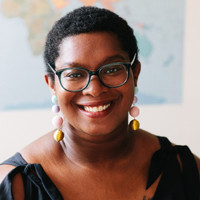
Aminatou Sow and Ann Friedman are co-hosts of the podcast Call Your Girlfriend and co-authors of the new book Big Friendship: How We Keep Each Other Close.

“People telling you about their lives is a real privilege and honor. No one owes you to tell you their story. Sometimes in the world of people who write or people who make media there is just this expectation that everything is on the table, especially if you’re two women who make media, that we’re supposed to just share our pain and everything that’s going on in our lives but that’s not fair and it’s not true and I think the larger project of this book is really sharing these stories in service of having an honest dialogue about how other people are doing friendship.”

Thanks to Mailchimp for sponsoring this week's episode.
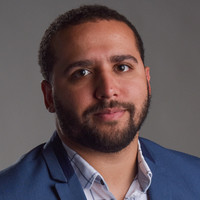
Ashley C. Ford is a writer and host of the podcast Fortune Favors the Bold. Her memoir, Somebody's Daughter, is forthcoming from Flatiron Books.

“For the first time I felt like I had so many more choices in my life than I originally thought I had. That was my first realization that I did not just have to react to the world, that I could be intentional in the world, and just curious about what came back to me.”

Thanks to Mailchimp and Pitt Writers for sponsoring this week's episode.

Tavi Gevinson is the founder and editor-in-chief of Rookie.

"I just want our readers to know that they are already smart enough and cool enough."

Thanks to this week's sponsors, TinyLetter and Atavist Books.

Wesley Lowery is a correspondent for “60 in 6” from 60 Minutes. He is the author of They Can't Kill Us All: Ferguson, Baltimore, and a New Era in America's Racial Justice Movement and won the 2016 Pulitzer Prize for "Fatal Force," a Washington Post project covering fatal shootings by police officers.

“The police are not, in and of themselves, objective observers of things. They are political and government entities who are the literal characters in the story. They are describing the actions of people who are protesting them. They have incentives.”

Thanks to Mailchimp for sponsoring this week's episode.

Laura Shin is a journalist covering cryptocurrency and hosts the podcast Unchained. Her new book is The Cryptopians: Idealism, Greed, Lies, and the Making of the First Big Cryptocurrency Craze.

“I was extremely well-acquainted with what the failings were with our traditional financial system. I was seeing through my other reporting how everything works now, and really understanding, whoa, this is not a good system. And then getting this education on what bitcoin is, I understood right away: wow, this is going to change the world.”

Madeleine Baran is an investigative reporter for APM Reports and the host and lead reporter of the podcast In the Dark.

“We’re always thinking about first not so much the narrative, but first what did we find out and how is it important? And how can we construct a story that’s going to take people along on that and they’re going to care about it and be able to follow it. That’s a challenge in any kind of serialized podcast or film where you have one narrative arc from start to finish in a season, but you also have all these individual episodes with narrative arcs. And because we’re not novelists, we don’t get to change the facts, sometimes there are these facts you do not like cause they’re really confusing and you wish they were not that way. We spend a lot of time in storyboarding and edits and group edits and sound edits. We bring in people who don’t know what we’re doing and have them listen for mostly for clarity and confusion.”

Thanks to MailChimp, Screen Dive podcast, Skagen, Squarespace, and Pitt Writers for sponsoring this week's episode.

Kenneth R. Rosen has written for The New York Times, Wired, The New Yorker, and many other publications. His new book is Troubled: The Failed Promise of America's Behavioral Treatment Programs.

“When I report, I keep two journals. … I keep my reporting notebook, which is sort of an almanac of dates, times, names, quotes, phone numbers. And then I have my personal notebook, which has all my fears and anxieties. And it invariably makes its way into the reporting … which is sort of an amalgamation of those two journals, of those two experiences, the internal and the external.”

Thanks to Mailchimp for sponsoring this week's episode.
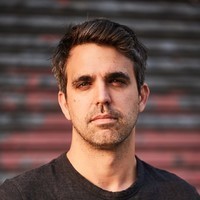
PJ Vogt is the host of Search Engine.

“One of our tests editorially is if we think we’ve got something good, but we haven’t started reporting or recording on it, I’ll just try asking the question at dinner and stuff. If it derails conversations, that’s a really good sign.”

Charlie Warzel is a writer-at-large for The New York Times opinion page.

“I’m relying on my morals more than I normally do, but less on my gut. The stakes are just so high.”

Thanks to Mailchimp and Pitt Writers for sponsoring this week's episode.

Tessa Hulls is a writer and artist whose work has appeared in The Rumpus, The Washington Post, and The Capitol Hill Times. Her new book, a graphic memoir, is Feeding Ghosts.

“This project is the thing I have spent my entire life running from. I was incredibly determined to never touch this, either personally or professionally. … It was more an eventual act of resignation than a desire.”

John Grisham is the author of 38 books, including his latest novel, Camino Island.

A Time to Kill didn’t sell. It just didn’t sell. There was never any talk of going back for a second printing. No talk of paper back. No foreign deal. It was a flop. And I told my wife, I said, ‘Look, I’m gonna do it one more time. I’m gonna write one more book…hopefully something more commercial, more accessible, more popular. If this doesn’t work, forget this career. Forget this hobby. I’m just gonna be a lawyer and get on with it.’”

Thanks to Casper, Squarespace, and MailChimp for sponsoring this week's episode.

Casey Newton covers technology for The Verge and writes The Interface newsletter.

“I remember one time a Facebook employee told me when I wrote something critical and I said something like, ‘Yeah, I know that one was a little harder on you.’ I remember he said to me, ‘Please understand that this helps to make the case internally for changes we want to make.’ When this type of criticism get published when we know that this is the conversation, we can push for these kinds of changes on the inside. If you believe that these platforms are going to be around and that they aren’t going to be shut down and all the executives put into jail, I think what you actually want is to see them get better at things.”

Thanks to MailChimp, The Great Courses Plus, and Pitt Writers for sponsoring this week's episode.

Julie Snyder, one of the first producers at This American Life, is the co-creator of Serial and S-Town.

“I am constantly second-guessing myself. I am full of regret and recrimination all the time. I don’t pride myself on it cause it probably goes too far, but in other ways I do feel like I am a person who is very flawed and I make mistakes and I try and learn from them. And I try to be very open to other people’s thoughts and input and everything like that. So to be that open to criticism after season one [of Serial] was rough for being that open because we just got so much attention. I could feel people being like, ‘Oh, go cry on your bags of money.’ It was huge. I got that, but at the same time, it was hard to ignore.”

Thanks to MailChimp, First Day Back, and Pitt Writers for sponsoring this week's episode.

Dan Taberski is the host of Missing Richard Simmons and Surviving Y2K.

“Why would you walk into podcasting, where not a lot of rules have been written yet, why would walk into that space and be like, I'm just going to stick to the rules over here. It doesn't make any sense. ... Sourcing, respect for privacy — all these rules are here for a reason. And there's a line you shouldn't cross. But I don't see the point of not walking up to that line and looking over it. Because that is where interesting stuff is happening. ... To be able to earn that ability to cross the line a little bit and then jump back to where you belong, I think that's where beautiful storytelling happens.”

Thanks to MailChimp and Pitt Writers for sponsoring this bonus episode.

David Grann is a staff writer for The New Yorker. His new book is The Wager: A Tale of Shipwreck, Mutiny and Murder.

“I became very haunted by the stories that [nations] don't tell. Nations and empires preserve their powers not only by the stories they tell, but also by the stories they leave out. … Early in my career, if I came across the silences in a story, I might not have highlighted them, because I thought, Well, there's nothing to tell there. And now I try to let the silences speak.”

Nicholas Quah founded and writes Hot Pod, a newsletter about the podcasting industry, and reviews podcasts for Vulture.

“I think to some extent I’m in love with the concept of momentum. Sheer velocity. It’s painful. It’s punishing. Physically, I’m worse off for it. But I feel like if I stop moving, something will fall. Something will break. And I’m over. It’s a horrible feeling.”

Thanks to Mailchimp, Pitt Writers, Audm, and Bayer for sponsoring this week's episode.
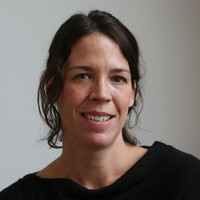
Molly Lambert is a writer and the host of the new podcast HeidiWorld: The Heidi Fleiss Story.

“I think as a writer… I always had this thing: I don't want to be out front. I don't want the spotlight on me. I'm not an actor. I want to be lurking in the back with the cast accepting the applause, but I don't want to be the center of attention. And so I think kind of like making peace with like, Look, man, it's fine to be the center of attention when you made something you're proud of.”

Jay Caspian Kang is a staff writer for The New Yorker and a co-host of Time to Say Goodbye.

“At some point, you have to kick it out the door, and it’s never finished to the degree that you would finish a magazine piece. But it, in some ways, is more interesting because it is produced in a short amount of time, and it’s read as something that is not supposed to be complete. It’s just meant to provoke or to provide thought or whatever, to provide some sort of context on a certain issue or not. And I actually like that a lot better than the magazine writing. I respect the magazine writers—obviously, I was one—but for my disposition now, in my lifestyle, I actually enjoy having to produce this thing every week.”

Have a question for the mailbag? Email the show or leave a voicemail at (929) 333-2908.

Sean Flynn is a GQ correspondent and National Magazine Award winner.

"I find it satisfying to be able to give a voice to people that sort of get lost…You know, when these big horrible things happen, and the spotlight is very briefly on them, and then it moves away, and it's not that I'm dragging them out and forcing them to 'Relive your horrible moments!' It's more a thing of, 'If you'd like to relive your horrible moment, if you want people to know what actually happened, talk to me. I will tell your story.'"

Thanks to TinyLetter and the The Literary Reportage concentration at NYU's Arthur L. Carter Journalism Institute for sponsoring this week's episode.
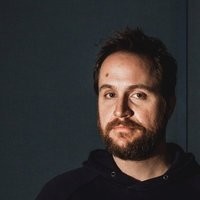
Matthew Cole is an investigative reporter at The Intercept, where he recently published “The Crimes of Seal Team 6.”

“I’ve gotten very polite and very impolite versions of ‘go fuck yourself.’ I used to have a little sheet of paper where I wrote down those responses just as the vernacular that was given to me: ‘You’re a shitty reporter, and I don’t talk to shitty reporters.’ You know, I’ve had some very polite ones, [but] I’ve had people threaten me with their dogs. Some of it is absolutely cold.”

Thanks to Squarespace, Blue Apron, and MailChimp for sponsoring this week's episode.

Anna Sale is the host of Death, Sex & Money. Her new book is Let’s Talk About Hard Things.

“What hard conversations can do is—you can witness what's hard. You can be with what's hard. Admit what's hard. That can be its own relief. … Some hard conversations … are successful when they end in a place that's like, Oh, we're not going to agree on this. … I think you can get used to the feeling of feeling out of control and that makes them less scary.”

Thanks to Mailchimp for sponsoring this week's episode.

Liz Hoffman, a former The Wall Street Journal reporter, is now the business and finance editor for Semafor. Her new book is Crash Landing: The Inside Story of How the World's Biggest Companies Survived an Economy on the Brink.

“I think these systems are hugely important and are wielded by people who are not that accessible. If you can sort of open the aperture a little bit and unpack that and explain to people what’s going on and leave them to sort of, you know, come away with their own conclusions about the morality of the whole thing — that's where I’m most comfortable.”

Ben Taub is a staff writer at The New Yorker.

“I don’t think it’s my place to be cynical because I’ve observed some of the horrors of the Syrian War through these various materials, but it’s Syrians that are living them. It’s Syrians that are being largely ignored by the international community and by a lot of political attention on ISIS. And I think that it wouldn’t be my place to be cynical when some of them still aren’t.”

Thanks to MailChimp and Tripping for sponsoring this week's episode.