Showing 25 articles matching iraq podcast.

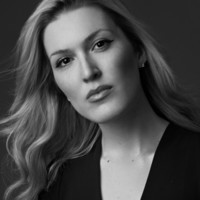
Jia Tolentino is the deputy editor of Jezebel.

“Insult itself is an opportunity. I’m glad to be a woman, and I’m glad not to be white. I think it’s made me tougher. I’ve never been able to assume comfort or power. I’m just glad. I’m glad, especially as you watch the great white male woke freak-out meltdown that’s happening right now, I’m glad that it’s good to come from below.”

Thanks to MailChimp, Squarespace, and Home Chef for sponsoring this week's episode.
Cheryl Strayed is the author of Wild and Tiny Beautiful Things.

“There's a long history, of women especially, saying 'Well, I just got lucky.' I didn't just get lucky. I worked my fucking ass off. And then I got lucky. And if I hadn't worked my ass off, I wouldn't have gotten lucky. You have to do the work. You always have to do the work.”

Thanks to TinyLetter, Trunk Club, and HP Matter for sponsoring this week's episode.

Maggie Haberman covers the White House for The New York Times.

“If I start thinking about it, then I’m not going to be able to just keep doing my job. I'm being as honest as I can — I try not to think about it. If you’re flying a plane and you think about the fact that if the plane blows up in midair you’re gonna die, do you feel like you can really focus as well? So, I’m not thinking about [the stakes]. This is just my job. This is what we do. Ask me another question.”

Thanks to MailChimp, Bombfell, Babbel, and HelloFresh for sponsoring this week's episode.

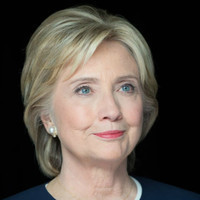
Hillary Clinton is the former Democratic nominee for president. Her new book is What Happened.

“I hugged a lot of people after [my concession speech] was over. A lot of people cried … and then it was done. So Bill and I went out and got in the back of the van that we drive around in, and I just felt like all of the adrenaline was drained. I mean there was nothing left. It was like somebody had pulled the plug on a bathtub and everything just drained out. I just slumped over. Sat there. … And then we got home, and it was just us as it has been for so many years—in our little house, with our dogs. It was a really painful, exhausting time.”

Thanks to MailChimp, Audible, and Casper for sponsoring this week's episode.

Tyler Cowen is an economist, the co-founder of Marginal Revolution, and the host of Conversations with Tyler. His latest book is The Complacent Class: The Self-Defeating Quest for the American Dream.

“I think of my central contribution, or what I’m trying to have it be, is teaching people to think of counter arguments. I’m trying to teach a method: always push things one step further. What if, under what conditions, what would make this wrong? If I write something and people respond to it that way, then I feel very happy and successful. If people just agree with me, I’m a little disappointed.”

Thanks to MailChimp and Squarespace for sponsoring this week's episode.

Maggie Haberman covers the Trump Administration for The New York Times.

“If I start thinking about it, then I’m not going to be able to just keep doing my job. I'm being as honest as I can — I try not to think about it. If you’re flying a plane and you think about the fact that if the plane blows up in midair you’re gonna die, do you feel like you can really focus as well? So, I’m not thinking about [the stakes]. This is just my job. This is what we do. Ask me another question.”

Thanks to MailChimp for sponsoring this week's episode.

Megan Greenwell is the editor-in-chief of Deadspin.

“I’m the first external hire to be the EIC in Deadspin history, so not everybody knew me or knew anything about my work. I don’t think there was resistance to me being hired, but I do think when you’re coming in from outside, there’s a need to say, ‘Hey, no, I can do this.’ Somebody told me about a management adage at one point: Everybody tries to prove that they’re competent when they first start, and what you actually have to prove is you’re trustworthy. That is something that I think about all the time.”

Thanks to MailChimp, Read This Summer, Google Play, and Stitcher Premium for sponsoring this week's episode.

Mark Adams is the author of Mr. America and Turn Right at Machu Picchu. His latest book is Tip of the Iceberg: My 3,000-Mile Journey Around Wild Alaska, the Last Great American Frontier.

“It’s always sheer and utter panic the whole time I’m on the road. I never sleep more than like three or four hours a night when I’m on the road because I wake up at 4:00 in the morning and I’m like, Who am I going to talk to today? I don’t have anything scheduled for today. What am I going to do? And sometimes things work out for that day and sometimes they don’t. I think when you start to lose that feeling — that tense feeling, that pit in your stomach — then the work starts to lose something as well.”

Thanks to MailChimp and Pitt Writers for sponsoring this week's episode.

Jenny Odell is a multidisciplinary artist and the author of How to Do Nothing: Resisting the Attention Economy.

“I’ve noticed that the times I’m extra susceptible to being on social media is when I am feeling personally insecure or when I’m dealing with existential dread. That within itself is not part of the attention economy - that’s just a human being having feelings and reacting to things. For me, it’s a question of like, ’What do I do with that?’ I can either feed it back into the attention economy and actually get more of it back - more anxiety or more existential dread - or I can go in this other direction and spend time alone or with people who care about the same things. Those are places where I can bring my feelings and they won’t destroy me.”

Thanks to Mailchimp, Substack, and Pitt Writers for sponsoring this week's episode.

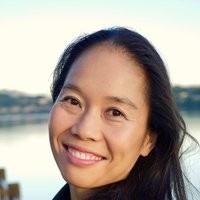
Bonnie Tsui is a journalist and author of the new book Why We Swim.

“I am a self-motivated person. I really don’t like being told what to do. I’ve thought about this many times over the last 16 years that I’ve been a full-time freelancer... even though I thought my dream was to always and forever be living in New York, working in publishing, working at a magazine, being an editor, writing. When I was an editor, I kind of hated it. I just didn’t like being chained to a desk.”

Thanks to Mailchimp and Pitt Writers for sponsoring this week's episode.

Olivia Nuzzi is the White House correspondent for New York.

“I don’t think that, broadly speaking, this a group of redeemable people. … But I do think there is tremendous value, in this first draft of history, trying to understand why the fuck they are like this. … There is value in understanding why these people are like this because they are the reason why we are here in this situation. And I think it’s a [question] that historians will try to answer years from now. … I view my job as providing fodder for that.”

Thanks to Mailchimp and SAIC for sponsoring this week's episode.

Katie Engelhart is a journalist and the author of the new book The Inevitable: Dispatches on the Right to Die.

“Billions of dollars of government money goes to the nursing home industry every year. And nobody has a nursing home correspondent. Nobody has an assisted living correspondent…. That's wild to me. As a journalist, someone tells me, Oh, there's an industry. It's hugely underregulated. It's getting billions of dollars a year. It is not super-accountable for that money. Who wouldn't want to cover that?”

Thanks to Mailchimp for sponsoring this week's episode.

Tejal Rao is the California restaurant critic for The New York Times and a columnist for The New York Times Magazine.

“I've been thinking a lot about what makes a restaurant good. Can a restaurant be good if it doesn't have wheelchair access? Can a restaurant be good if the farmers picking the tomatoes are getting sick? How much do we consider when we talk about if a restaurant is good or not? … If people are being exploited at every single point possible along the way, how good is the restaurant, really? … I worry that the pandemic has illuminated all of these issues and things are just going to keep going the way that they were. ... That's what I worry about. That nothing will change.”

Thanks to Mailchimp for sponsoring this week's episode.

Evan Osnos is a staff writer for The New Yorker. His new book is Wildland: The Making of America’s Fury.

“I'm always trying to get inside a subculture. That's the thing that I think has been the most enduring, attractive element for me. Is there a world that has its own manners and vocabulary and internal rhythms and status structure? And who looks down on whom? And why? And who venerates whom? Who's a big deal in these worlds? And if I can get into that, it doesn't even really matter to me that much what the subculture is. I'm fascinated by trying to map that thing out.”

Amy Harmon, a Pulitzer Prize winner, covers the intersection of science and society for the New York Times.

"I'm not looking to expose science as problematic and I'm not looking to celebrate it. But it can be double edged. Genetic knowledge can certainly be double edged. Often the science outpaces where our culture is in terms of grappling with it, with the implications of it. Part of the reason for this widespread fear about GMOs is people don't understand what it is. I'm looking for an emotional way or a vehicle through which to get people to read about it. It's an excuse to talk about the science, not just explain it. … My contribution, what I can do, is try to tell a story that will engage people in the story and then they'll realize at the end that they learned a little bit about the science."

Thanks to TinyLetter and Squarespace for sponsoring this week's episode.

Emily Bazelon is a staff writer at the New York Times Magazine and the author of Sticks and Stones.

"There’s nothing purely, or maybe even at all, altruistic about this exchange. It’s transactional in the Janet Malcolm classical sense, but also in the emotional sense. There is a way in which I’m super open. I take in these experiences. They keep me up at night. They really get inside me. But then, I'm also using them to craft whatever I’m working on."

Thanks to TinyLetter for sponsoring this week's episode.

Sean Wilsey has written for The New Yorker, The London Review of Books, The New York Times, and McSweeney’s Quarterly, where he is an editor-at-large. His latest book is More Curious.

"I’m actually apparently a fairly competent person at getting things done, making deadlines and all these things. But the Wilsey you might get in the piece about NASA is the guy who eats a ton of oysters and drinks a lot of beer before getting on the vomit comet."

Thanks to TinyLetter and GoDaddy for sponsoring this week's episode.

Jack Shafer covers the media for Politico.

“This is a true story, not a ‘Brian Williams story’: my first report card said ‘Jack is a very good student, but he has a tendency to start fights on the playground and bring them back into the classroom.’ That's been my career style — start a fight and bring it back to the classroom.”

Thanks to TinyLetter and Lynda for sponsoring this week's episode. If you would like to support the show, please leave a review on iTunes.

Daniel Alarcón, a novelist and the co-founder of Radio Ambulante, has written for Harper's, California Sunday, and the New York Times Magazine.

“I’m a writer. I’ve written a bunch of books, and I care a lot about my sentences and my prose and all that. But would I be willing to defend my book in a Peruvian prison? That’s a litmus test I think a lot of writers I know would fail.”

Thanks to MailChimp, Audible, and Home Chef for sponsoring this week's episode.
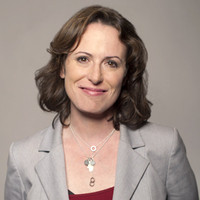
Jace Clayton is a music writer and musician who records as DJ /rupture. His book is Uproot: Travels in 21st-Century Music and Digital Culture.

“What does it mean to be young and have some sound inside your head? Or to be in a scene that you want to broadcast to the world? That notion of the world is changing, who you’re broadcasting to is changing, all these different things—the tool sets. But there’s this very fundamental joy of music making. I was like, ‘Ok. Let’s find flashpoints where interesting things are happening and can be unpacked that shed different little spotlights on it, but do fall into this wider view of how we articulate what’s thrilling to be alive right now.’”

Thanks to MailChimp for sponsoring this week's episode.
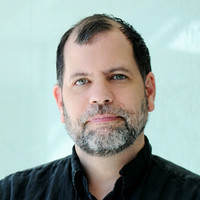
John Seabrook is a New Yorker staff writer and the author of The Song Machine: Inside the Hit Factory.

“Whether or not the piece succeeds or fails is not going to depend on whether I’m up to the minute on the latest social media spot to hang out or the latest slang words that are thrown around. It’s going to be the old eternal verities of structural integrity. So much of it is narrative and figuring out the tricks—and they are tricks, really—that make it go as a narrative. And that’s really the most interesting thing. Because you never ultimately have a formula that goes from piece to piece; it’s always going to have to be rediscovered every time you work on a long piece. And that’s kind of fun.”

Thanks to MailChimp and MasterClass for sponsoring this week's episode.
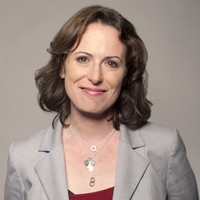
Kurt Andersen is the co-founder of Spy Magazine, the author of several books, and the host of Studio 360.

“As a young person, I never thought of myself as a risk-taker. Then I did this risky thing that shouldn't have succeeded, I started this magazine. And it did encourage me to think, ‘Eh, how bad can it be if it fails? Sometimes these long shots work. So fuck it, try it.’”

Thanks to MailChimp, MasterClass, The Message, RealtyShares, and Prudential for sponsoring this week's episode.
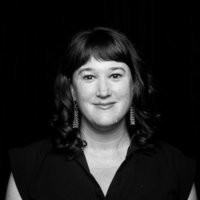
Mara Shalhoup was until recently the editor-in-chief of LA Weekly. She is the author of BMF: The Rise and Fall of Big Meech and the Black Mafia Family.

“I’m so fearful about what it will look like for cities without an outlet for [alt-weekly] stories. And for young writers, who need and deserve the hands-on editing these kind of editors can give them and help really launch careers … it’s a tragedy for journalism. It’s a tragedy for young people, people of color. It’s a tragedy for the subjects of stories that won’t get written now. That’s just the reality.”

Thanks to Mail Chimp, Mubi, and Skillshare for sponsoring this week's episode.
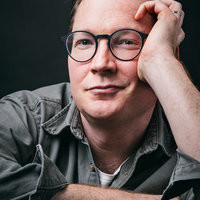
Sheila Heti is the author of seven books. Her latest is Motherhood: A Novel.

“[My parents] were afraid for me. As anybody who has a kid who wants to be a writer. I think they understood it was a hard life. It was a life in which you wouldn’t necessarily make enough money. It was a life in which you might be setting yourself up for a great amount of disappointment. My dad’s father was a painter, so there was in him this idea that it wasn’t so crazy to him. It wasn’t so outside his understanding. And, yeah, my mom thought it was a bad idea. And it probably is a bad idea in a lot of ways, but my dad was supportive but also cautioning. I think the book really moved [my mom] and really had an effect on her, so maybe you understand that it’s not necessarily a frivolous thing to be doing. Maybe it’s not just playing. I think my mom always had this idea that writing is playing, and it is playing, but it’s a serious kind of playing.”

Thanks to MailChimp, MUBI, and Tripping.com for sponsoring this week's episode.
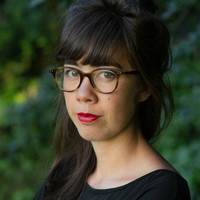
Reeves Wiedeman is a reporter at New York.

“I think the main reason I love the job is reporting. And the fact that you get to go out into situations that you wouldn’t otherwise as your job. I’m someone who gets antsy if I’m just on a vacation sitting around. I’d much rather go somewhere weird and kind of have a purpose. So, just feeling like you can kind of go anywhere and see anything and talk to anyone is a pretty cool way to live your day.”

Thanks to MailChimp, Pitt Writers, Thermacell, and Best Self for sponsoring this week's episode.