Showing 25 articles matching fc points to coins calculator Visit Buyfc26coins.com for latest FC 26 coins news..OtjT.

Crass Warfare

Why Whitney is Lucy, only less lovable:

This may sound like blasphemy to anyone who loves Lucille Ball, the woman who pioneered the classic joke rhythms that Whitney Cummings so klutzily mimics. Cummings has none of Ball’s shining charisma or her buzz of anarchy. Yet she does share Lucy’s rictus grin, her toddler-like foot-stamping tantrums, and especially her Hobbesian view of heterosexual relationships as a combat zone of pranks, bets, and manipulation from below. “This is war,” Whitney announces, before declaring yet another crazy scheme to undercut her boyfriend, and it might as well be the series’ catchphrase.

Tavi Gevinson is the founder and editor-in-chief of Rookie.

"I just want our readers to know that they are already smart enough and cool enough."

Thanks to this week's sponsors, TinyLetter and Atavist Books.

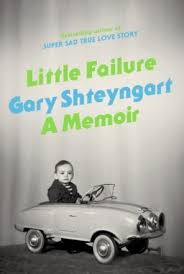
Sponsor: "Little Failure" by Gary Shteyngart

</param></param></param></embed>

Our sponsor this week is Little Failure, the new memoir by Gary Shteyngart. Already a New York Times bestseller, Little Failure tells the story of Shteyngart's American immigrant experience, moving back and forth through time and memory with self-deprecating humor, moving insights, and literary bravado. The result is a resonant story of family and belonging that feels epic and intimate and distinctly his own.

Mary Karr called Little Failure "a memoir for the ages." The Millions dubbed Shteyngart the "Chekhov-Roth-Apatow of Queens." And Nathan Eglander said the book is so honest "Dr. Freud would be proud."

Buy Little Failure today or read an exclusive excerpt on Longform.

James Franco Interview

FRANCO: “Straight” and “gay” are fairly recent phenomena. One of the things the great book Gay New York: Gender, Urban Culture and the Making of the Gay World, 1890–1940 is about is the way those labels have changed behavior. Between World War I and World War II, straight guys could have sex with other guys and still be perceived as straight as long as they acted masculine. Whether you were considered a “fairy” or a “queer” back then wasn’t based on sexual acts so much as outward behavior. Into the 1950s, 1960s and so on, the straight and gay thing came up based on your sexual partner. Because of those labels, you do it once and you’re gay, so you get fewer guys who are kind of in the middle zone. It sounds as though I’m advocating for an ambiguous zone or something, but I’m just interested in the way perception changes behavior.

Building New York's Subway

“Morning and night the hordes of clerks and stenographers and business men who fill the offices of down-town New York have poured across Newspaper Row and City Hall Park with scarcely a glance at the labor progressing underfoot that is going to bring them so many minutes nearer their work in the morning, and at night so many minutes nearer their play.”

Best of the Week: June 7-13

Want our favorite articles of the week delivered straight to your inbox? Subscribe.

The Mysterious Death of a Muslim Marine Recruit

Raheel Siddiqui was a young Muslim who dreamed of becoming a Marine. At twenty, he started basic training at Parris Island, where barking drill sergeants transform callow recruits into elite killing machines. Less than two weeks after he arrived, Siddiqui suffered a mysterious and fatal fall. The Marine Corps says he committed suicide, but some think more sinister forces led to his death.

The Mystery of the Killer Vacation

He’d sold his company, chartered a yacht, and set off with his model girlfriend to see the world. Finally, it seemed, Chris Smith was living the life he’d always wanted. But back home there was trouble: missing money, unraveling secrets, and a sudden question. Where the hell was Chris Smith, really?

Synthetic Biology Could Bring a Pox on Us All

On July 11, 2002, the researchers revealed that they had synthesized the polio virus, which had been wiped out in the US in 1979. It was the first time a virus had been created from scratch with synthetic DNA. The work was funded by the Pentagon in part to establish whether terrorists could pull off such a feat. The answer was yes.

Matthieu Aikins is a contributing writer at The New York Times Magazine who has reported on Afghanistan since 2008. His new book is The Naked Don’t Fear the Water: An Underground Journey with Afghan Refugees.

“I think at some point you just say, screw it. I'm gonna act like a human being and help my friend. That's the most important thing. You actually realize, yeah, now that we're in it together, the only thing that matters is both of us staying alive and staying safe and getting where we need to go. And whatever I have to do to do that, I'm going to do.”

Hannah Goldfield is the food critic at The New Yorker.

“There are just only so many ways to say ‘crunchy.’ There's ‘crunchy,’ there's ‘crisp,’ there's ‘crispy,’ you can say something ‘crackles,’ and that's kind of it. It's really, really hard. And a lot of things are crunchy. It's a really specific sensation that needs to be described. But I've had moments where I'm like, I can't say crunchy again in a sentence. What am I going to do? How do I get this across?

Sponsor: Aeon Magazine

Our sponsor again this week is Aeon, a great new digital magazine covering ideas and culture. Aeon publishes an original essay every weekday, several of which have been picked for Longform. Here are three recent favorites:

No Drama, King Obama, by Edward L. Fox
In Javanese culture, a ruler must stand chivalrously above strife: cool, intelligent and self-contained. Sound familiar?

Mortal Remains, by Thomas Lynch
The dead are no longer welcome at their own funerals. So how can the living send them on their way?

Animal Spirits, by Stephen T. Asma
The more we learn about the emotions shared by all mammals, the more we must rethink our own human intelligence.

Read those stories and more at aeonmagazine.com.

Sixteen-year-old Tara Perry followed her man into crime and madness

Three months before it all started, she'd been a shy sophomore at Aurora Central High School, a member of the soccer and speech teams. Then Randy Miller had come out of prison and back into her world. A 22-year-old former child prostitute and drug dealer, Miller had promised to take her away from a tumultuous and painful home life. But the journey he had in mind led downward, into a terrifying series of home invasions and armed robberies and, finally, a few hours after the King Soopers stickup, to a standoff with state troopers in a small Kansas town.

White Collars Turn Blue

People know Krugman these days as a feisty political polemicist, but back when he was less politically engaged he was absolutely one of the very finest popularizers of economic ideas ever. This piece is a wonderful, brief introduction to the fundamental economic forces driving the world and a lot of my current thinking is preoccupied with the questions it raises. Reading it again, I realized that a point I like to make about the elevator being a great mass transit technology is almost certainly something I subconsciously picked up here.

-M. Yglesias

Nightmare in Maryville

Daisy Coleman, new to town and a cheerleader, was 14. Matthew Barnett, a 17-year-old football player and the grandson of a longtime politician, was 17. The evidence pointed overwhelmingly toward rape. There was even a video. Yet the charges were dropped. Then the people of Maryville, Missouri, set about running the Colemans out of town.