Showing 25 articles matching fccoins26 Coinsnight.com FC 26 coins 30% OFF code: FC2026. The best place for game coins.28oS.

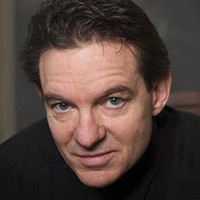
Lawrence Wright is an author, screenwriter, playwright, and a staff writer for The New Yorker.

”There’s nothing more important about a person than their story. In a way, that’s who we are. And yet, memories fade and people die. So those stories disappear and the job of the journalist is to go out before that happens and accumulate the kinds of stories that are going to help us understand who we are, why we are, where we are right now in time, and try to thread those stories into a coherent narrative. In a way, you give it a kind of immortality. And that’s a big job. It’s a great privilege.”

Steven Levy covers technology for Wired, where he is the editor of Backchannel.

“It’s about people. Travis Kalanick’s foibles aren’t because he’s a technology executive. It’s because he’s Travis Kalanick. That’s the way he is. There is a certain strain in Silicon Valley, which rewards totally driven people, but that is humanity. And advanced technology is no guarantee—and as a matter of fact I don’t think it’ll do anything—from stopping ill-intentioned people from doing ill-intentioned things.”

Thanks to MailChimp, Audm, Rover, and Babbel for sponsoring this week's episode.

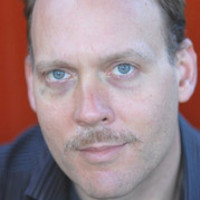
Evan Wright, a two-time National Magazine Award winner, is the author of Generation Kill.

"When people were killed, civilians especially, I realized I was the only person there who would write it down. I was frantic about getting names, and in the book there are a few Arabic names, some of the victims. Not that anyone cares. But I thought, 'At least somewhere there's a record of this.'"

Thanks to this week’s sponsors: TinyLetter and HostGator.

Sarah Maslin Nir, a reporter for The New York Times, recently published an exposé of labor practices in the nail salons of New York.

“The idea of a discount luxury is an oxymoron. And it’s an oxymoron for a reason: because someone is bearing the cost of that discount. In nail salons it’s always the person doing your nails, my investigation found. That has put a new lens on the world for me.”

Thanks to TinyLetter, Trunk Club, and Aspiration for sponsoring this week's episode.

T. Christian Miller, senior investigative reporter at ProPublica, and Ken Armstrong, staff writer at The Marshall Project, co-wrote the Pulitzer-winning story, “An Unbelievable Story of Rape.”

“I won’t forget this: when T. and I talked on the phone and agreed that we were going to work on [“An Unbelievable Story of Rape”] together, T. created a Google Drive site, and we decided we’d both dump all our documents in it. And I remember seeing all the records that T. had gathered in Colorado, and then I dumped all the records that I had gathered in Washington, and it was like each of us had half of a phenomenal story. And in one day, by dumping our notes into a common file, we suddenly had a whole story.”

Thanks to MailChimp, Squarespace, and Trunk Club for sponsoring this week's episode.

Shane Bauer, a senior reporter for Mother Jones, spent four months working undercover as a guard in a private prison.

“The thing that I grappled with the most afterward was a feeling of shame about who I was as a guard and some of the things that I had done. Sending people to solitary confinement is hard to come to terms with—even though, in that situation, I don't know what else I could have done. ... I had to do what I could to keep myself safe.”

Thanks to MailChimp for sponsoring this week's episode.

Ariel Levy is a staff writer at The New Yorker.

"I like an older awesome lady, I don't think enough is written about older awesome ladies and I don't think there are enough role models for younger awesome ladies. It’s great fun hanging out with an older awesome lady. It’s inspiring. And it makes you think 'Jesus, I might be rocking it when I’m 80!'"

Thanks to TinyLetter and ProFlowers for sponsoring this week's episode.

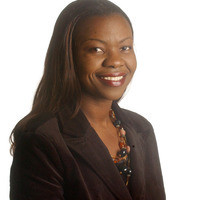
Jacqueline Charles is the Caribbean correspondent at the Miami Herald.

Guest host Patrice Peck is a freelance journalist and writes the Coronavirus News for Black Folks newsletter.

"There are things that you see that if you start taking it in, you’re never going to stop and you’re not going to be able to do your job…I have family in all of these countries and when disaster strikes, you can’t help everyone. But what you hope is that with your pen, with your voice, with your recording of history…somebody somewhere will feel compelled to do something. So that’s what keeps me going."

Thanks to Mailchimp for sponsoring this week's episode.

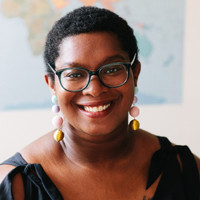
Ashley C. Ford is a writer and host of the podcast Fortune Favors the Bold. Her memoir, Somebody's Daughter, is forthcoming from Flatiron Books.

“For the first time I felt like I had so many more choices in my life than I originally thought I had. That was my first realization that I did not just have to react to the world, that I could be intentional in the world, and just curious about what came back to me.”

Thanks to Mailchimp and Pitt Writers for sponsoring this week's episode.

Alex Goldman is the co-host of Reply All.

“I am not the authority on the internet. I’m not an expert on particularly anything, except stuff that I like.”

Thanks to MailChimp, Squarespace, and Blinkist for sponsoring this week's episode.

Joe Sexton is a senior editor at ProPublica and a former reporter and editor at the New York Times, where he led the team that produced "Snow Fall."

"My experience in a newspaper newsroom over the years has been: The word you hear least often, the word that's hardest for people to say in that environment, is the word yes. It's safer to say no. You get second-guessed less often if you say no. Your job's not on the line if you say no. But if you're willing to say yes and you're willing to face the consequences of having said yes, then quite amazing things can happen."

Thanks to Random House and TinyLetter for sponsoring this week's episode.

Grant Wahl is senior writer at Sports Illustrated and the author of The Beckham Experiment.

“I said to Balotelli, ‘I know you’re into President Obama. There’s a decent chance that he might read this story.’ He kind of perked up. I don’t think I was deliberately misleading him. There was a chance!”

Thanks to MailChimp, Audible, </em>Feverborn</a>, and Squarespace for sponsoring this week's episode.</p>