Showing 25 articles matching fccoins26 Coinsnight.com FC 26 coins 30% OFF code: FC2026. The best place for game coins.28oS.

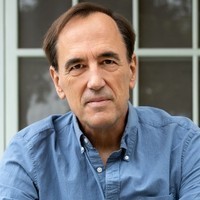
Jeff Goodell is a climate change writer for Rolling Stone and the author of seven books. His new book is The Heat Will Kill You First: Life and Death on a Scorched Planet.

“I would not have said this even five years ago, but I have really come to see this now as a crime story. This is a kind of looting of the atmosphere of the earth, siphoning off resources and grossly profiting off of that at the expense of many other people—billions of people—on this planet. And I understand that’s a big thing to say, but I think it’s just pretty obviously true. … I don’t mean that personally that each one of them personally is a criminal. We are all complicit in this.”
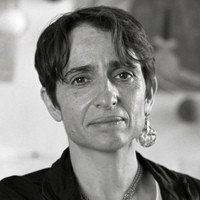
Masha Gessen has written for The New York Times, The London Review of Books, Vanity Fair, and others. Her book about Tamerlan and Dzhokhar Tsarnaev, The Brothers: The Road to an American Tragedy, came out in April.

“The moment she said it, it was obvious that I'd been created to write this story. I'd covered both wars in Chechnya. I'd covered a lot of terrorism. I'd studied terrorism. And I'd been a Russian-speaking immigrant in Boston, which actually is the most important qualification for writing this book. It didn't give me special knowledge, but it gave me a lot of questions that I knew to ask that other people wouldn't.”

Thanks to TinyLetter, Trunk Club, and Casper, for sponsoring this week's episode.

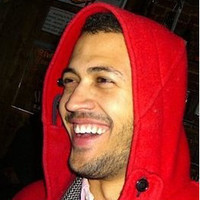
Cord Jefferson is the West Coast editor at Gawker.

"I consider myself to be a sincere human being. And I think that the way the internet carries itself, the way the internet has dialogues, is often insincere. That concerns me. I don't ever want to lose my sincerity. I don't ever want to lose my ability to feel emotional about things that I write about. I don't ever want to have a distance from everything that I write. I think that can be a danger of writing too much for the internet, that you develop this elitist distance from everything. That nothing really matters, you know?"

Thanks to TinyLetter and Hulu Plus for sponsoring this week's episode.

Amanda Hess, a staff writer at Slate, has also written for Pacific Standard, GOOD, and ESPN the Magazine.

"I ended up not loving the fact that I was getting a bunch of calls from MSNBC and CNN, who mostly wanted to talk about people threatening to rape and kill me and only a tiny bit about the story I'd written. ... It was tiring, and it seemed dismissive of me as a person. It's a strange thing to become somebody else's story, especially when the story is: You're a victim of an insane online harasser. That's who you are."

Thanks to this week's sponsors, TinyLetter and Oyster Books.

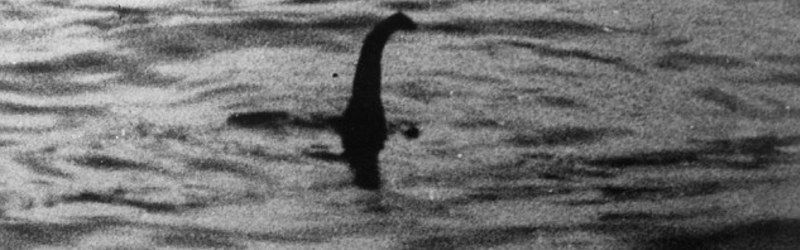
Loch Ness Memoir

A trip to Scotland and an investigation of enduring belief.

Read more

“I remember reading about the deathbed confession, and how strangely sad it made me, even though I had not, at that point, believed in the monster for years. How much sadder, I wondered, would it make those who still believed in the existence of a monster in Loch Ness?”

Tyler Cowen is an economist, the co-founder of Marginal Revolution, and the host of Conversations with Tyler. His latest book is The Complacent Class: The Self-Defeating Quest for the American Dream.

“I think of my central contribution, or what I’m trying to have it be, is teaching people to think of counter arguments. I’m trying to teach a method: always push things one step further. What if, under what conditions, what would make this wrong? If I write something and people respond to it that way, then I feel very happy and successful. If people just agree with me, I’m a little disappointed.”

Thanks to MailChimp and Squarespace for sponsoring this week's episode.

Jay Caspian Kang is a writer and editor at Grantland.

"That's one of the things I've been learning: sometimes if you just sit there, they forget that you're there, so they forget to get rid of you. I'm very quiet and I try not to ask them a lot of questions. ... Generally I just observe. I feel like because I'm a fiction writer, the story will tell itself through the narrative of the person's movement through their daily life."</i>

Thanks to TinyLetter for sponsoring this week's episode!

</blockquote>

Pamela Colloff is an executive editor and staff writer at Texas Monthly.
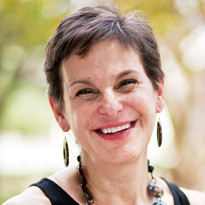
"That sense of loss, that sense of normal life turning on a dime is something that, in a very different way, I’ve experienced. And I carry that with me into some of the more difficult stories."

Smiley face Mimi Swartz has written for Talk, The New Yorker and Vogue. She is an executive editor at Texas Monthly.
"Here’s this great [public interest] story that nobody’s ever told. Now how can I write it so the maximum number of people want to read it? I try to make the homework part as interesting and compelling as possible."

Thanks to TinyLetter and PillPack for sponsoring this week's episode.

Nicholson Baker is the author of 18 books of fiction and nonfiction. He has written for The New Yorker, Harper’s, and many other publications. His latest book is Baseless: My Search for Secrets in the Ruins of the Freedom of Information Act.

"In the end, I don’t care how famous you get, how widely read you are during your lifetime. You’re going to be forgotten. And you’re going to have five or six fans in the end. It’s going to be your grandchildren or your great-grandchildren are going to say, Oh, yeah, he was big. … So I think the key is, write what you actually care about. Because in the end, you’re only doing this for yourself. … So maybe do your best stuff for yourself and for the three, four, five people who know in the coming century that you ever existed. That’s all you need to do."

Thanks to Mailchimp for sponsoring this week's episode.

Kelley Benham is a writer and editor at the Tampa Bay Times.

"People connect with this story in a really visceral kind of way, usually because of some experience they've had or someone close to them has had. I've had 90-year-old women crying into my phone about babies they lost 70 years ago. I've had people kind of sneak up to me and tell me about babies that have died that they don't talk about, but that they carry with them all the time. I've had premies who are grown up—those are my favorite—you know, "I'm 20 now and I have a scar just like Juniper's scar, and thank you for helping me understand who I am."

Thanks to TinyLetter for sponsoring this week's episode.

Alex Kotlowitz is a journalist whose work has appeared in print, radio, and film. He’s the author of three books, including There Are No Children Here: The Story of Two Boys Growing Up in the Other America.

“The truth of the matter is, given what we do, we’re always outsiders. If it’s not by race or class, it’s by gender, religion, politics. It’s just the nature of being a nonfiction writer—going into communities that, at some level, feel unfamiliar. If you’re writing about stuff you already know about, where’s the joy in that? Where’s the sense of discovery? Why bother?”

Thanks to MailChimp and MeUndies for sponsoring this week's episode.

Gary Smith, a four-time National Magazine Award winner, retired last month after 32 years at Sports Illustrated.

"We were on the Santa Monica Freeway, Ali's driving 70 miles an hour and his eyes are drifting asleep—the medication for Parkinson's would do that to him. I'm thinking, 'Oh, crap.' We're weaving between lanes, cars are honking, and I'm wondering in the passenger seat, 'Should I grab the wheel from the greatest champ of all-time?' The writer in me wants to let it go, let the crash happen just so I get a scene for the story. But the human in me was just getting scared as hell."

Thanks to TinyLetter and EA SPORTS FIFA WORLD CUP for sponsoring this week's episode.

Gerhard Steidl is Making Books An Art Form

Steidl, who is sixty-six, is known for fanatical attention to detail, for superlative craftsmanship, and for embracing the best that technology has to offer. "He is so much better than anyone,” William Eggleston, the American color photographer, told me, when I met him recently in New York. Steidl has published Eggleston for a decade; two years ago, he produced an expanded, ten-volume, boxed edition of “The Democratic Forest,” the artist’s monumental 1989 work. Eggleston passed his hand through the air, in a stroking gesture. “Feel the pages of the books,” he said. “The ink is in relief. It is that thick.”

Stephanie Clifford is an investigative journalist and novelist who has written for The New York Times, The New Yorker, The Atlantic, and many other publications. Her most recent article is "The Journalist and the Pharma Bro."

“I think your job as a journalist—particularly with people who are in vulnerable situations or people who are not used to press—is to explain what the fallout might be."

Thanks to Mailchimp for sponsoring this week's episode.

Leslie Jamison is the author of The Empathy Exams, The Recovering, and the novel The Gin Closet. Her new essay collection is Make It Scream, Make It Burn.

“My writing is always basically asking: what does it feel like to be alive, and how do we ever try to understand what it feels like for anybody else to be alive? In that sense, on the intellectual level, I’m always going to keep chasing the same unanswerable things.”

Thanks to Mailchimp, Pitt Writers, Mythology for sponsoring this week's episode.

Anna Sale is the host of Death, Sex & Money. Her new book is Let’s Talk About Hard Things.

“What hard conversations can do is—you can witness what's hard. You can be with what's hard. Admit what's hard. That can be its own relief. … Some hard conversations … are successful when they end in a place that's like, Oh, we're not going to agree on this. … I think you can get used to the feeling of feeling out of control and that makes them less scary.”

Thanks to Mailchimp for sponsoring this week's episode.

Jason Fagone, a contributing editor at Wired and a writer-at-large for Philadelphia, is the author of Ingenious.

"It seemed like all the big guys in American society had let us down, all the elites. And here was a contest that was explicitly looking to the little guy and saying, 'We don't care what you've done before or how much money you have in your pocket. If you solve this problem, you win the money.' There was something so optimistic and hopeful and cool about that to me."

Thanks to TinyLetter and Squarespace for sponsoring this week's episode.

Jazmine Hughes is an associate editor at The New York Times Magazine. Her writing has appeared in The New Yorker, Elle, Cosmopolitan, and The New Republic.

“You hope that one day when you’re the editor-in-chief of Blah Blah Blah that you’ll wake up and be like, ‘Okay, I deserve my job.’ But so far I haven’t met anyone who has told me that they feel that way. But, I will say, I don’t talk to white men a lot.”

Thanks to MailChimp, MasterClass, and The Great Courses Plus for sponsoring this week's episode.

Karina Longworth is a film writer and the creator/host of You Must Remember This, a podcast exploring the secret stories of Hollywood.

“For me the thing that’s exciting about it is that it’s research, and it’s reportage, and it’s criticism. But it’s also art. It’s creatively done. It’s drama. It consciously tries to engage people on that emotional level.”

Thanks to MailChimp, Squarespace, and MasterClass for sponsoring this week's episode.

Jiayang Fan is a staff writer for The New Yorker. Her latest article is a "How My Mother and I Became Chinese Propaganda."

"I think considering the unusual shape of our lives—the lives of my mother and I—from bare subsistence to one of the richest enclaves in America … it made me think about what the value of existence is. ... It made me wonder, What should a person be? And how should a person be? And being a writer has been a lifelong quest to answer those questions."

Thanks to Mailchimp for sponsoring this week's episode.

Hannah and Andrew

In October 2006, a four-year-old from Corpus Christi named Andrew Burd died mysteriously of salt poisoning. His foster mother, Hannah Overton, was charged with capital murder, vilified from all quarters, and sent to prison for life. But was this churchgoing young woman a vicious child killer? Or had the tragedy claimed its second victim?